The government proposed a budget of 728 trillion won ($525 billion) for next year Friday, aiming to significantly boost spending on research and development and artificial intelligence to drive future economic growth.
The proposed budget for 2026, endorsed by the Cabinet on the day, marks an 8.1 percent, or 54.7 trillion-won, increase from the government's budget proposal for this year, according to the Ministry of Economy and Finance. The proposed increase marks a sharp acceleration from a 3.2 percent on-year increase in 2025 and a 2.8 percent rise the previous year.
It is the first full-year budget plan unveiled by the new administration of President Lee Jae Myung, who has pushed forward a fiscal expansion policy to respond to growing economic challenges, including a slowdown in exports due to US tariff measures, a declining working-age population and subdued corporate investment.
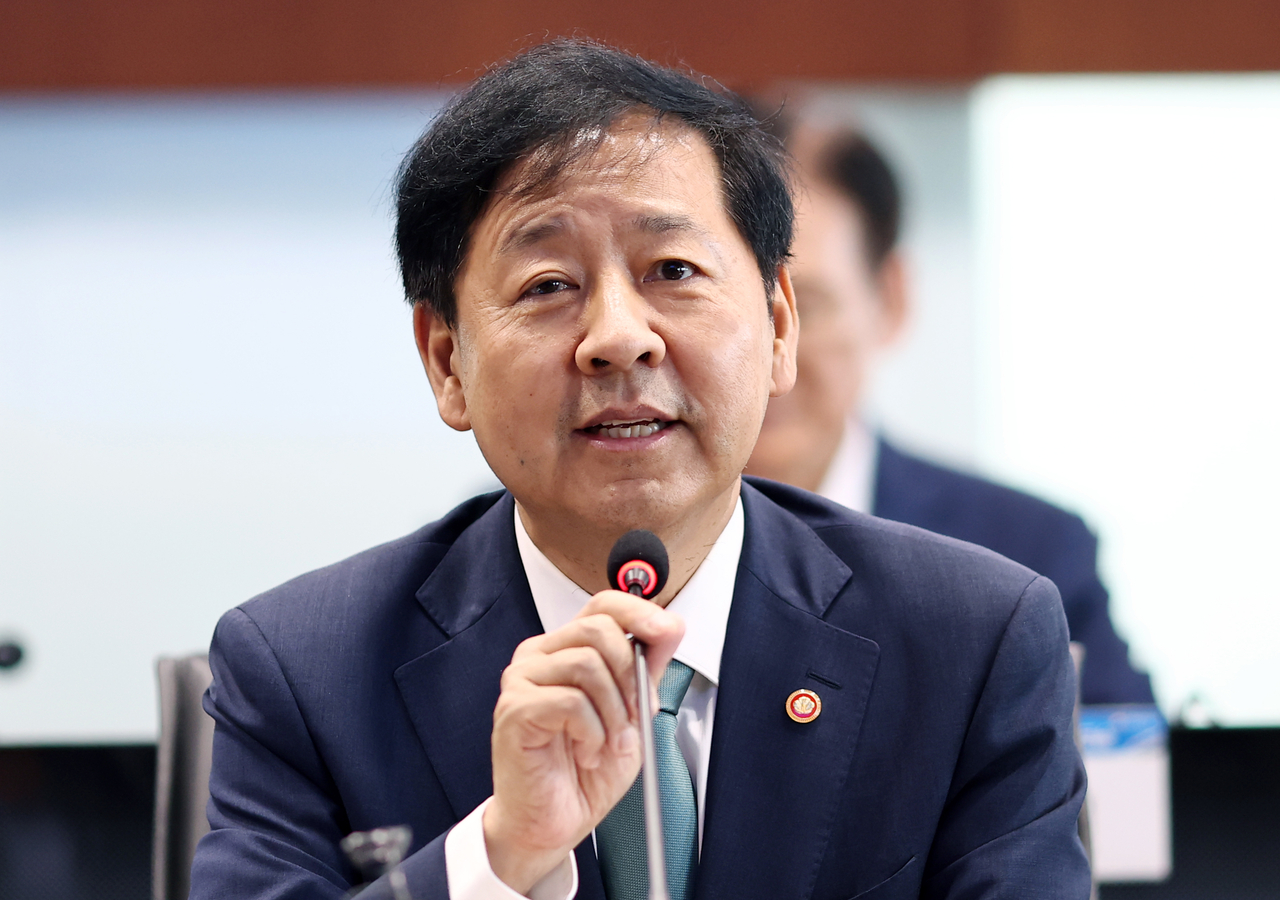
"To overcome such headwinds, we need not just expansionary fiscal management but a strategic fiscal operation focused on effective outcomes," Finance Minister Koo Yoon-cheol said during a press briefing.
Koo emphasized that the government will prioritize performance-based spending by drastically cutting or eliminating unnecessary expenditures while boldly investing in areas that produce tangible results.
To secure needed resources, the government trimmed a record high 27 trillion won in non-core expenditures, nearly half of the total increase in next year's budget, by scrapping around 1,300 projects deemed low-performing or unnecessary.
If finalized, it would mark the fourth consecutive year the government has implemented over 20 trillion won in spending adjustments.
"Achieving long-term policy goals cannot be supported by revenue alone," a ministry official said, vowing to further strengthen spending reforms in the years ahead.
Among the key cutbacks is a sharp reduction in the budget for official development assistance, which had surged during the previous Yoon Suk Yeol administration.
Instead, the 2026 proposal centers on building what the Lee administration has dubbed a "super innovation economy," led by cutting-edge technologies, such as AI.
A total of 72 trillion won is allocated for innovation-related sectors, up from 51 trillion won proposed last year.
The budget allocated for AI is at 10.1 trillion won, sharply up from 3.3 trillion won this year, with funds earmarked for projects, such as the purchase of 150,000 graphics processing units and talent cultivation.
A five-year economic development blueprint unveiled earlier by the Lee government emphasizes AI as a core driver of economic growth, with the private sector leading innovation, backed by comprehensive AI-focused government policies.
Since taking office in June, Lee has pledged to elevate South Korea into one of the world's top three AI powerhouses, committing to invest 100 trillion won by creating various investment funds over the next five years to that end.
The finance minister said the government will inject 1 trillion won in public finances next year and allocate a record high 2 trillion won to funds designed to help scale up promising small and venture firms.
In the long term, the government will invest about 6 trillion won over the next five years in regional innovation hubs that develop and test AI-enabled technologies in various sectors, such as robotics, automotive, shipbuilding and manufacturing, the ministry added.
The proposal also called for a record high 19.3 percent increase in the budget for R&D to allocate 35.3 trillion won in 2026.
This marks a significant shift from the previous administration's sharp cuts in R&D spending, a move that had sparked concerns and criticism over potential negative impacts on fundamental research and long-term productivity growth.
"This year's budget proposal, which balances investment and spending innovation, is not just a one-year plan but serves as a milestone that outlines the government's direction for the next five years," Koo said. (Yonhap)