
Women in their early 30s account for the largest share of mothers-to-be this year
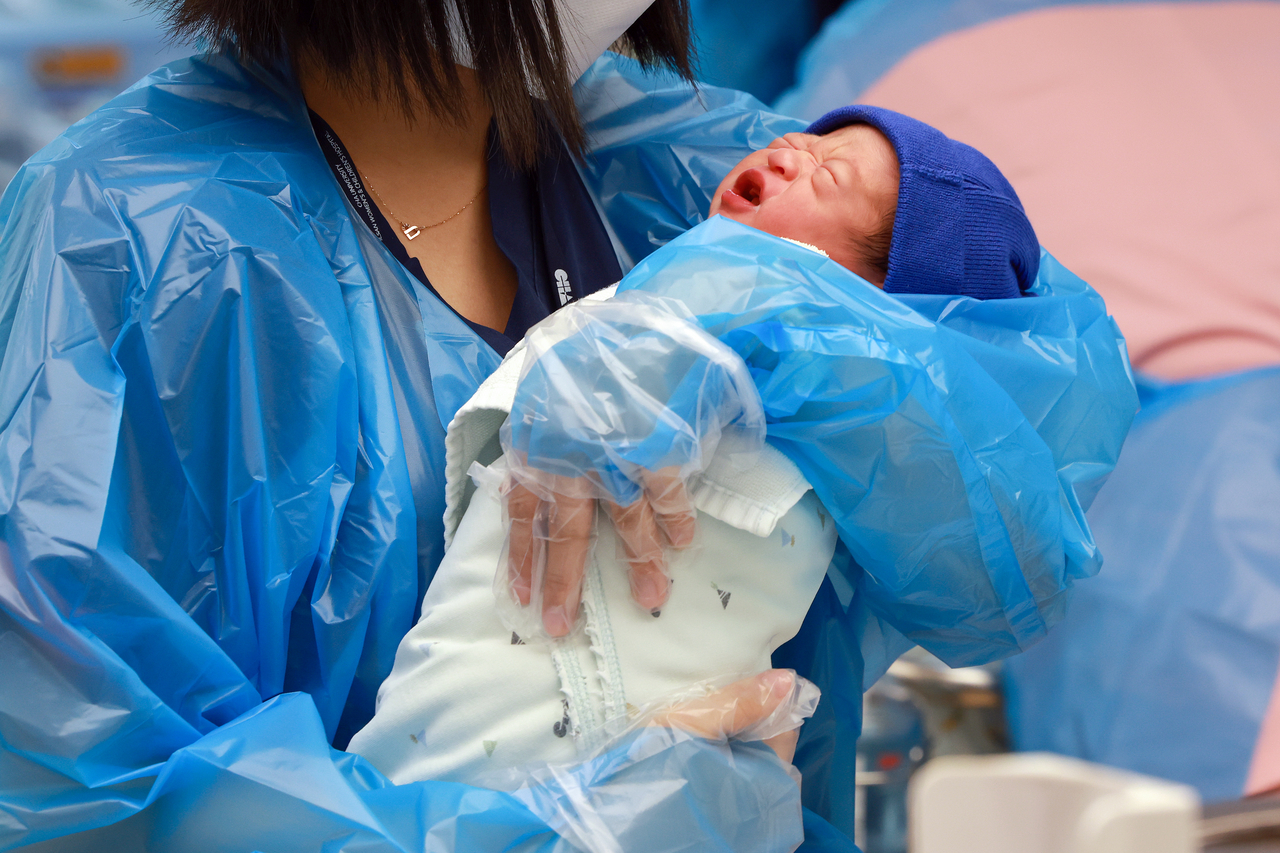
More than 300,000 women are expected to give birth in South Korea this year, raising hopes for a turnaround in the nation’s prolonged fertility decline, a report showed Tuesday.
The rosy prospect is based on the number of recipients of the country’s pregnancy voucher program in May, which stood at more than 304,000, up 21,000, or 7.4 percent, from last year’s 283,000.
The voucher program, run by the National Health Insurance Service, provides financial support for prenatal care, medical tests and prescription drugs. To receive the benefits, one must submit a hospital-issued pregnancy certificate with an expected due date.
Among these expectant mothers registered in the insurance system, those aged 30 to 34 accounted for the largest share at 143,072, up 11,000 from a year earlier. They were followed by 82,493 women aged 35 to 39, also marking an increase of about 8,000 from the previous year. Next came 48,081 women aged 25 to 29, up roughly 700 on-year.
Despite factors like miscarriages and abortions, the rise in expectant mothers is generally seen as a hopeful sign of an increase in newborns, the report said.
According to Statistics Korea, the number of newborns reached 238,000 in 2024, up 8,000 from 2023, marking the first increase since 2015. The country’s total fertility rate, the average number of children a woman is expected to have in her lifetime, also rebounded to 0.75 last year.
The report noted that 2024’s rebound in births was estimated to have been driven more by salaried workers than by the self-employed.
The delivery rate among the NHIS' workplace subscribers stood at 0.75 in the same year, higher than 0.57 for district subscribers without support from employers for their premiums.
The figures were calculated by dividing the number of deliveries among women aged 15 to 49 by the total number of female health insurance subscribers in the same age group and multiplying the result by 1,000.
Kim Sang-yong, an economic analyst at the NABO, argued that additional measures are needed to encourage childbirth among women outside the workplace.
“Government policies and budgets to support work-life balance for women to encourage childbirth have been on the rise, but the benefits mainly go to women employed at companies,” he said.
“Self-employed individuals, small business owners and part-time platform workers have limited access to maternity leave or health insurance subsidies. Additional measures are needed for them.”
cjh@heraldcorp.com