
S. Korea to plan phased roadmap for NK’s denuclearization, from freeze to dismantlement
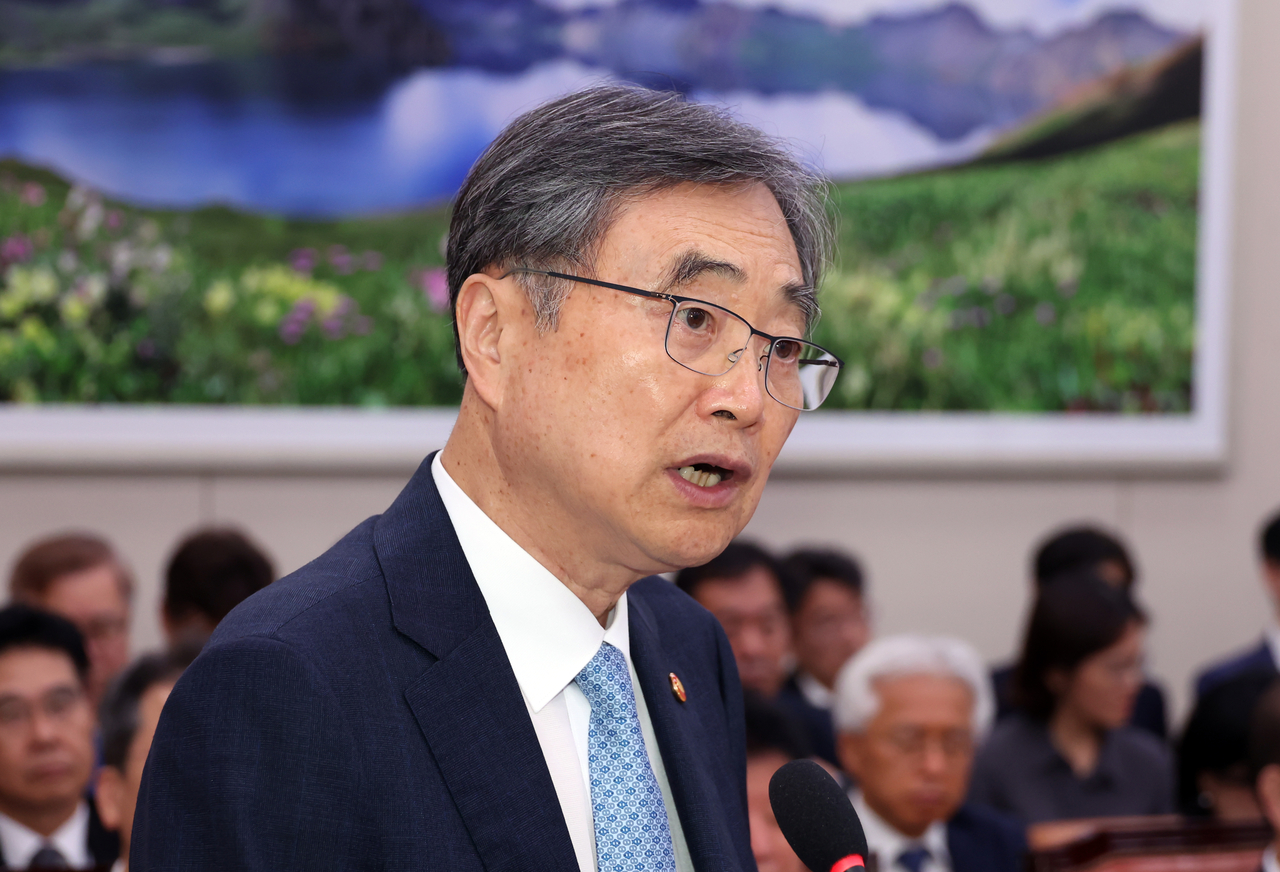
Seoul’s top diplomat said Monday that the Lee Jae Myung administration will leverage "alliance modernization" with the US as an opportunity to bolster South Korea’s defense capabilities, signaling openness to raising defense spending in response to Washington’s call.
The remarks come ahead of President Lee’s first in-person meeting with US President Donald Trump, scheduled for Aug. 25 in Washington. The two leaders are expected to discuss security and foreign affairs with a focus on alliance modernization and North Korea’s nuclear issue, as well as trade and, in particular, tariffs.
Foreign Minister Cho Hyun, speaking at a plenary session of the National Assembly’s Foreign Affairs and Unification Committee, underscored that “alliance modernization should be regarded as an opportunity for us to strengthen our defense capabilities.”
“This comes as we witness changes in the international security landscape, particularly the new forms of warfare brought about by recent technological advances — an area in which we must urgently prepare and respond,” Cho said. “Therefore, I see it as a chance to do so.”
In July, the allies agreed to “modernize the Alliance in a mutually beneficial manner in the face of an evolving regional security environment” in a joint statement issued after working-level negotiations on the matter.
Cho also highlighted the merits of increasing South Korea’s defense spending in the broader context of alliance modernization.
The Trump administration has urged Seoul to boost its defense outlays beyond the allies’ existing cost-sharing framework, formally known as the Special Measures Agreement, for the stationing of US Forces Korea.
While Cho acknowledged "mutually different starting points in negotiations" between the allies, he added, "Going forward, we should go through stages of consultations and negotiations, and there are two considerations at present."
"The first is that, given the extremely difficult international situation, there is a need for us to raise our defense budget to some extent and strengthen our defense capabilities," Cho told lawmakers.
"Secondly, it would be desirable to increase the defense budget if we can take this opportunity to cooperate with the US and make effective use of areas such as (research and development). I also believe this could be of some help to the defense industry."
South Korea’s 2025 defense budget marks a 3.6 percent increase from last year and accounts for 2.32 percent of gross domestic product, a 63.1 percent rise from a decade ago.
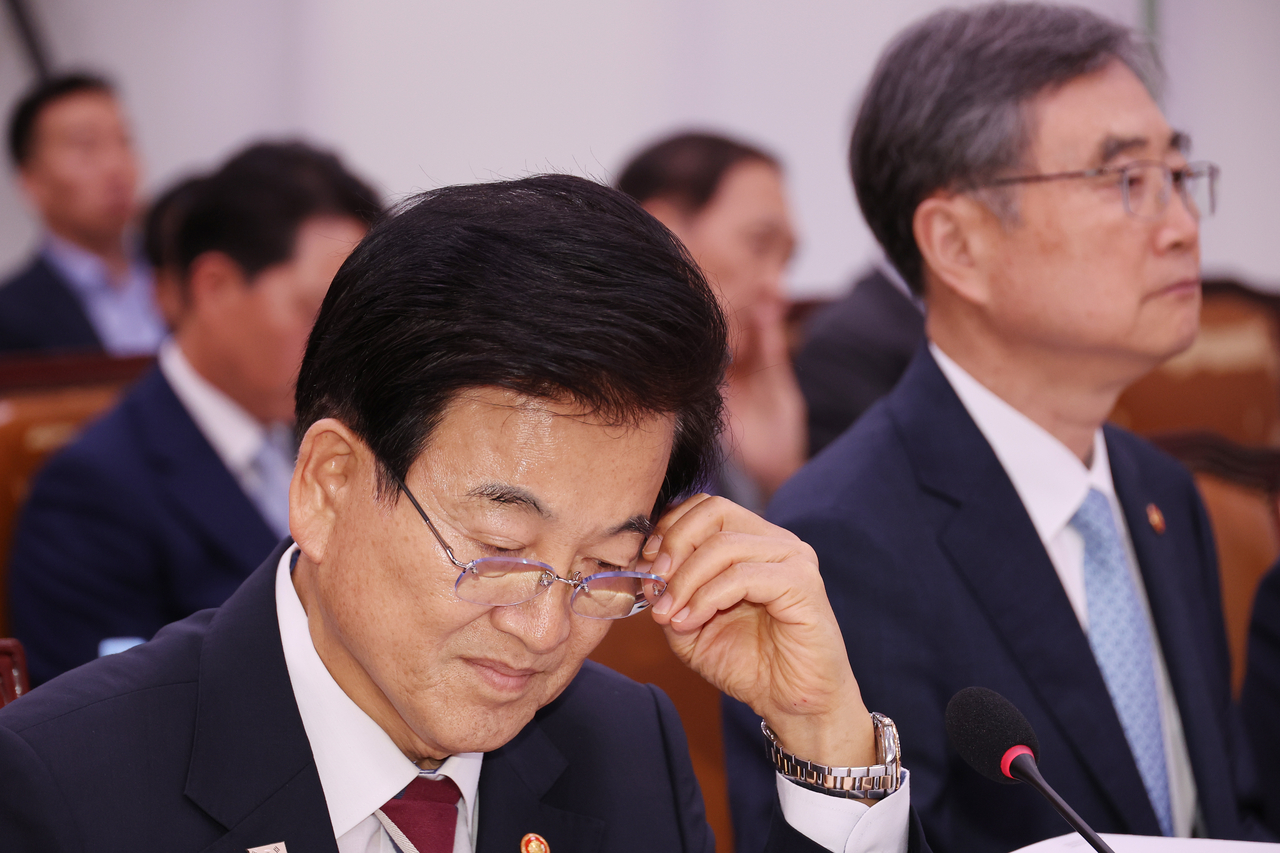
On the North Korean issue, Cho said South Korea will lay out a step-by-step roadmap to achieve North Korea's denuclearization.
"We will devise a phased denuclearization strategy and implementation plan — progressing from freeze to reduction to dismantlement — while also encouraging the constructive roles of neighboring countries such as China and Russia," Cho said.
On the North Korean issue, Cho said South Korea will present a step-by-step roadmap to achieve North Korea’s denuclearization.
"We will devise a strategy and implementation plan for phased denuclearization, progressing from a freeze to reduction to dismantlement, while also encouraging the constructive roles of neighboring countries such as China and Russia," Cho said.
"In the event of progress in dialogue, we intend to concurrently promote inter-Korean dialogue and North Korea-US negotiations, thereby creating conditions in which the denuclearization process and the process of establishing a peace regime on the Korean Peninsula can mutually propel each other forward and advance together."
Speaking at the Assembly session, Unification Minister Chung Dong-young, however, admitted that "more time will be needed before inter-Korean dialogue can be restored."
Chung underscored the importance of "reestablishing inter-Korean relations on the basis of reconciliation and cooperation, and institutionalizing peaceful coexistence."
"Since restoring communication channels with North Korea is the top priority, we will utilize major opportunities to send strategic messages to North Korea, strengthen our capacity for talks, and prepare for the resumption of dialogue," Chung told lawmakers.
Lee, for instance, committed to taking measures to substantially ease tensions and restore confidence, while respecting the North Korean regime’s system and existing inter-Korean agreements, in his Aug. 15 National Liberation Day speech.
"While thoroughly managing the situation, we will gradually restore military trust by reinstating inter-Korean communication lines and restoring the Sept.19 military agreement," Chung said.
dagyumji@heraldcorp.com


