
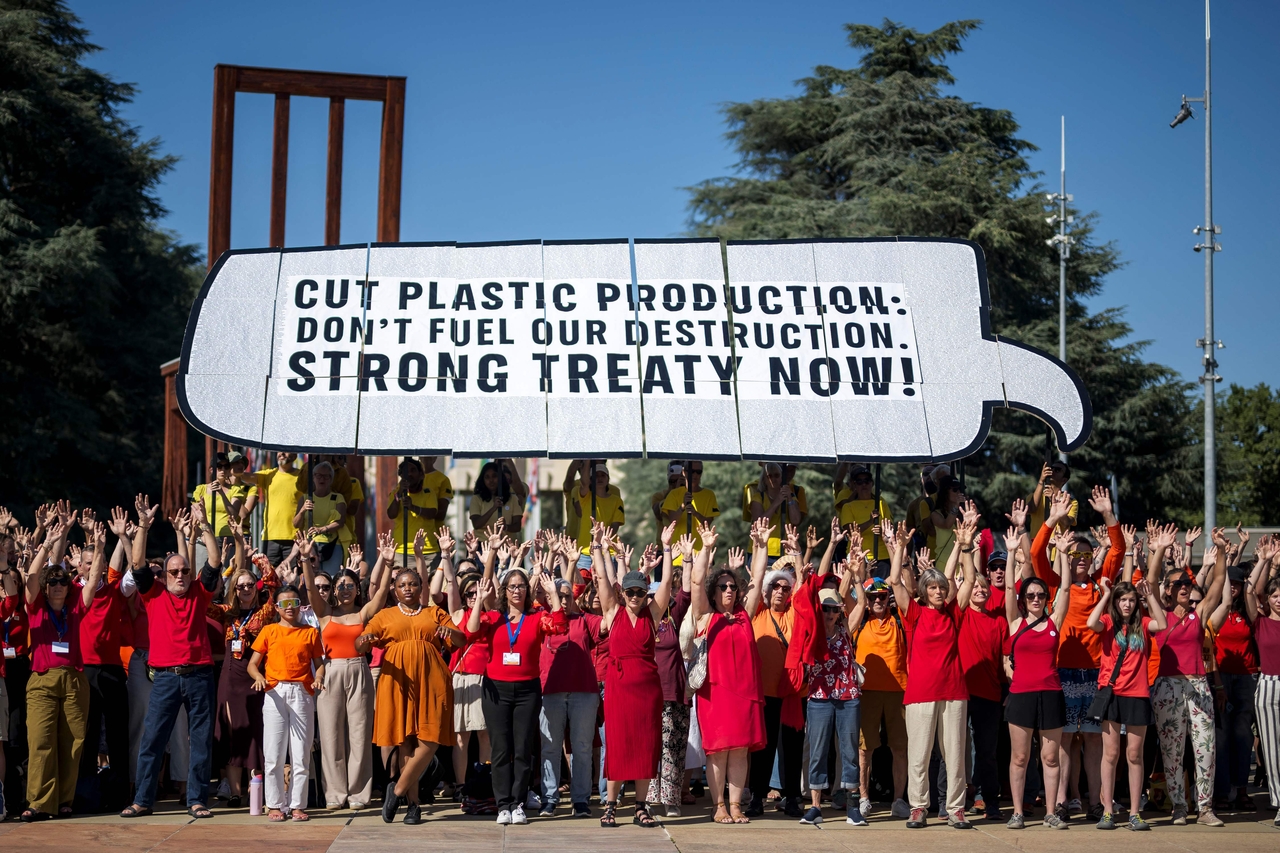
Despite President Lee Jae Myung's pledge to “de-plastic” by the end of 2025, South Korea is drawing scrutiny for proposing softer language for a key provision in UN-led treaty negotiations aimed at reducing plastic waste.
The South Korean government submitted amendments in tandem with Brazil to a draft provision mandating countries to reduce hazardous plastic products during the resumed fifth session of the Intergovernmental Negotiating Committee tasked with finalizing a legally binding international treaty on plastic pollution.
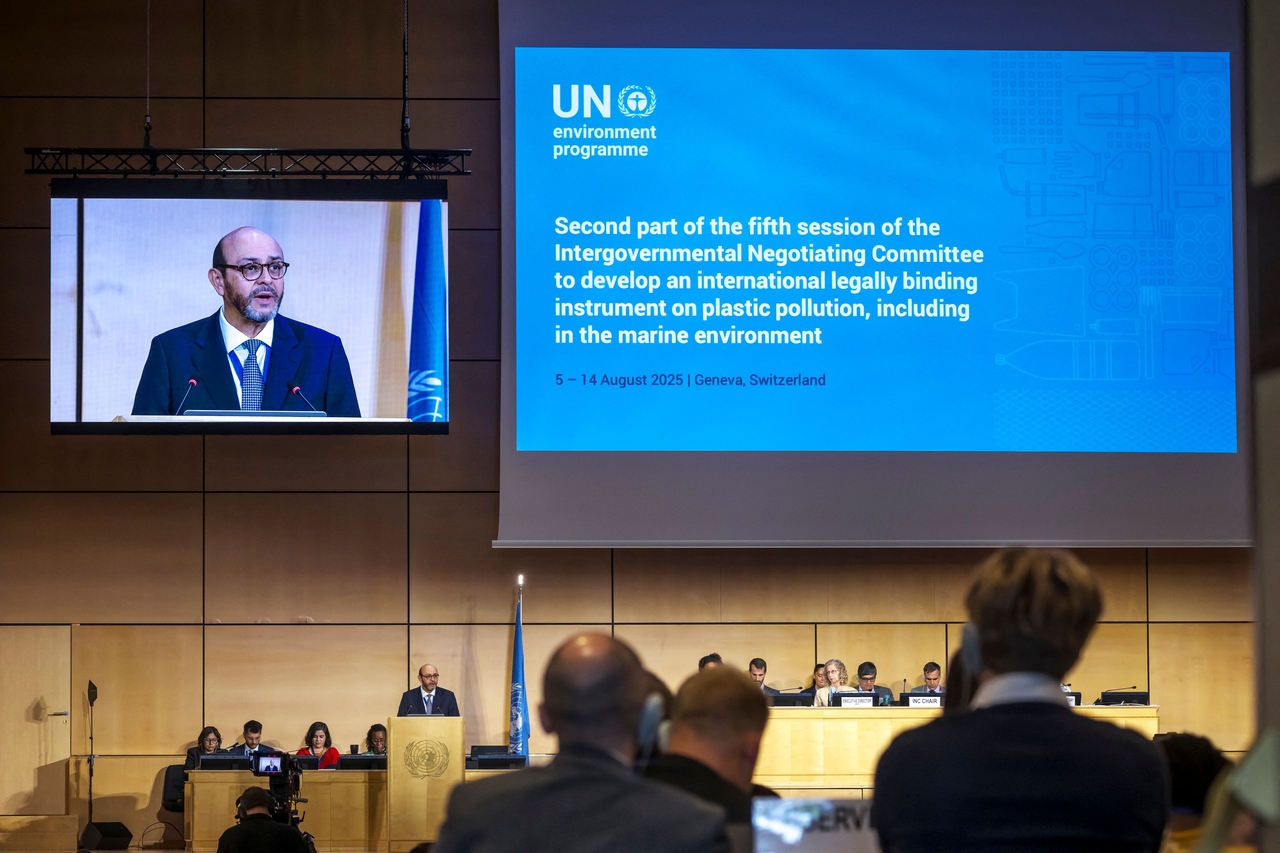
The INC-5.2 began Tuesday in Geneva and will continue until Thursday.
The second part of the INC-5 was launched as participating country representatives failed to reach a full consensus on what should and should not be included in a binding agreement against plastic pollution during the first INC-5 at Busan in December 2024.
The original text, proposed jointly by Switzerland and Mexico, stated that each supporting state “shall reduce” harmful plastic products with legally binding force.
The definition of harmful plastics included plastics that risk leaking into the environment or human bodies, contain chemicals with potential health or environmental impacts, cannot be feasibly recycled or reused at scale or significantly obstruct circular economy efforts.
A total of 77 countries — including all 27 EU member states and 14 Pacific Island nations formally backed the proposal, according to the UN Environment Program.
However, the proposal submitted by South Korea and Brazil sought to revise the text to a more suggestive tone — requiring parties to “take appropriate measures to address, manage, reduce or prohibit” harmful plastic products.
In the proposal, two countries also suggested taking each country’s “circumstances, capacities and socioeconomic factors” into consideration when determining what constitutes an “appropriate measure” to counter plastic waste.
This is not the first time Seoul has aligned with Brazil in global plastic negotiations. A similar proposal was made during the first INC-5 meeting last year under the previous Yoon Suk Yeol administration.
Local climate advocacy groups sharply criticized the Korean government’s stance throughout talks held so far at INC-5.2.
“President Lee made de-plasticization one of his core pledges during his presidential campaign and even promised to come up with a roadmap by the end of this year to combat plastic waste. Introducing a watered-down language during the treaty talks goes directly against that commitment,” said Solutions for Our Climate through an official statement issued Friday.
Claiming that a legitimate response to the climate crisis is “fundamental reduction, the group added that “managing or addressing plastic pollution is not enough.”
“Korea must step up and lead on real solutions, not backtrack,” the group added.
In response to mounting criticism, the Ministry of Environment denied claims that Korea was attempting to block plastic reduction efforts.
“We’re not opposed to the reduction of harmful plastics,” a ministry official told The Korea Herald. “From our knowledge, several countries have expressed difficulty in accepting the proposal presented by Switzerland and Mexico in its current form. Korea’s intention was to facilitate dialogue by introducing alternative language that could help break the deadlock.”
lee.jungjoo@heraldcorp.com