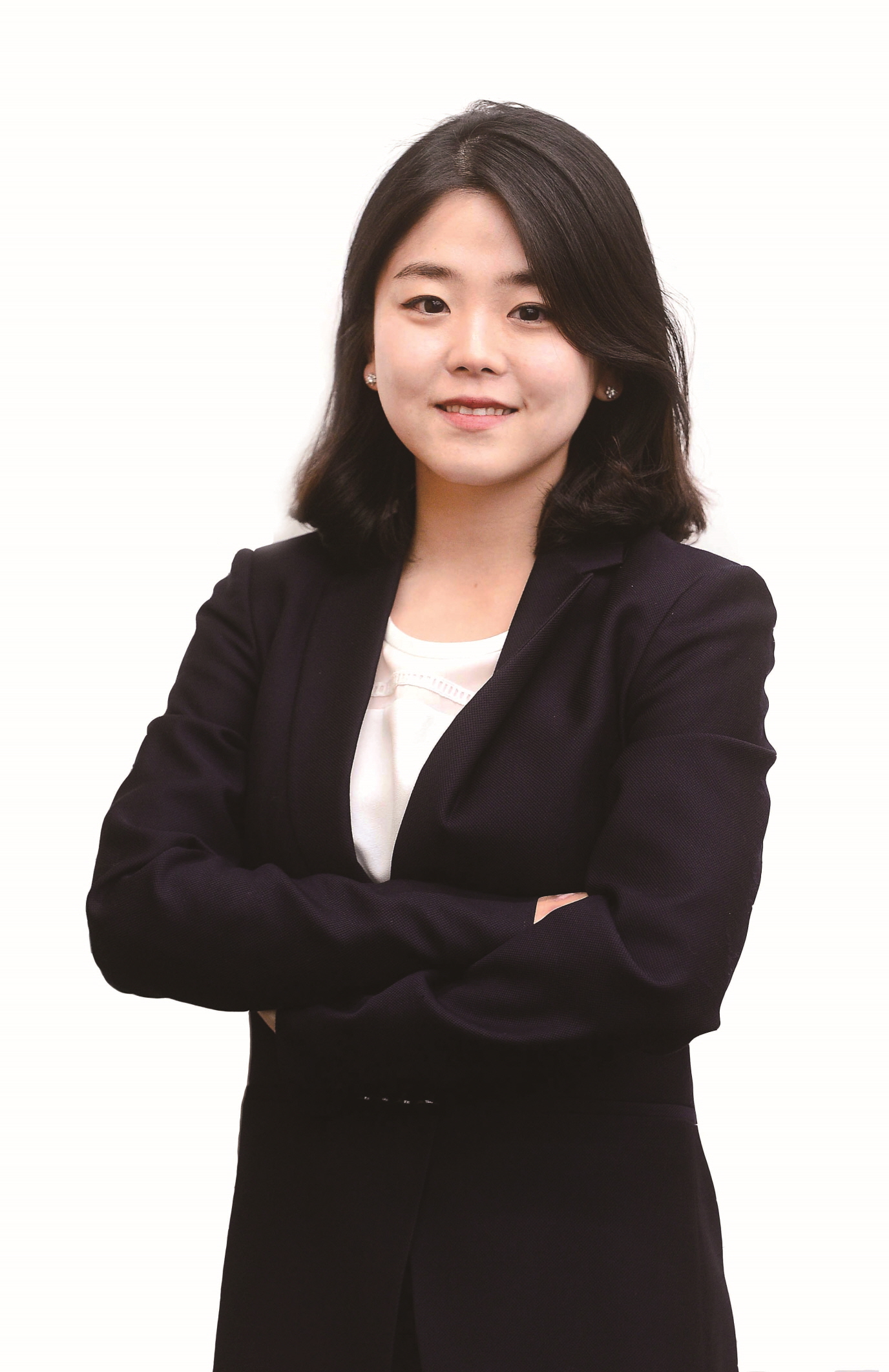

Female leadership makes progress, but legacy ties, influence still loom

As global investors turn a sharper eye toward corporate governance in South Korea’s financial sector, scrutiny is intensifying around the leadership of the country’s top financial groups — KB, Shinhan, Hana and Woori.
Boardroom composition, once treated as a procedural matter by companies, now speaks volumes about their strategic priorities and governance culture. In particular, the identity and independence of board chairs have become bellwethers for how each group balances executive power, oversight and long-term shareholder value.
Here, we take a closer look at the leadership shaping Korea’s four major financial groups.
Women at the helm: KB, Shinhan signal progress
Among the big four, Shinhan Financial Group and KB Financial Group stand out for appointing female board chairs — a rare move in the still male-dominated Korean boardroom.
Shinhan led the shift early, appointing Korea’s first female financial group chair in 2010, the same year it abolished CEO duality. In 2024, the group named its second, Yoon Jae-won.
At 55, Yoon is the youngest chair among Korea’s major financial groups. A business professor at Hongik University and a core committee member at the Korea Accounting Institute, she has played a key role in reshaping Shinhan’s governance architecture. Under her leadership, the group reported the fewest financial mishaps among its peers in the recent two years and was the first to submit a regulatory “accountability map” clarifying executive roles. As former audit committee chair, Yoon championed transparency and pushed for robust oversight mechanisms.
Her impact has been felt beyond Korea. In a recent interview with The Korea Herald, the Asian Corporate Governance Association named Shinhan Korea’s top performer in value enhancement, and Yoon broke new ground by independently hosting an investor meeting in Hong Kong in June — a first for a nonexecutive Korean chair.
KB followed suit by appointing its first female chair, Kwon Seon-joo — a former CEO of the Industrial Bank of Korea — last year. She was succeeded in 2025 by Cho Wha-joon, signaling the group’s continued commitment to board diversity. A seasoned finance executive, Cho previously served as chief financial officer of both BC Card and KT Capital, where she was also the first female CEO within KT Group. After leaving KT, she spent six years on the board of Mercedes-Benz Financial Services Korea as a director and audit committee member before joining KB’s board in 2023.
Continuity and caveats: Hana, Woori favor stability
In contrast to peers emphasizing change, Hana Financial Group and Woori Financial Group opted for continuity by appointing seasoned male directors as chairs.
At Hana, Park Dong-moon was named chair in March after serving as an outside director since 2021 — the longest tenure among current board members. A career executive, Park previously led Kolon Industries and other Kolon affiliates and is widely seen as a professional corporate manager.
His ties to Kolon have drawn attention, as the group holds a 1.4 percent stake in Hana. Though modest, the cross-holding signals a longstanding business relationship that has raised questions about board independence. Proxy adviser Institutional Shareholder Services and other governance observers have flagged potential conflicts. Nonetheless, industry insiders view Park’s promotion as a vote for stability, especially as the group's CEO Ham Young-joo also secured a second term in March.
Woori tapped Yoon In-sub, an insurance industry veteran, as chair in March. He previously led ING Life Korea, KB Life and Fubon Hyundai Life, and was recommended by Woori strategic investor Fubon Life of Taiwan. His appointment as chair aligns with the group’s planned reentry into insurance this year — a top priority as Woori looks to reduce its heavy reliance on banking, which still generates almost 90 percent of its earnings.
But Yoon’s reappointment came under fire earlier this year. Proxy adviser ISS recommended voting against his extension, citing a weak board response to past governance controversies surrounding former Group CEO Sohn Tae-seung. Yoon joined the board in early 2022 and served during Sohn’s regulatory scrutiny, leading some to view him as partly accountable. Sohn is now under investigation for allegedly arranging illegal loans for relatives, intensifying calls for stronger risk oversight from Woori’s board.
Still, Yoon’s elevation underscores Woori’s commitment to making its insurance strategy work. He is believed to have played a central role in last year’s acquisition of ABL and Tongyang Life and is expected to remain a key figure as the group charts its new path forward.
jwc@heraldcorp.com