

Entire neighborhoods were left buried in mud and strewn with broken belongings this week as parts of southern South Korea endured their heaviest rainfall on record, with residents now racing to address the damage before more rain arrives.
In Gwangju’s northern Shinan-dong district, a deluge of 426.4 millimeters fell in just 24 hours on Thursday, the heaviest single-day rainfall the city has ever seen, according to the Korea Meteorological Administration.
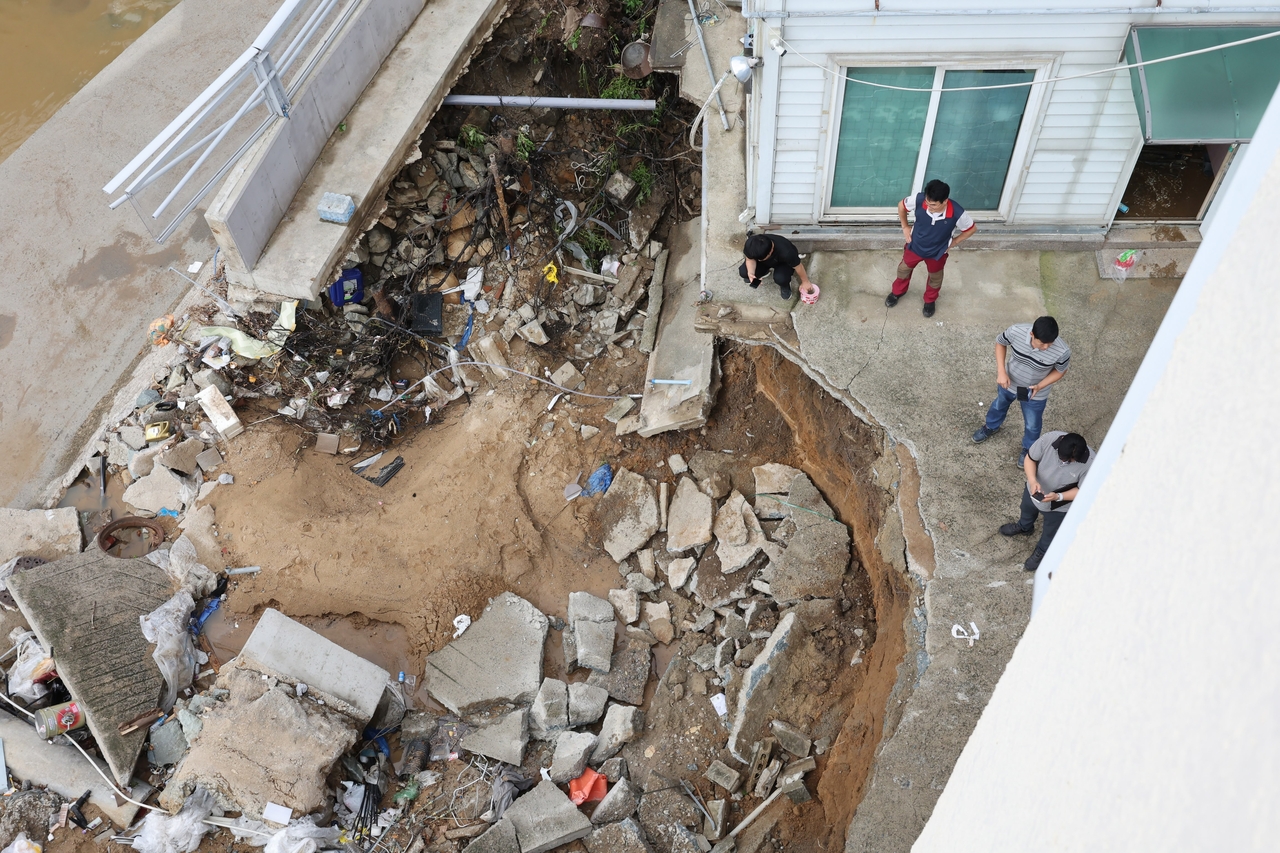
Floors collapsed, roads buckled and small businesses were gutted as torrents of water surged through homes and stores.
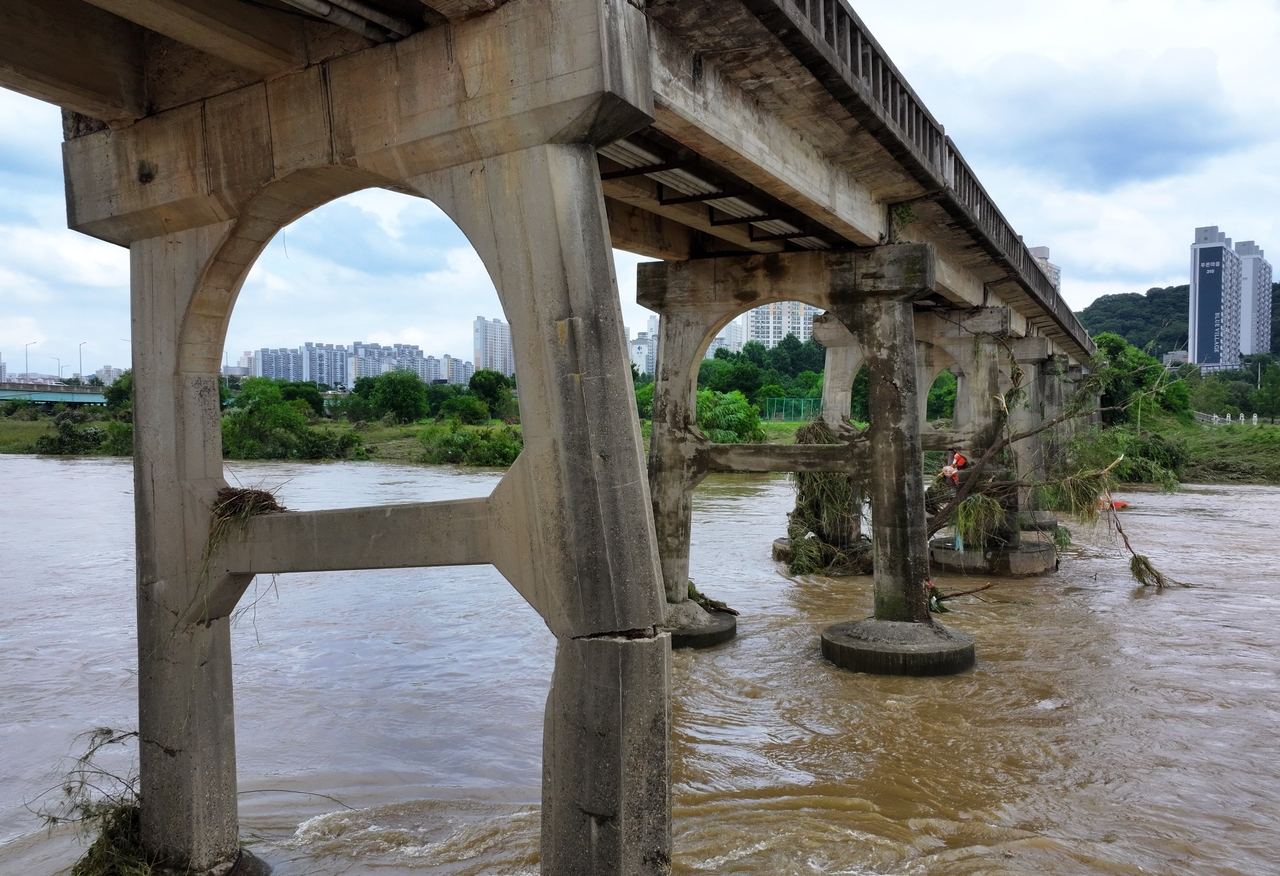
On Friday morning, residents returned to clear what they could. Restaurants were reduced to debris fields, the streets were lined with rain-drenched appliances, and the ground beneath at least one bridge had given way.
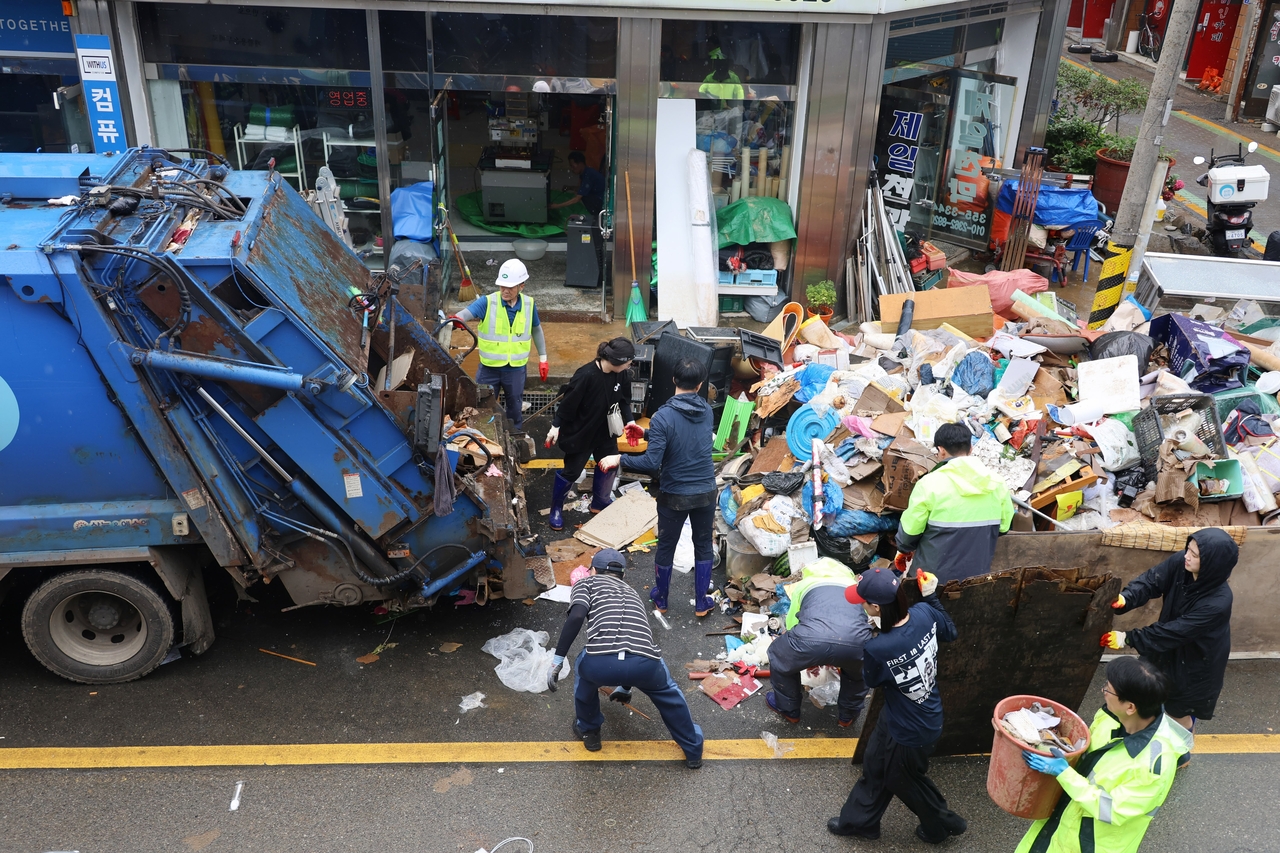
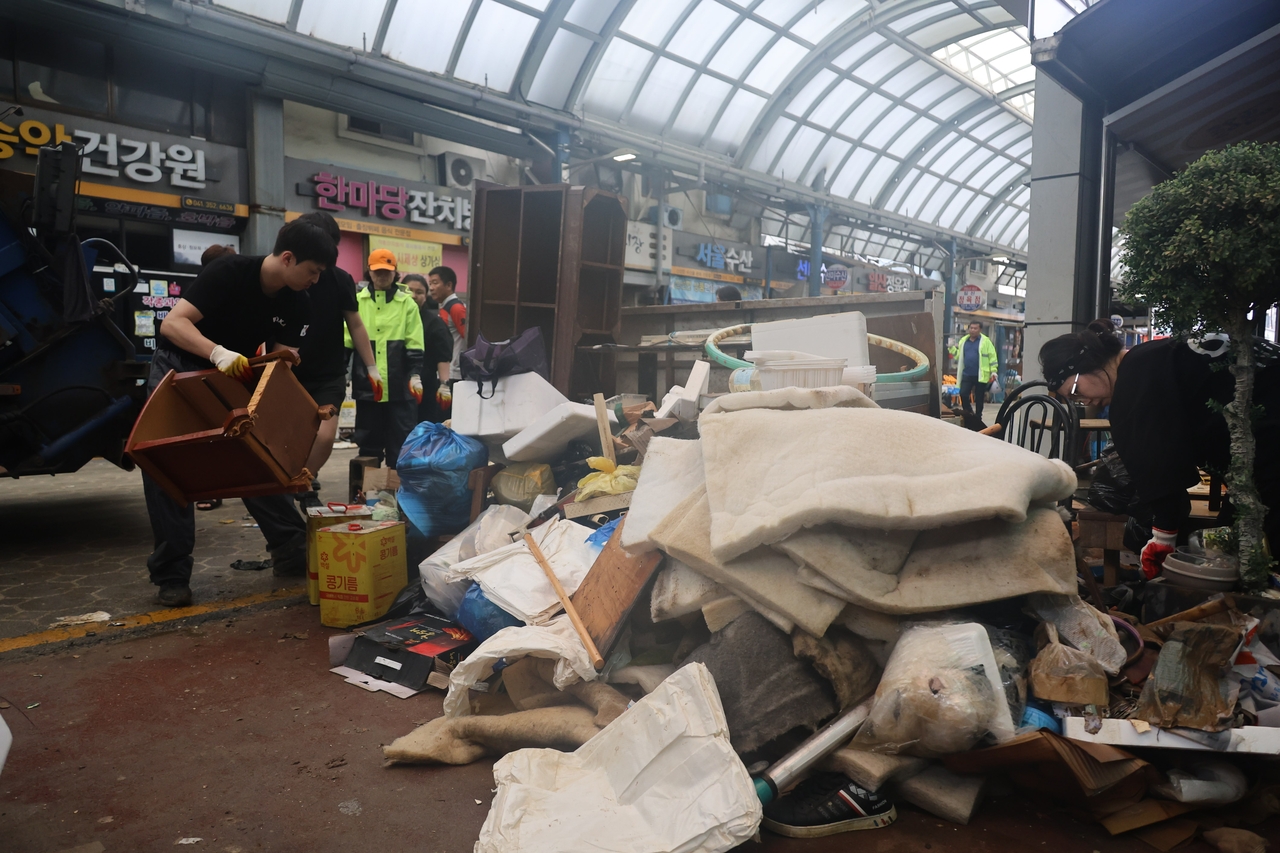
Roughly 250 kilometers northwest of Gwangju, the coastal city of Dangjin faced similar destruction. Waist-high water swept through its traditional market, submerging kitchens, medicine shops and seafood stalls.
At daybreak on Friday, shopkeepers were scrubbing walls and rinsing salvaged goods, but much of the damage was beyond repair. Cleanup teams included local officials, soldiers and volunteers, who worked to remove piles of contaminated waste and assist elderly evacuees.
In Seosan, also in South Chungcheong Province, more than 160 people from city offices, the military and community centers helped disinfect flooded homes in rural areas. Dozens of people remain displaced, many unable to return due to mobility issues or unsafe conditions.
The storm left a deadly mark. According to the Central Disaster and Safety Countermeasures Headquarters, four people have died and two are missing, including one person swept away near Gwangju’s Shinan Bridge. As of Friday morning, over 5,600 people across 59 cities and counties had been forced to evacuate.
The KMA has warned of additional heavy rain through Saturday, forecasting up to 300 millimeters in parts of the southern and central regions.
mjh@heraldcorp.com