
Korea needs legally binding heat-stress work stoppages to prevent further
casualties, say experts
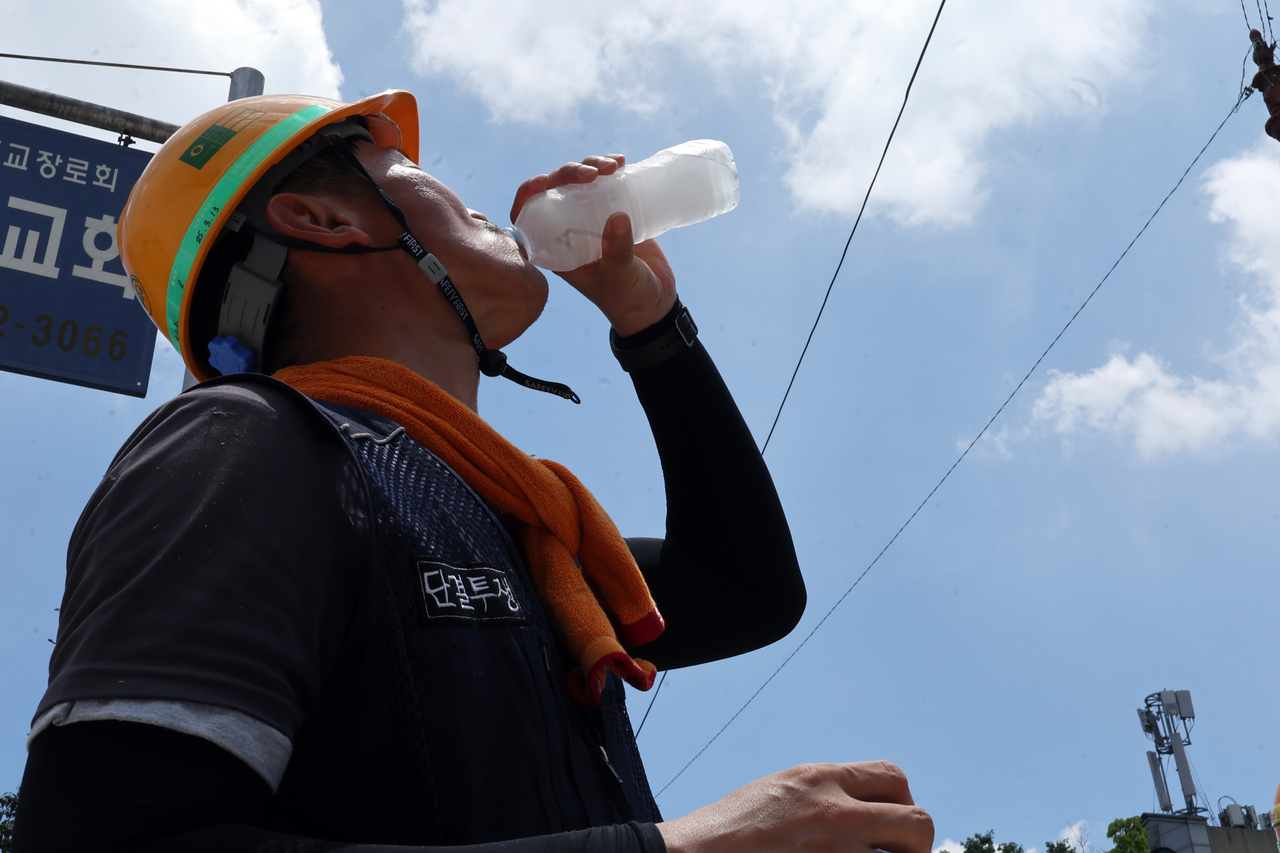
South Korea will require outdoor workers to receive at least 20 minutes of rest every two hours when apparent temperatures exceed 33 degrees Celsius from as early as next week, the Ministry of Employment and Labor said Friday.
The new rule — part of a revision to the Occupational Safety and Health Standards — was passed during a review by the Regulatory Reform Committee on Friday. It had been initially rejected in April and May over concerns that it would overburden small and medium-sized enterprises.
The revision was made following mounting criticism from labor groups and a surge in heat-related deaths among outdoor workers during the relentless and intense heat.
In recent days, more than 1,000 cases of heat-related illness have been reported — over twice the number recorded during the same period last year — as record-high temperatures grip the country.
According to the Korea Disease Control and Prevention Agency’s heat-related illness emergency room surveillance system, 1,357 patients had visited emergency rooms by Thursday due to heat-related illnesses, with nine deaths reported.
The majority of cases, comprising 28.7 percent of the total, occurred at outdoor workplaces like construction sites, where foreign laborers are also often employed.
On Monday, a Vietnamese day laborer in his 20s was found dead at an apartment complex construction site in Gumi, North Gyeongsang Province. Authorities suspect the cause of his death to be heat-related, as his body temperature was over 40 degrees Celsius when he was found. Gumi also saw daytime temperatures reach as high as 38.3 C on the same day.
On July 3, a Filipino seasonal worker in his 30s was found unconscious at a field in Yeongju, North Gyeongsang Province. The worker was immediately transported to the hospital, with medical authorities suspecting he had collapsed due to heat-related illness.
As Korea continues to break summer heat records year after year, the government has in the past emphasized three basic principles for responding to heat waves — water, shade and rest.
The Labor Ministry has also recommended that all work outdoors be suspended during heat waves — though such recommendations weren't legally binding.
Korea behind on worker heat rules
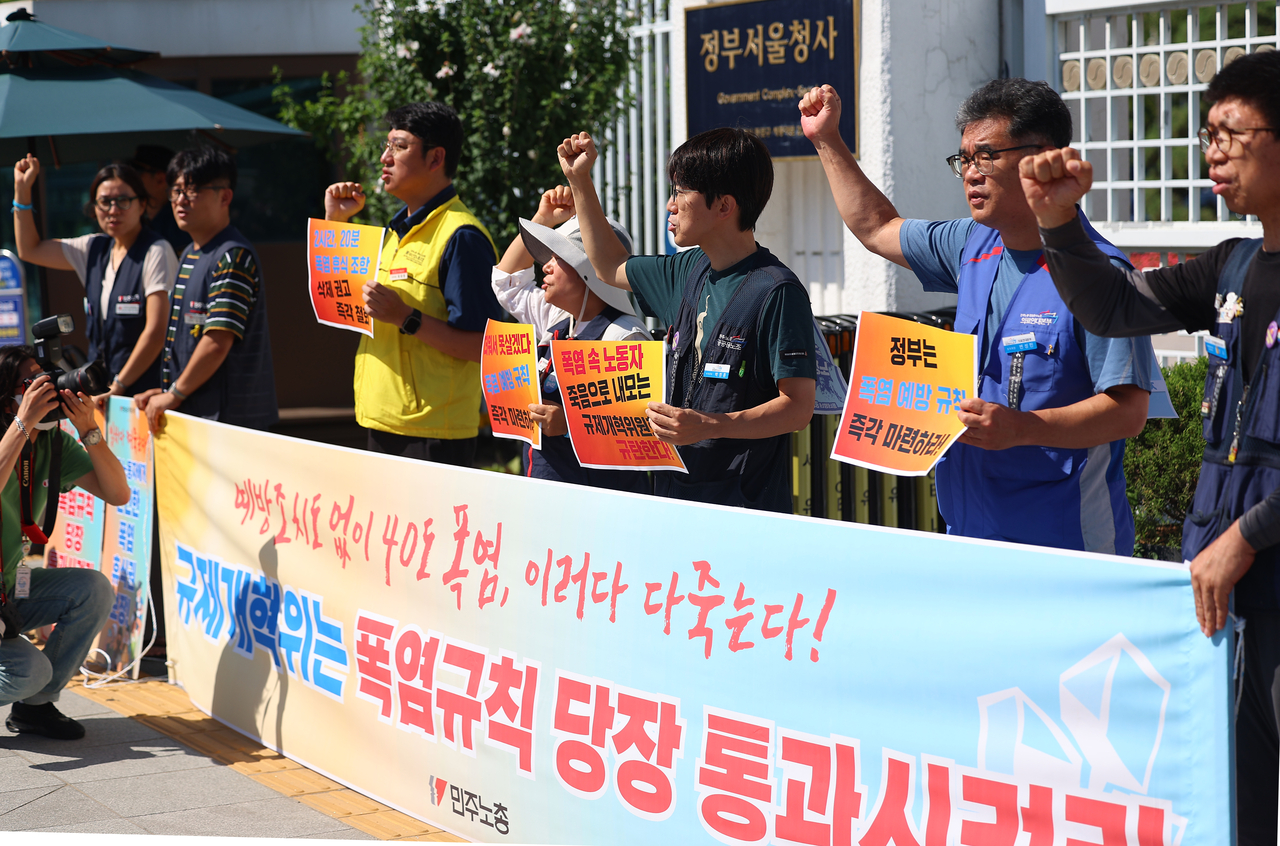
However, according to workers, such guidelines were not properly implemented.
According to a study conducted by the Korean Confederation of Trade Unions in 2024, around 15 percent of outdoor workers reported not receiving water on site and only 20 percent of respondents indicated that they had been able to stop work during heat waves.
“The problem behind Korea’s policies on working conditions for outdoor workers in summer is that they’re mere recommendations and are not legally mandated,” sociology Chung-Ang University professor Lee Byoung-hun told The Korea Herald.
“Korea needs a legislated work stoppage system based on the Wet Bulb Globe Temperature index, similar to California, to effectively respond to heat waves.”
The WBGT index mentioned by professor Lee is a measure of heat stress in direct sunlight that considers temperature, humidity, wind speed and solar radiation and is used to assess the risk of heat-related illnesses during outdoor activities.
“Although Korea is seeing record-breaking summer temperatures every year, its protective measures for those working outdoors in the heat lag significantly behind other countries,” Lee added, mentioning Greece as an example.
Greece recently saw temperatures reaching as high as 40 C, prompting the Greek government to order a temporary suspension of outdoor labor and delivery services in parts of the country, according to the Associated Press on Monday.
“Mandatory rest periods, wearing cooling vests as well as the installation of cooling equipment should be mandated by the government to make sure such working guidelines are properly implemented,” Lee added.
lee.jungjoo@heraldcorp.com