
Minimum wage agreement leaves bitter taste to both labor and management
South Korea set next year’s minimum wage through the first labor-management agreement in 17 years, a decision the presidential office pledged to respect.
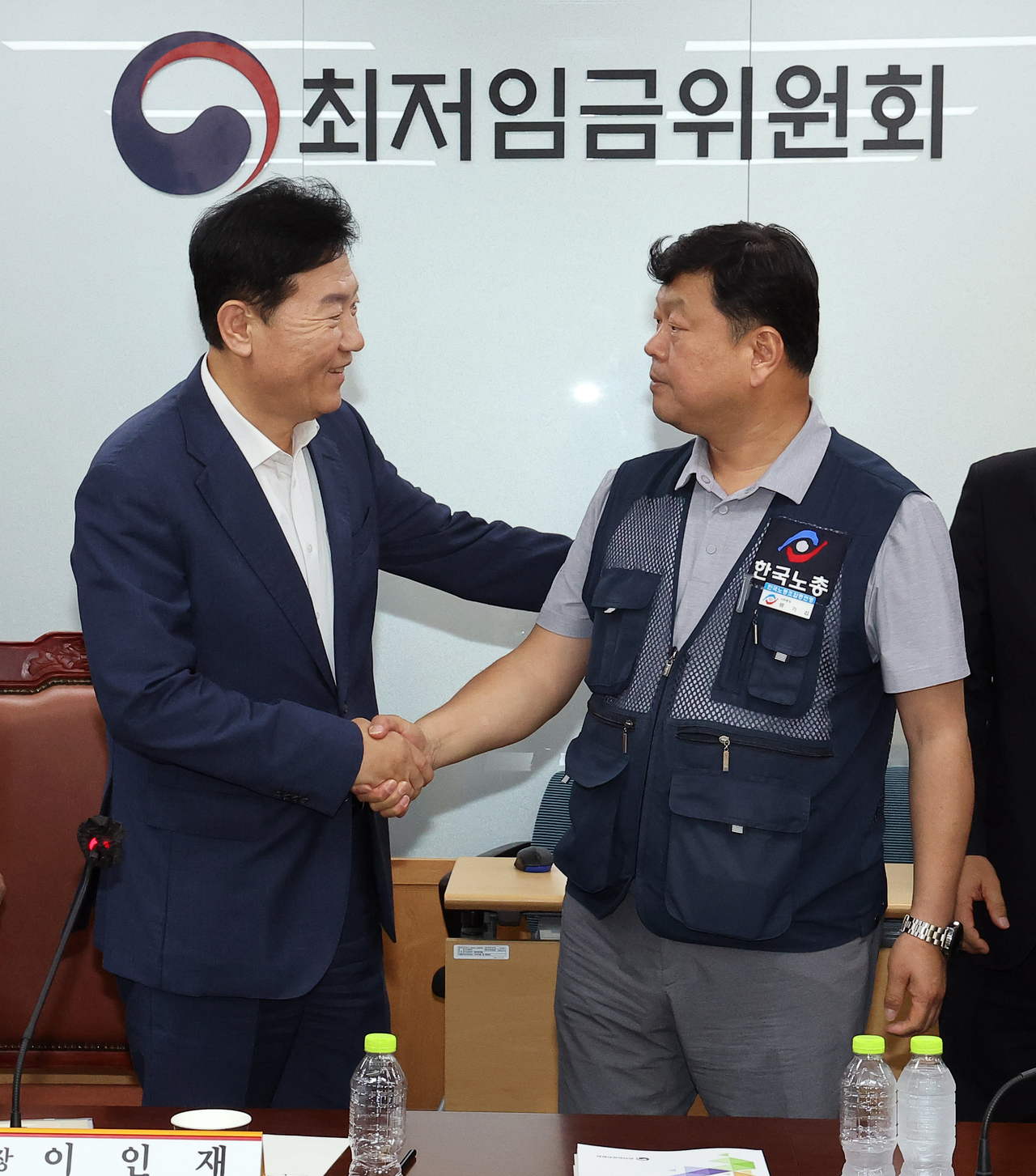
The Minimum Wage Commission decided Thursday to increase next year’s minimum wage by 2.9 percent to 10,320 won ($7.51) per hour with an agreement reached by the labor, business and the general public representatives.
This marked the first time since 2008 that the tripartite panel reached an agreement without a vote.
“As the first minimum wage agreement under Lee Jae Myung's administration was achieved through mutual understanding and concessions between labor and management, the government fully respects the decision,” the presidential office said.
Lee's office added that it will work to ensure the minimum hourly wage for next year is effectively implemented through active public outreach, guidance and supervision.
According to the presidential office, the decision was made through a comprehensive consideration of objective statistics, including the inflation rate, the circumstances of vulnerable workers and small business owners.
Though the finalized minimum wage was reached through the agreement, both labor and management expressed their disappointment.
Critics also said the minimum wage outcome was a half-baked achievement, as it was effectively determined under the leadership of public interest members who held the key to the final decision.
The Korean Confederation of Trade Unions — which represents half of the labor-side commissioners — boycotted the meeting, leaving the agreement incomplete.
The KCTU, one of the major labor umbrella groups, also stated that next year’s minimum wage falls short of covering the living expenses of low-wage workers. The KCTU added that the shortcomings revealed by the agreement remain a challenge for the Lee Jae Myung administration to address.
The KCTU insisted that the new government’s first minimum wage debate be discussed in a way that guarantees workers’ living expenses are covered by their actual earnings.
The management panel, which maintained its stance to freeze the minimum wage, acknowledged that reaching the agreement was not easy. But the decision was made after considering the continued slump in domestic demand and growing economic difficulties.
The Minimum Wage Commission will submit the proposal for next year’s minimum wage — finalized by 23 representatives, excluding four boycotted individuals from the labor sector — to the Ministry of Employment and Labor.
After the labor ministry confirms and officially announces the minimum wage by Aug. 5, the increased minimum wage will take effect on Jan. 1, 2026.
Objections can be filed either by the labor or management before the ministry’s official announcement. If the labor ministry deems any objection reasonable, it may request a reconsideration by the Minimum Wage Commission.
sj_lee@heraldcorp.com