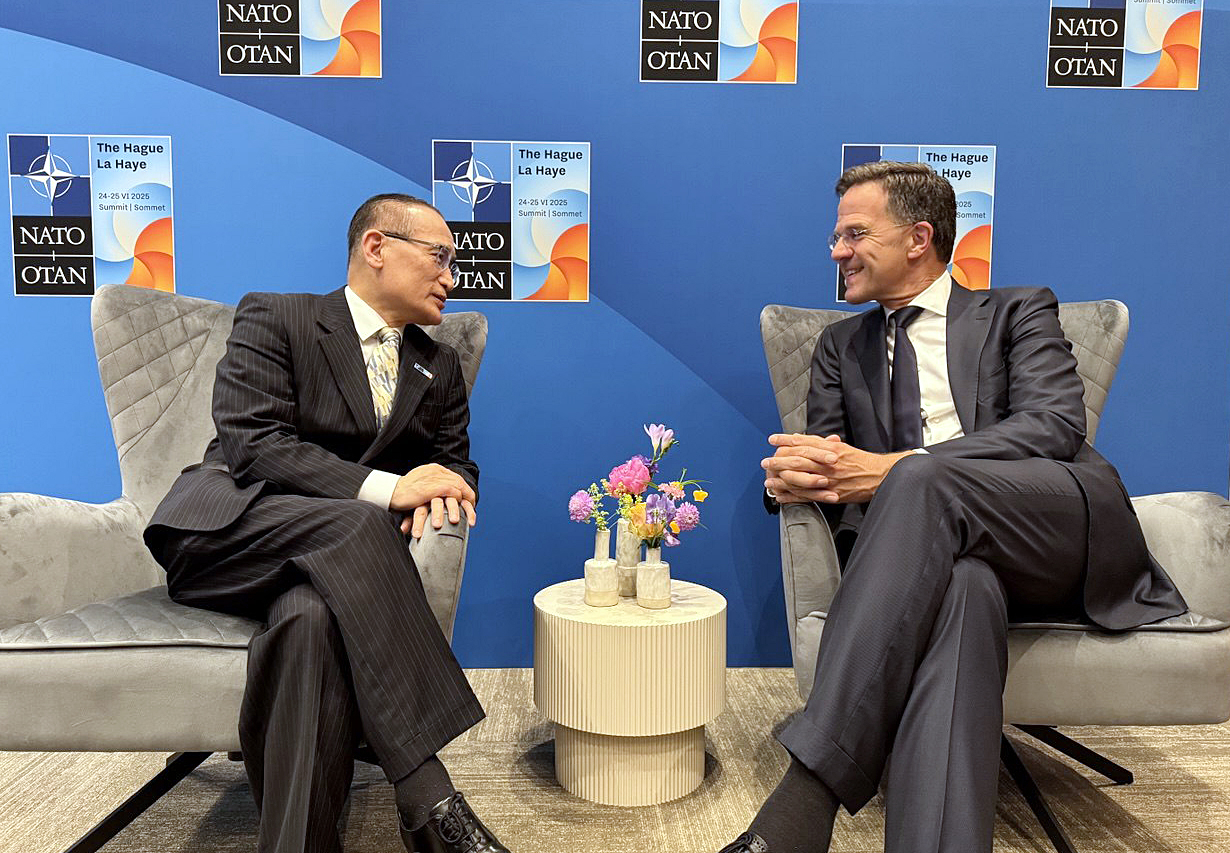
South Korea should utilize its military manufacturing firms to navigate new security challenges and shifting demands posed by the latest NATO defense spending agreement, a think tank said Monday.
“With NATO members now committed to raising defense spending to 5 percent of GDP, demand for advanced weapons systems and defense technology is set to rise sharply,” the Asan Institute for Policy Studies said in its report, “Managing Decline? NATO’s Uneasy Future After the 2025 Summit."
“South Korea’s defense sector, which has seen rapid growth in recent years, is well-positioned to meet this demand,” it added.
The think tank pointed to growing arms demand from Europe, coupled with the NATO allies’ plans to replenish stockpiles, upgrade their capabilities and diversify suppliers to counter evolving security threats as new opportunities for the local defense industry.
“To fully capitalize on these opportunities, South Korea should treat defense industry cooperation not simply as a commercial venture but as a core pillar of its broader security and alliance strategy,” the report highlighted.
“By aligning defense exports with NATO’s evolving priorities and actively engaging in mechanisms like the consultative group, South Korea can help bolster transatlantic defense resilience while simultaneously advancing its own national security and economic interests.”
The report comes as South Korea faces pressure from the US to align with the NATO members’ latest decision to raise defense and security spending to 5 percent of gross domestic product by 2035. South Korea's defense budget this year stands at around 61.2 trillion won ($44.6 billion), which is 2.32 percent of its GDP, according to Seoul's defense ministry.
“Rather than viewing NATO solely through the lens of symbolic partnership, South Korea should approach its cooperation with NATO, particularly the IP4, as part of a broader effort to diversify partnerships, manage alliance dependencies, and contribute to global security frameworks in areas where it holds comparative advantages,” the report said. “Defense industry cooperation, in particular, offers a practical avenue to advance this strategy.”
Meanwhile, South Korea’s arms exports fell to $9.5 billion last year after hitting a record high of $17.3 billion in 2022 and sliding to $13.5 billion in 2023.
mkjung@heraldcorp.com