
New report urges mega sandbox reforms, reshoring of fabs, $6tr Korea-Japan bloc to unlock new growth engines

South Korea needs to attract 5 million highly-skilled foreign professionals and forge an economic alliance with Japan to tackle its demographic headwinds and counter rising trade protectionism, the Korea Chamber of Commerce and Industry proposed Wednesday.
In a policy booklet roughly translates to "New Order, New Growth" delivered Tuesday to the government, parliament, and presidential office, the business lobby outlined structural fixes to help Korea escape the trap of slowing growth and a shrinking labor force.
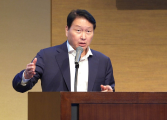
“This is a time when growth is more necessary than ever. The global landscape is shifting dramatically, and the Korean economy, having failed to bring about lasting change, now faces the risk of zero growth,” wrote Chey Tae-won, chairman of SK Group and KCCI, in the booklet’s preface.
“We must work with the new government to build future growth engines for the Korean economy. It’s essential to find actionable solutions to reduce high costs by joining hands with global partners.”
The proposal comes as the Lee Jae Myung administration works to finalize its national policy roadmap, with input from a new planning committee that is actively soliciting feedback from business and civil society.
Among Korea’s most pressing structural concerns is a declining working-age population coupled with a limited domestic market. The KCCI argued this can be alleviated by attracting skilled talent from countries such as Vietnam, Indonesia and Malaysia.
Beyond addressing labor shortages, an influx of foreign professionals could be expected to stimulate consumption and increase tax revenues.
Supporting this approach, studies cited in the proposal showed that a 3 percent increase in skilled and unskilled foreign labor leads to GDP growth of 1.46 percent and 0.85 percent, respectively, in the US, with comparable figures in Japan, underscoring the economic benefits of immigration.
The plan recommends visa reforms inspired by Germany’s Green Card system tailored for IT professionals, along with family friendly settlement policies.
It also proposed reshoring major overseas semiconductor fabs to Korea to attract highly skilled workers on a large scale.
In tandem with immigration, the KCCI urges Korea to deepen economic cooperation with Japan, a nation grappling with similar demographic and industrial challenges.
The report argues that aligning the two economies could create a $6 trillion economic bloc, eclipsing Germany and positioning Korea and Japan as global rule-makers in trade and regulatory standards.
“If Korea and Japan become each other’s second-largest domestic market, they can enjoy productivity gains even in aging societies,” the report said.
Joint LNG procurement and coordinated production networks spanning Asia, the US, and the EU could lower costs and enhance competitiveness.
The proposal envisioned an emerging Asian economic zone — including Korea, Japan, and other developing countries that could grow to $47.7 trillion by 2030, becoming the world’s largest economic region, 1.3 times the size of the US economy.
The booklet also called for a fundamental shift away from Korea’s longstanding dependence on goods exports, which have fueled remarkable growth -- over 10,000 percent in GDP over 70 years -- but are now hampered by shrinking profit margins and rising protectionism.
Manufacturing profitability has steeply declined, with net income per 10,000 won ($7.35) in sales dropping from 830 won in 1995 to just 320 won in 2024, reflecting structural challenges in the sector.
To counter this, the KCCI advocated boosting service exports and primary income through strategic overseas investments, pointing to Japan’s returns from foreign assets and the UK’s robust service economy as benchmarks.
One example the group suggested was the industrialization of Korean food and culture exports, including recipe licensing, cooking classes, kitchenware, and interior design, aiming to capture untapped non-tariff export value and open new global markets.
To implement these changes, the KCCI proposed expanding Korea’s regulatory sandbox into a “mega sandbox” model. This framework would offer wide-ranging regulatory exemptions, aggressive private sector incentives, talent matching platforms and global-standard living conditions to attract and retain top international talent.
The 250-page report was compiled by 13 experts, ranging from think tank researchers and law professors to industry consultants, including Kim Chang-wook, Boston Consulting Group’s semiconductor lead in Korea, Suh Dong-hyun, economist at the Bank of Korea, and Kwon Seok-joon, a chemical and polymer engineering professor at Sungkyunkwan University.
hnpark@heraldcorp.com


![[Exclusive] Ateez to return in November](https://wimg.heraldcorp.com/news/cms/2026/09/02/news-p.v1.20260902.76162fb0ba55493aad1c076f240d0750_R.jpg?type=h&h=120)