The US Federal Reserve on Wednesday held its benchmark interest rate steady and continued to project two rate cuts this year, as it remains in a wait-and-see mode to assess the impact of President Donald Trump's tariff policies and the deepening Israel-Iran conflict.
Following the two-day Federal Open Market Committee meeting, the central bank decided to keep the key rate at the 4.25-4.50 percent range, as Trump has been ratcheting up pressure on Fed Chair Jerome Powell to lower the rate.
FOMC members' new median economic projection showed the federal funds rate would be cut to 3.9 percent at the end of the year -- the same as the March projection. But it forecasts the rate would be reduced to 3.6 percent at the end of next year, 0.2 percentage points higher than the previous forecast.
The Fed also projects the United States' gross domestic product to grow by 1.4 percent this year, down from 1.7 percent projected in March.
In addition, the median projection indicated that Personal Consumption Expenditures inflation could reach 3 percent at the end of the year, higher than the March forecast of 2.7 percent. PCE is a measure of household consumer spending on goods and services in the US.
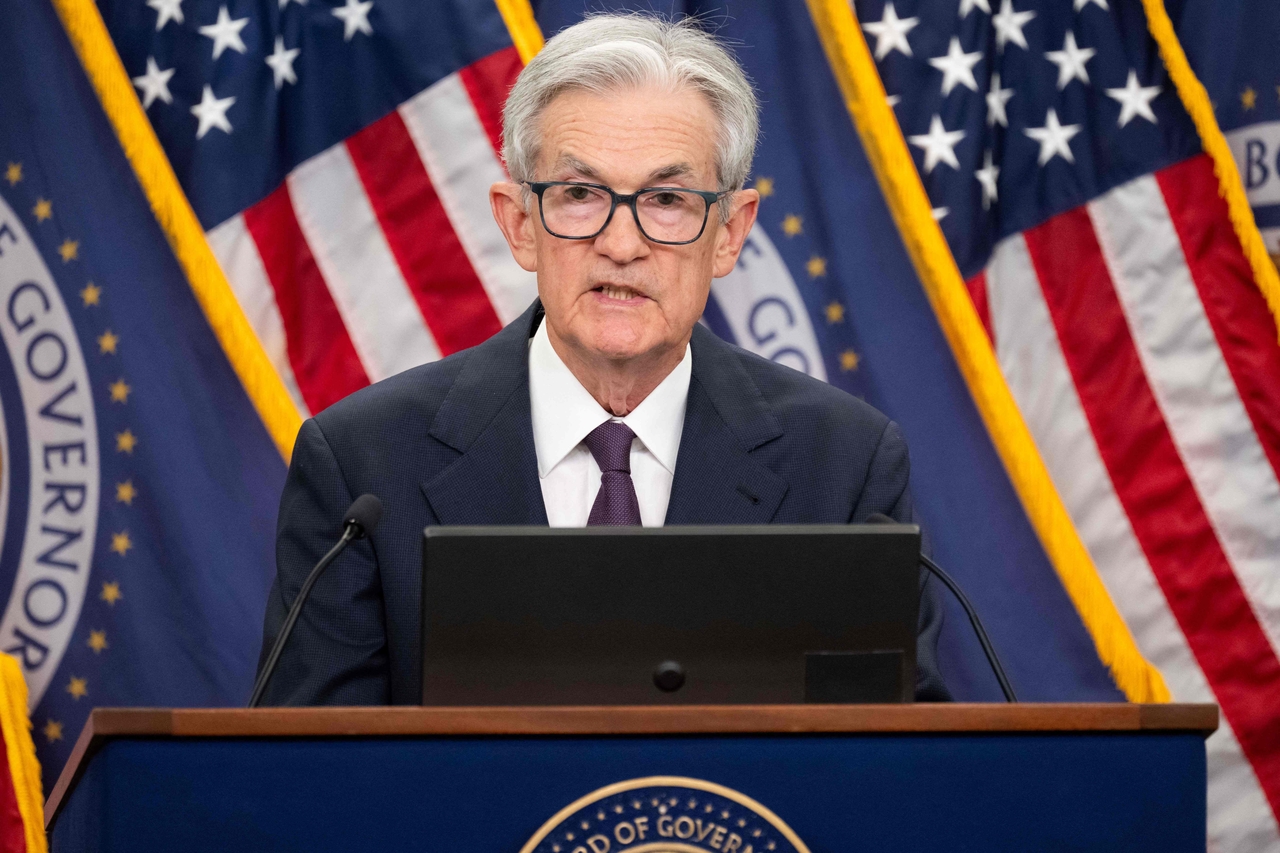
During a press conference, the Fed chair noted that uncertainty stemming from Trump's tariff policies has diminished, but remains elevated.
"Uncertainty really peaked in April, and since then has come down," he said, referring to the period in April when Trump rolled out steep "reciprocal" tariffs, including 25 percent duties on South Korea, only to pause them until July 8 to allow for negotiations.
He pointed out that increases in tariffs this year are likely to push up prices and weigh on economic activity.
"The effects (of the tariffs) on inflation could be short-lived, reflecting a one-time shift in the price level. It's also possible that the inflationary effects could instead be more persistent," he said.
"Avoiding that outcome will depend on the size of the tariff effects, on how long it takes for them to pass through fully in the prices, and ultimately on keeping longer-term inflation expectations well anchored."
He also stressed that the size of tariff effects and their duration are "highly uncertain."
"That is why we think the appropriate thing to do is to hold where we are as we learn more," he said. "And we think our policy stance is in a good place where we're well positioned to react to incoming developments."
Moreover, Powell addressed a question about Trump's criticism of him and whether it should be ignored until his term ends in May next year, or if it could affect the economic outlook going forward.
"My standpoint is (that) it's not complicated. What everybody on the FOMC wants is a good, solid American economy with strong labor market and price stability ... I think our policy is well-positioned right now to deliver that and to be able to respond in a timely way as the data lead us around," he said.
"The economy has been resilient, and part of that is our stance."
During a press availability hours ahead of the rate decision, Trump criticized Powell as a "stupid person," arguing that the borrowing rate should be at least 2 percentage points lower.
The Fed paused rate cuts in January, March and last month following a quarter percentage point reduction in December.
This week's rate decision has widened the gap between the key rates of South Korea and the United States at up to 2 percentage points. (Yonhap)