
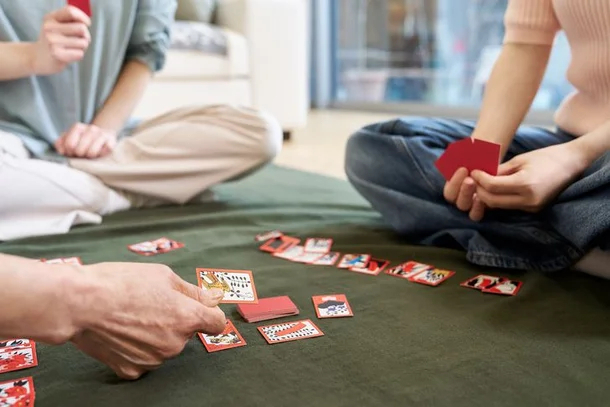
A man in his 60s who was indicted on gambling charges for playing “go-stop”, a traditional Korean card game with cash bets, has been acquitted, a local court said Monday.
In April last year, the 69-year-old man joined three neighbors in a round of go-stop at an apartment in Gunsan, North Jeolla Province, wagering 100 won, about 7 cents, per point.
In go-stop, played with hwatu, flower-themed cards of Japanese origin, players earn points by collecting combinations of cards categorized into groups such as bright, ribbon, animal and junk. Once a player reaches at least three points, they must choose whether to call “go” to continue for higher stakes or “stop” to end the game and take their earnings.
In the game in question, the total pot came to 108,400 won ($79.30). The players had agreed beforehand that the winner would use part of the winnings to buy fried chicken and beer for everyone.
However, just 15 minutes into the game, they were caught by police, who were responding to a neighbour's complaint about gambling, the and the case was referred to the prosecution.
The Jeonju District Court, upholding a lower court’s decision, ruled the men not guilty. The court said the game did not constitute serious gambling, noting the minimal stakes, short duration, and social nature of the gathering, which did not appear designed for personal profit.
While gambling is illegal in South Korea, the line between unlawful betting and recreational play remains blurry. Small-stakes games for socializing or leisure have long been a part of everyday life. During family gatherings, it's not uncommon to see relatives playing go-stop, wagering modest sums that often end up as pocket money for children.
In public spaces popular among seniors — such as Tapgol Park in Jongno, central Seoul — elderly men can frequently be seen stacking coins as they play baduk, or Korean chess, highlighting the cultural nuance between casual pastime and prosecutable offense.
cjh@heraldcorp.com