

Seoul Station Square to be designated as no-smoking zone from June
The rate of exposure to secondhand smoke in indoor spaces in South Korea rose in 2023 after falling for three consecutive years, according to a report released by the Korea Disease Control and Prevention Agency, Thursday.
Secondhand smoke, as defined by the governmental agency, refers to individuals inhaling smoke from someone else’s cigarette or e-cigarette. As cigarette smoke contains carcinogenic and other harmful substances, secondhand smoke can contribute to “early death in non-smokers,” the KDCA said.
According to the KDCA, the rate of exposure to secondhand smoke in indoor public spaces and indoor workspaces in 2023 was 8.6 percent and 8 percent, respectively.
For both indoor public spaces and workspaces, the exposure rate of secondhand smoke fell from 2020 to 2022.
After the exposure rate for indoor workspaces reached 14.1 percent in 2019, it decreased to 10.3 percent in 2020 and 6.3 percent in 2022.
For indoor public spaces, the rate was also highest in 2019 at 18.3 percent. Before decreasing to 12 percent in 2020 and 7.4 percent in 2022. The rate for 2023 was 8.6 percent.
Although the household exposure rate was relatively low, the KDCA noted that it followed the same trend. While it had recorded up to 4.7 percent in 2019, it had decreased to 2.6 percent in 2022, before rising again to 3 percent in 2023.
Ahead of World No Tobacco Day, the Ministry of Health and Welfare stated that it will work to “support all revisions and implementations of laws related to regulating all types of tobacco, including new kinds such as e-cigarettes.”
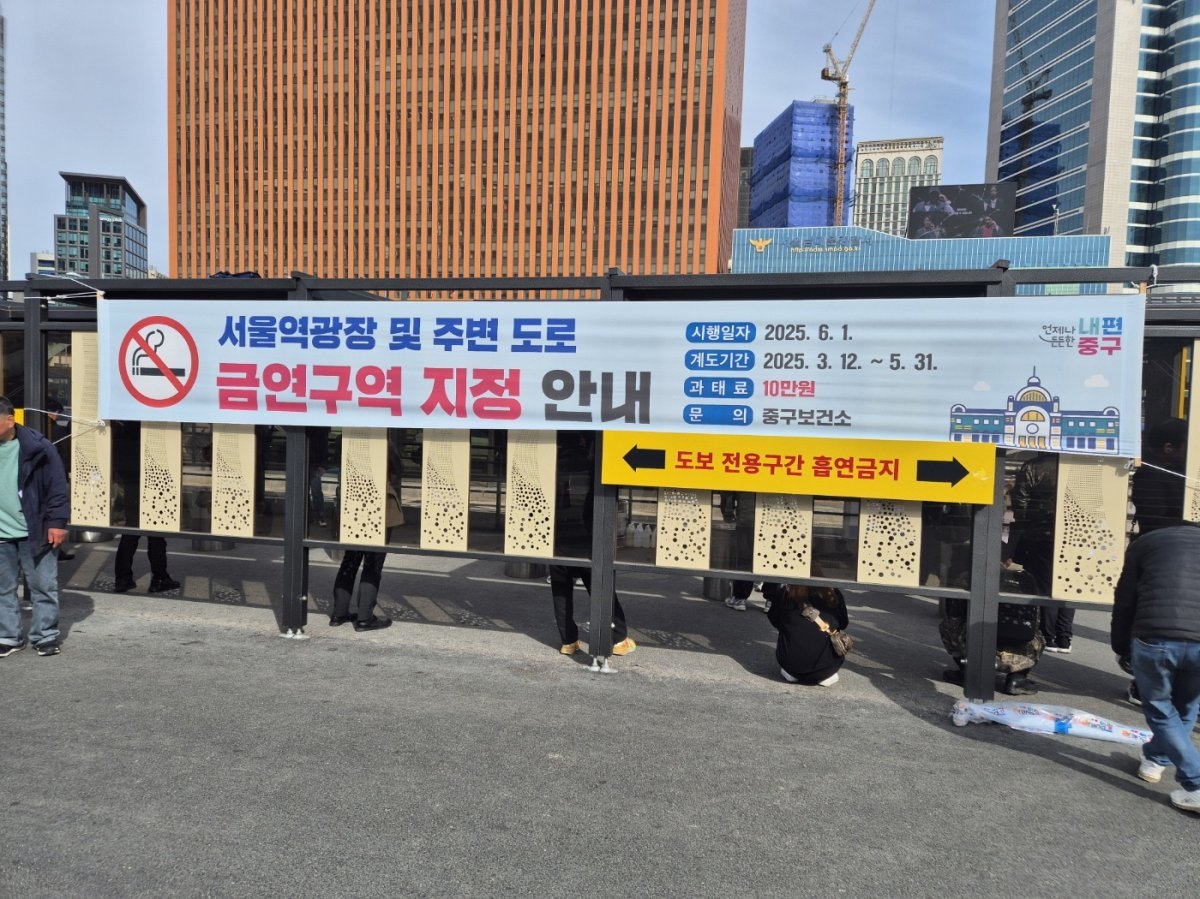
In relation to the government’s stance, Seoul Station Square in Jung-gu, central Seoul, will be designated as a non-smoking zone from June 1.
From June, smokers will be required to use the smoking booths located around Seoul Station Square and those who are caught not abiding by this new rule will be fined up to 100,000 won ($73).
lee.jungjoo@heraldcorp.com