

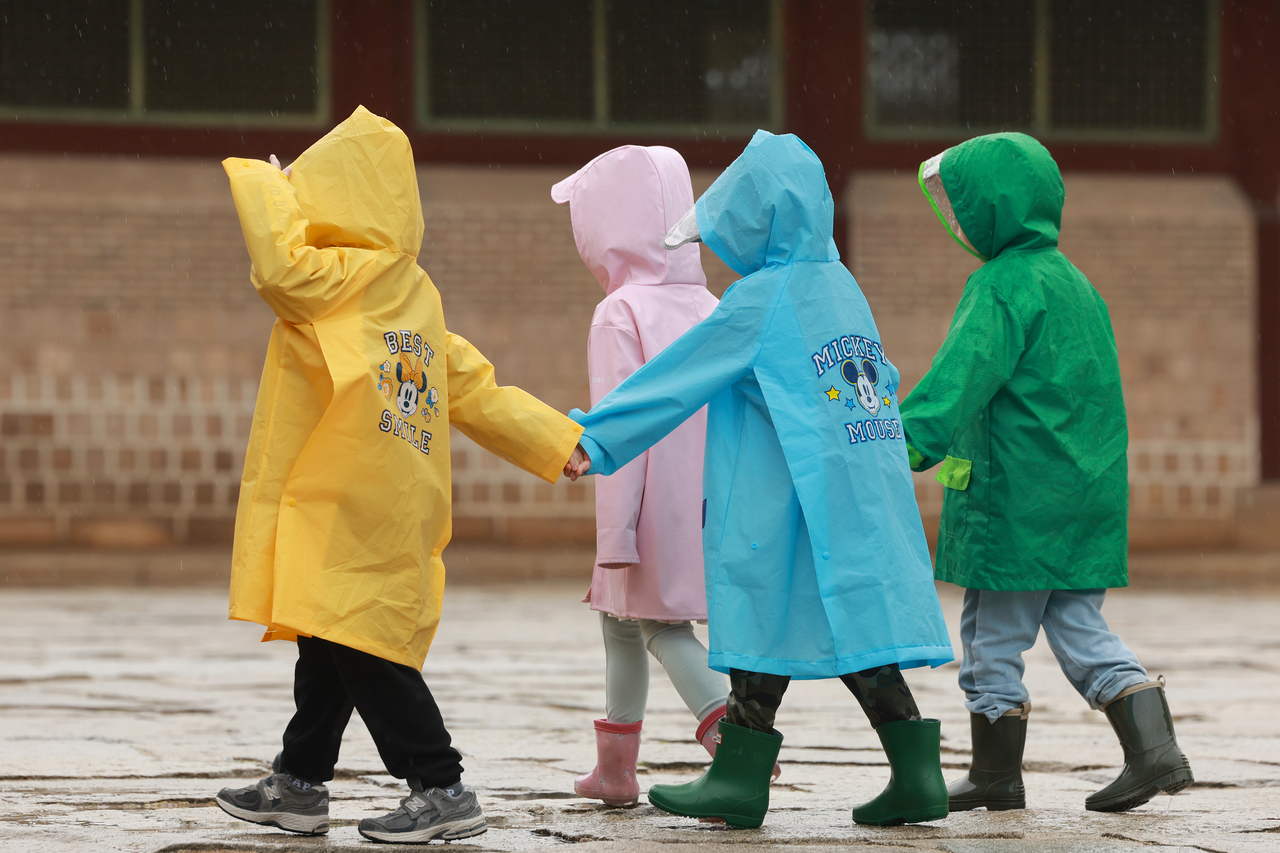
Though the level of happiness among South Korean children has shown general improvement, the gap in happiness based on socioeconomic background factors, such as household income, remains.
According to the “Happiness Disparities among Korean Children” report published by the Korea Institute for Health and Social Affairs, the average life satisfaction score of Korean children in 2023 was 7.14 out of 10. The score was calculated based on a survey taken every five years, targeting children between the ages of 9 and 17.
KIHASA added that a steady increase in these scores had been noted among children over the years. Though the average life satisfaction score was marked as 6.10 in 2013, when the survey was first taken, it had increased slightly to 6.57 by 2018.
However, the institute noted that Korean children's happiness levels differed depending on their household income.
For nonimpoverished children in families earning a median income of 50 percent higher or more, their average life satisfaction score was 7.19 out of 10 in 2023. For impoverished children in families earning a median income of less than 50 percent, their average life satisfaction score was 6.20 points out of 10 in 2023.
Although overall happiness levels steadily increased in 2023 for both impoverished and nonimpoverished children, those from low-income households consistently reported life satisfaction scores 1 to 1.5 points lower than their more affluent peers.
The difference in scores was because children from lower-income families tended to give relatively higher scores on questions measuring their scale of depression and anxiety, while giving relatively lower scores on questions asking about their satisfaction with life and measuring their scale of happiness.
According to KIHASA, children’s happiness also showed differences based on family structure. For children raised by grandparents or in single-parent households, their satisfaction score in 2023 was placed at 6.33 out of 10, while children coming from typical households with both parents present saw life satisfaction scores of 7.26 in 2023.
“The fact that a gap exists in happiness levels among children from different socioeconomic classes shows that simply raising the average level of happiness among children is not enough to achieve equity in children’s happiness,” said KIHASA researcher Yoo Min-sang. “To achieve equity in happiness levels of all children, the focus of policies targeting children’s life satisfaction levels should be shifted from generally increasing the level of happiness to reducing disparities depending on socioeconomic class.”
lee.jungjoo@heraldcorp.com