The Constitutional Court of Korea on Thursday dismissed the National Assembly’s impeachment motion against Justice Minister Park Sung-jae, saying it found no evidence of him aiding former President Yoon Suk Yeol in his martial law imposition.
Park’s impeachment was dismissed in an 8-0 decision by the Constitutional Court. The verdict came 119 days after the impeachment motion was submitted to the court by the National Assembly.
Though acting President Han Duck-soo appointed Ma Eun-hyuk as the ninth justice -- completing the nine-member bench of the Constitutional Court -- on Tuesday, Ma was not involved in the ruling as the formal hearing of the trial came to an end prior to his appointment.
The court announced there was no evidence or objective material to back the Assembly’s accusation that Park aided Yoon’s martial law imposition.
It also stated that a gathering that took place at the presidential safe house after martial law was lifted could not be judged as Park being involved in discussing legal measures and follow-up strategies related to the insurrection.
The National Assembly previously suspended the justice minister for not opposing Yoon's martial law declaration during a Cabinet meeting that was convened on the night of Dec. 3. He was accused of allegedly planning follow-up measures for the martial law decree with former Interior Minister Lee Sang-min at a presidential safe house the following day, including the establishment of detention facilities to hold lawmakers when martial law was declared.
In the first formal hearing of his impeachment trial on March 18, Park denied allegations linking him to the declaration of martial law, claiming he had urged the president not to proceed with the imposition. He said the gathering at the safe house was simply a meeting with acquaintances and insisted that martial law-related measures were never discussed.
The Assembly also argued that Park — who oversees the prosecution service — refused its request to submit detailed records on the prosecution's use of special activity funds, asserting that the minister’s refusal constituted a violation of the Act on Testimony and Appraisal Before the National Assembly.
Another charge behind Park’s impeachment was his abrupt departure from a parliamentary plenary session in December 2024, during which lawmakers were deliberating a bill to appoint a special prosecutor to investigate multiple scandals involving former first lady Kim Keon Hee.
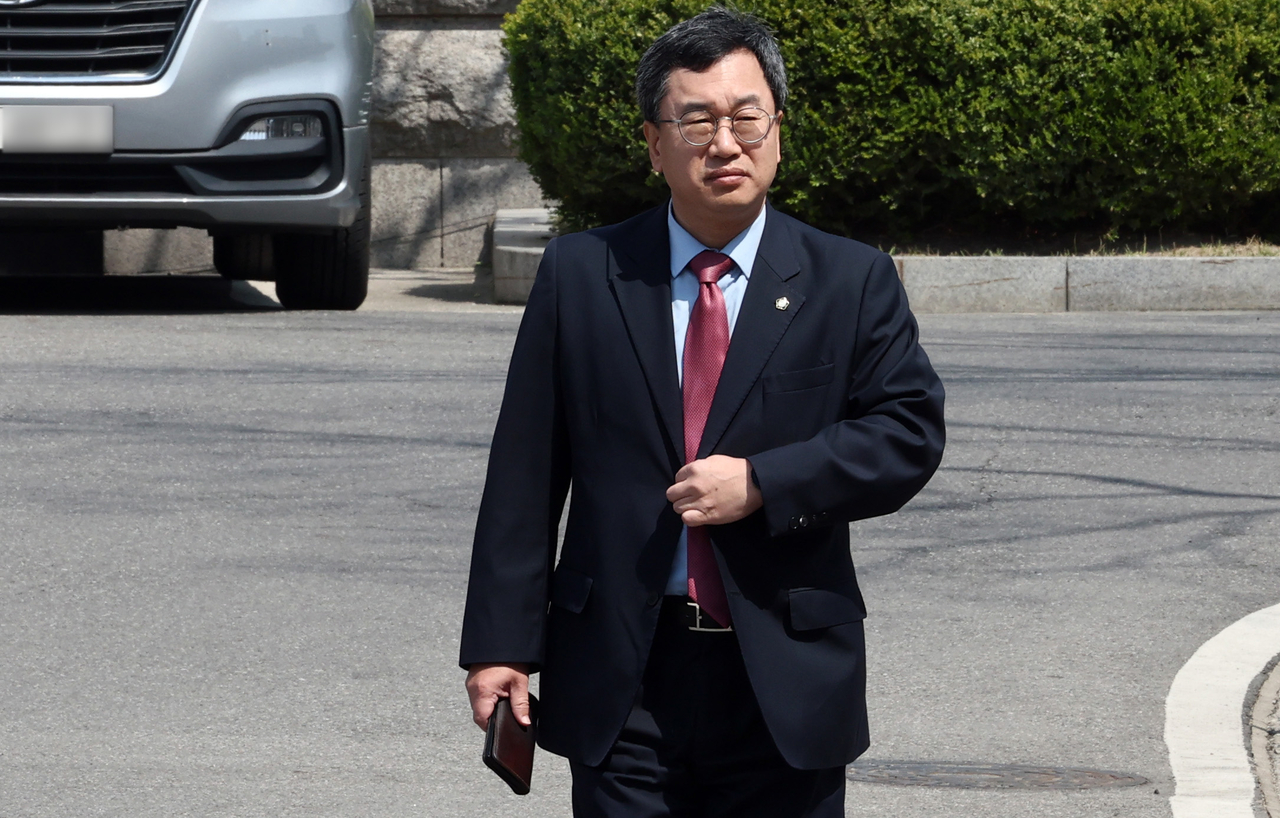
“I do not believe that I committed anything that would lead to impeachment, and I made my explanation in the hearing," the justice minister told reporters after he arrived at the ministry building in Gwacheon, Gyeonggi Province, Thursday.
"I am grateful that the court made a wise decision by considering my statements. Since I have been away from the office for a long time, I will make efforts to resume my duties as soon as possible,” Park said.
sj_lee@heraldcorp.com