'The Match' delivers as perfectly serviceable biopic, despite sidestepping deeper implications
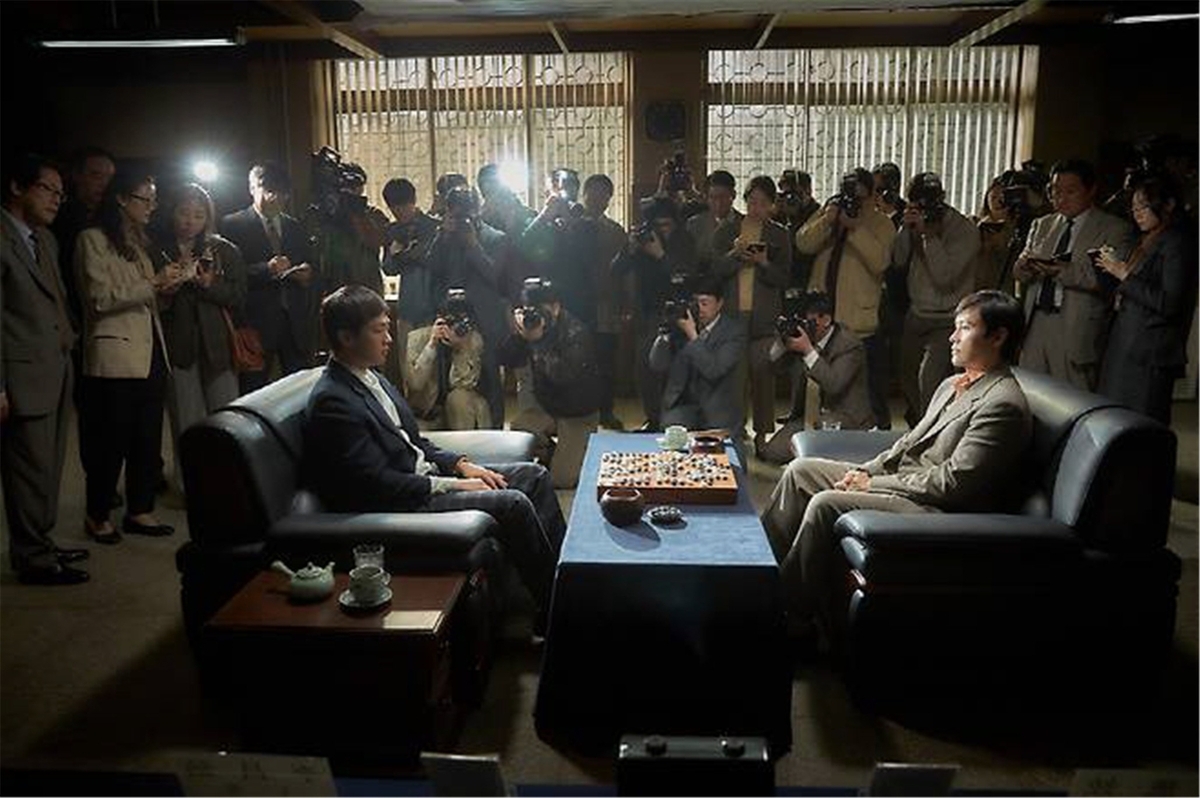
The ancient board game of Go thrives on silent conflict. Unlike its Western counterpart chess, where dramatic captures and aggressive advances define play, Go's tension lies largely beneath the surface — abstract territories and invisible formations collide as black and white stones rest peacefully on a wooden grid.
This metaphysical complexity of the game sets up director Kim Hyung-ju's central challenge in "The Match": How can a filmmaker turn a cerebral contest with minimal physical action into a spectacle worth watching?
The film answers by shifting focus from the board to the faces, examining the psychological contours of those playing the game rather than the game itself. It tells a storied tale steeped in the game's history — the real-life rivalry between Cho Hun-hyun (Lee Byung-hun), an undisputed champion at the top of his game, and his prodigious protege Lee Chang-ho (Yoo Ah-in), whom Cho brings into his home as a kind of surrogate son.
Their relationship evolves from paternal mentorship to high-stakes competition as Lee develops his own distinctive playing style that ultimately challenges, then surpasses, his master (after becoming national champion at just 14, Lee would eventually go on to become one of the greatest players in Go history).
Their contrasting temperaments and inclinations spill directly into their approaches to the game, a fact well known to followers of the sport. Cho attacks with flamboyant aggression — his bold placements and swift building of positions earned him the nickname "Swallow" — all the while disrupting opponents midgame with his constant humming and fidgeting.
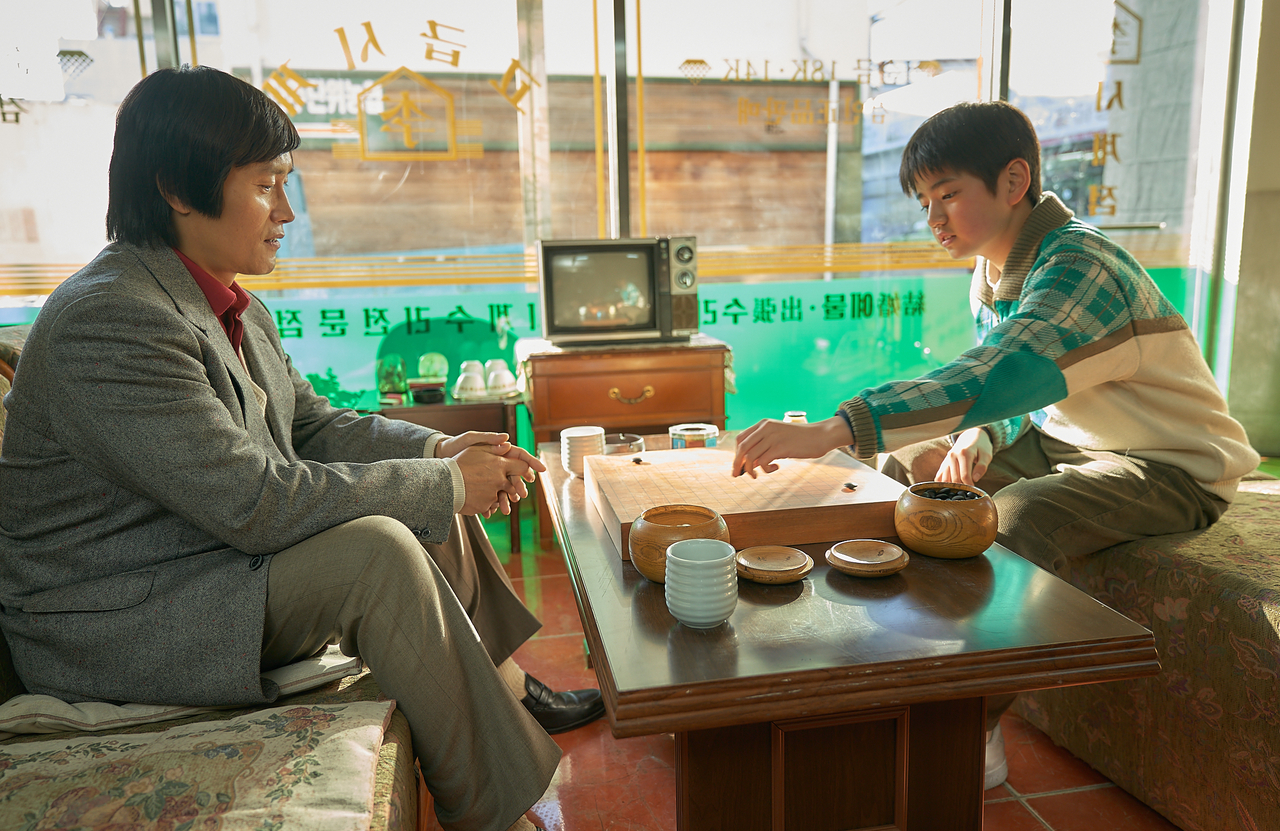
Meanwhile, Lee transforms from a brazen kid (portrayed with brilliant wit and nerve by Kim Kang-hoon) to a more reserved adult who plays with mechanical precision. His style is patient and calculating — he hangs back, letting opponents overreach before punishing them clinically. Cho initially disapproves of this strategy, but is forced to recognize its strength after suffering multiple defeats at Lee's hands.
Aesthetically speaking, "The Match" largely keeps to familiar ground.
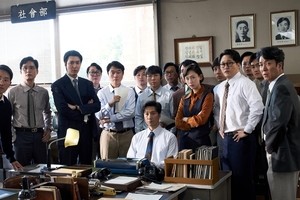
The film excels primarily as a nostalgic portrait of late-'80s Korea — from quaint neighborhood streets to the smoke-filled Go clubs where champions rose to fame — but has little visual invention to offer beyond period detail. It leans into standard techniques rather than cinematic innovation, even during the game's most charged moments.
The closest "The Match" comes to experimentation is a recurring motif of clocks — a nod to Lee's childhood in his grandfather's clock store — that serves as both psychological sanctuary and metaphor for his methodical playing style.
This playing-it-safe approach has its own merits; after all, the film reminds us that good commercial cinema needs little more than a good script and good actors who can carry it on screen. Both are present in full here, sustaining the earnest realism and sentimental humanism that has long characterized Korean cinema's most successful works.
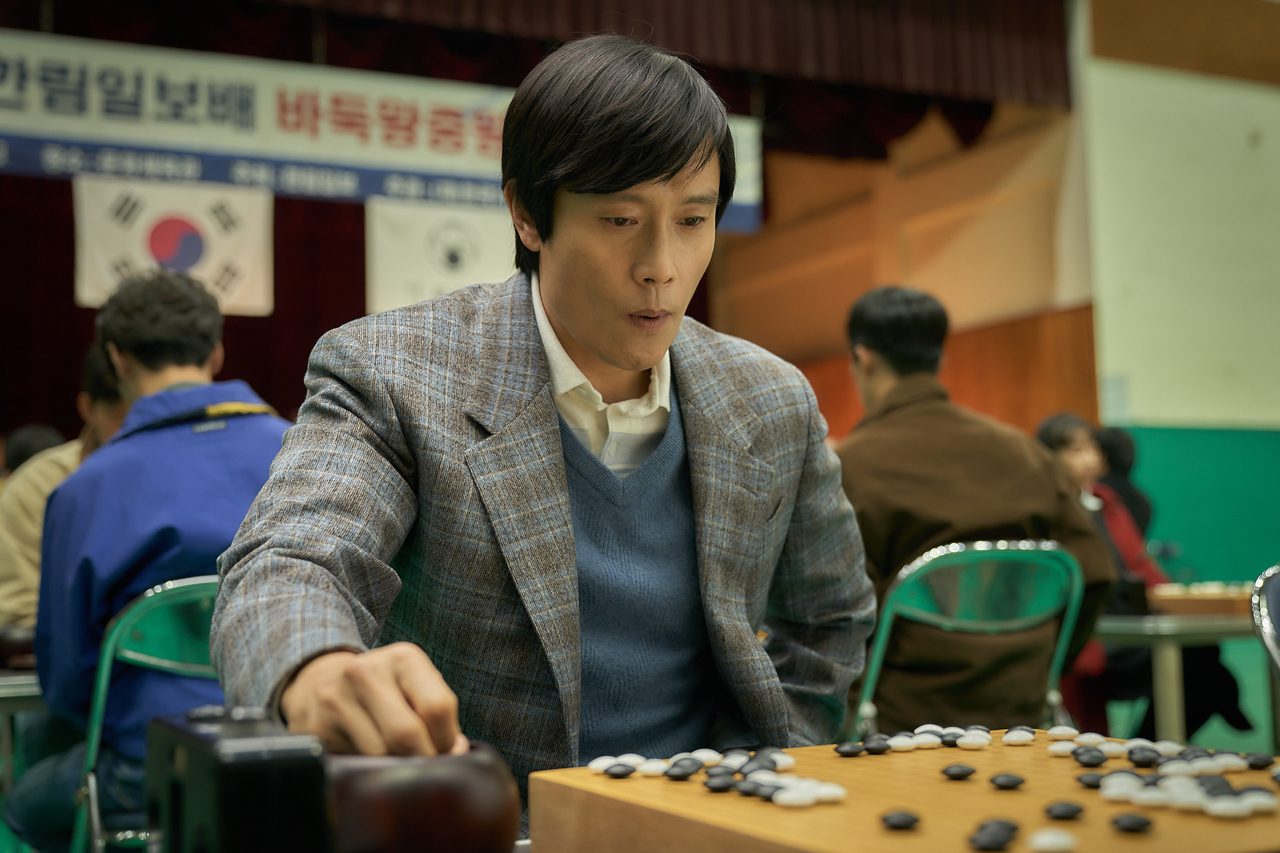
Now a household name in Korean cinema, Lee Byung-hun delivers a convincing portrayal of a man grappling with the unfamiliar disorientation of defeat after a career of dominance.
Lee's performance, steady and assured as expected from an actor of his caliber, captures the vulnerability of a man built on winning — the sudden outbursts, the sullen withdrawals, the barely contained fury of a champion dethroned. His arc from pride to humiliation to renewed determination gives the film its emotional backbone, while he also embodies the film's nostalgic appeal with his period-appropriate hairstyle and attire, instantly recognizable features of a bygone era.
But the real triumph belongs to Yoo Ah-in. Scrubbed almost entirely from the film's marketing following his legal troubles, he delivers a compelling character study of an enigmatic prodigy, in what turns out to be his most mature performance to date.
As Lee Chang-ho, Yoo suppresses the theatrical flair that defined earlier roles like 2015’s "The Throne," where he played the tormented crown prince driven to madness under royal expectations. Instead, he crafts a more nuanced portrait of simmering intensity.
Yoo's anxieties and insecurities are folded into dim expressions and deliberate, measured movements — a deeply interior performance that mirrors the actual player’s nickname: “the Stone Buddha.” The role all but demands viewers to disentangle the artist from the art, challenging, through its sheer force, the fairness of his fall from grace under Korea’s notoriously unforgiving attitude toward celebrity misdeed.
The film falters where it could have reached for something deeper — where style could have met substance in sharper ways. The central contrast in playing styles — Cho's restless aggression versus Lee's watchful restraint — is a motif rife with philosophical weight, far beyond mere strategic variation. It points to a clash of sensibilities, worldviews, even different eras, a dichotomy that could have elevated the film beyond conventional biopic if properly pursued. That rich thematic potential, however, remains disappointingly underexplored, both visually and narratively.
The chief problem here is that the board itself, unlike the animated faces around it, remains almost totally inert, failing to reflect the mental territories being claimed and abandoned therein. As a result, the game's psychological battles and the players' stylistic yin and yang never find adequate visual expression beyond what happens outside the game.
There are flickers of artistry that hint at what might have been. In one scene, a stone cracks like an egg under pressure, a faint metaphor for Cho's unraveling, but these visual effects feel incidental, not calibrated.
That compromise reveals its problems as stakes rise. In the climactic showdown between Cho and Lee — framed as the master's potential comeback after multiple defeats — the film makes the dubious choice of having an actual sports commentator (Jeong Woo-young, a Korean equivalent of Joe Buck) broadcast the match.
While clearly intended to make the game's technicalities accessible to viewers, it transforms a subtle mind game into something resembling a late-night baseball highlight reel, complete with dramatic exclamations and rising volume that feel jarringly out of place. More embarrasing are the frequent cuts to tearful spectators watching the match, a melodramatic flourish that cheapens what should be a contemplative reckoning between the two giants.
Despite missed opportunities, "The Match" delivers on the fundamentals: decent storytelling and strong performances, both rarities in today's Korean cinema. It doesn't push cinematic boundaries, but provides an engaging experience accessible to both Go enthusiasts and newcomers alike. And that's nothing to scoff at.
"The Match" is now screening in theaters nationwide.
moonkihoon@heraldcorp.com