
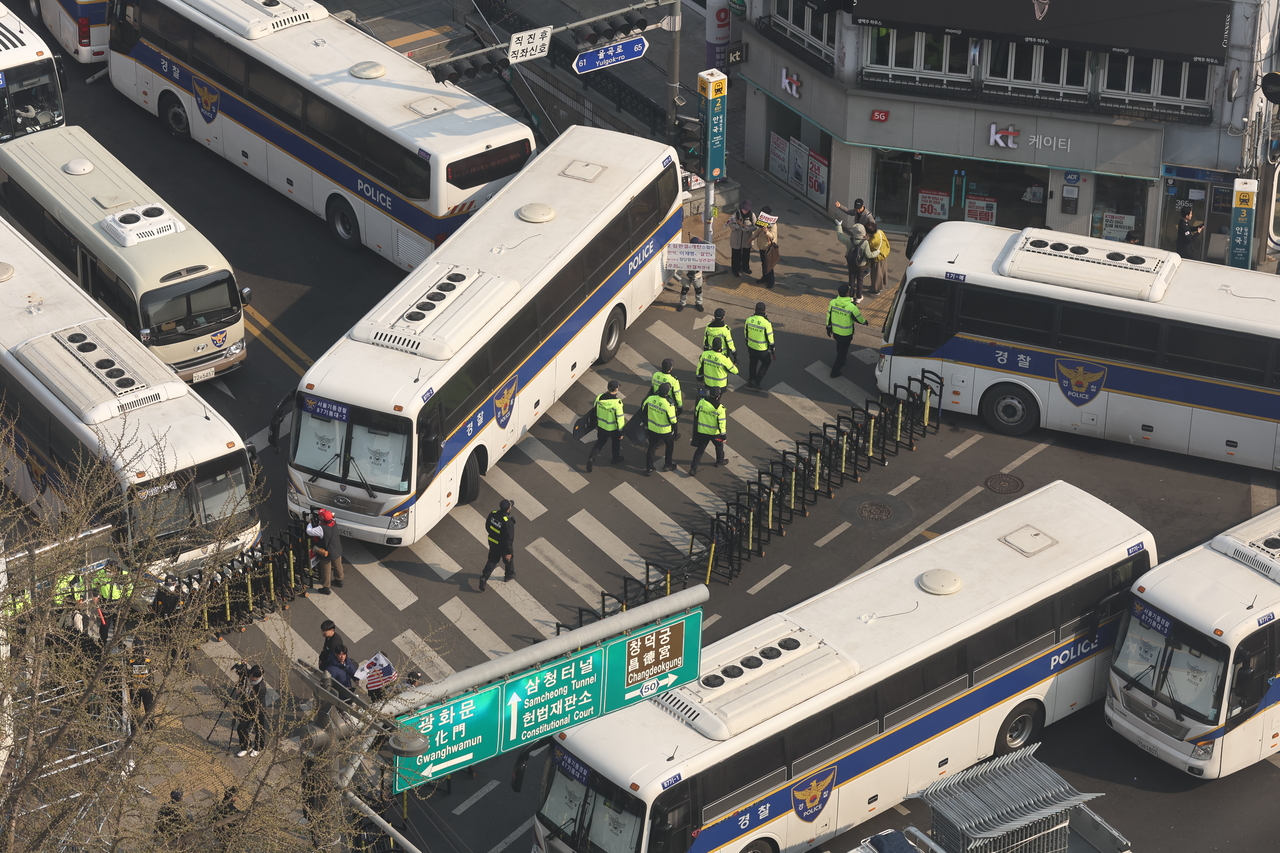
With two days left before the delivery of the historic verdict on suspended President Yoon Suk Yeol’s impeachment, authorities expanded the police bus barricade surrounding the Constitutional Court on Wednesday afternoon, as part of their “vacuum state” approach to responding to any violence or challenges to public authority.
According to the Seoul Metropolitan Police Agency, 200 police buses had been deployed near the Constitutional Court as of 2 p.m., Wednesday, to secure a 150-meter radius around the court, an expansion from the 100-meter radius the police buses enclosed as of Tuesday.
Inside the buffer zone, group protests and single-person demonstrations are prohibited. The four tents previously set up by pro-Yoon supporters in front of the court had been dismantled as of Wednesday afternoon. Pedestrian access near the court remains open to the general public -- excluding protesters -- but the sidewalk directly in front of the main entrance of the Constitutional Court remains fully restricted except to court officials and members of the press.
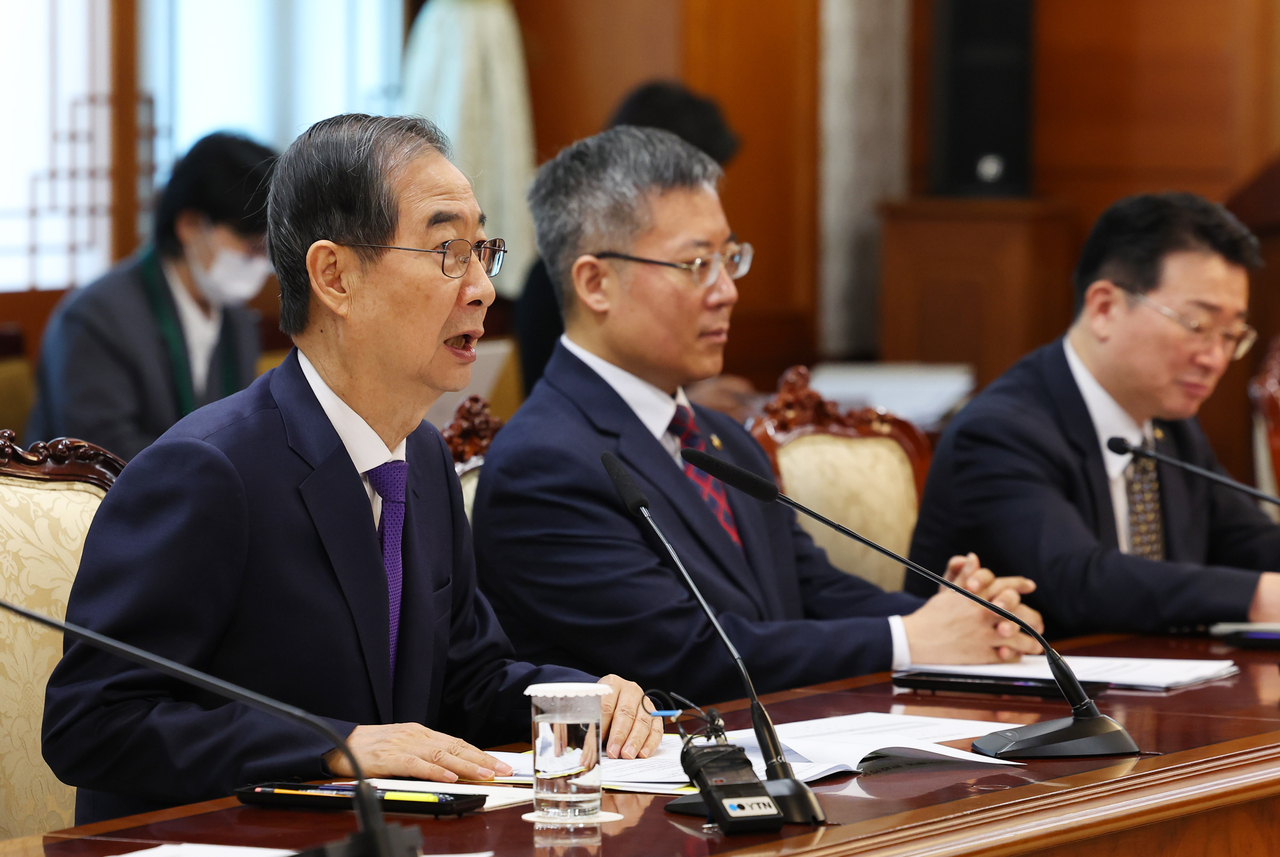
During a meeting held by Prime Minister and acting President Han Duck-soo to coordinate public safety measures ahead of Friday’s ruling, the acting chief of the Korean National Police Agency Lee Ho-young stated that the police will remain in an emergency response posture from 9 a.m. on Thursday in case emergency situations arise and will maintain such posture after the verdict is made until public order and security are stable.
Lee also reaffirmed that actions such as “destroying public property, delivering death threats to Constitutional Court judges or assaulting police officers on site will be regarded as a challenge to the rule of law,” and will be “responded to firmly under the principle of immediate arrest and investigation while under arrest.”
The Ministry of Justice added to this point during Wednesday’s meeting, saying it will work closely with the police to respond strictly to any crimes that undermine the rule of law, while also maintaining emergency duty on the day of the ruling.
Additionally, the Interior Ministry aims to prevent safety accidents caused by mass gatherings by conducting special safety inspections of elevators in major subway stations while also testing the emergency communication network’s functions ahead of Friday.
The National Fire Agency will also operate a situation response team on Friday to prepare for any emergencies and a potential surge in emergency calls. Personnel and vehicles will be deployed on-site to respond swiftly to any incidents that require emergency assistance.
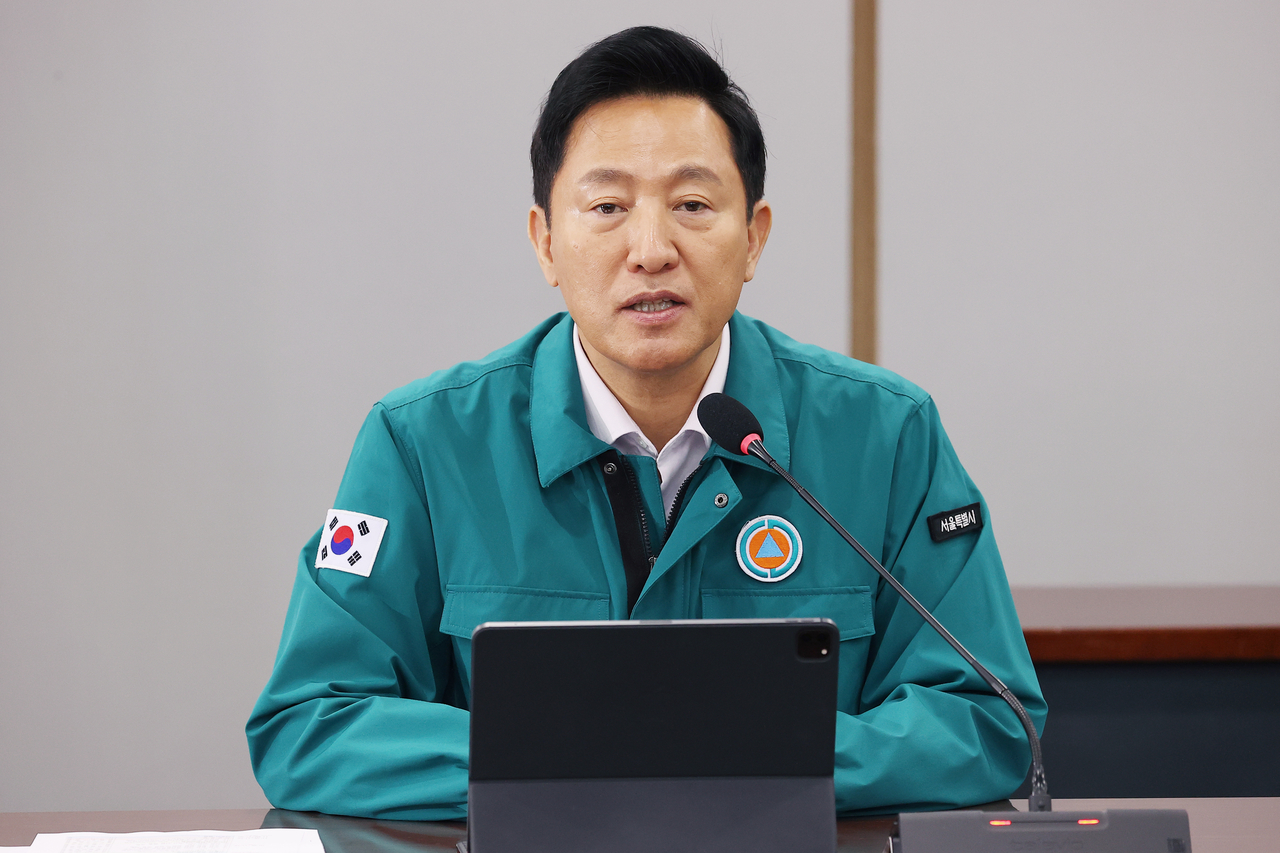
During a meeting held with district office heads, police and fire authorities on Wednesday, Seoul Mayor Oh Se-hoon announced that up to 2,400 personnel from the city government will be deployed from Thursday to Saturday to manage crowd control at rally sites and operate situation rooms that will monitor crowds using CCTV cameras.
To prepare for potential medical emergencies, four on-site medical clinics will be set up near Anguk Station, Cheonggye Plaza, Hannam-dong in Yongsan-gu -- all in central Seoul -- and Yeouidaero in Yeongdeungpo-gu, western Seoul, near the National Assembly. The clinics will be equipped with medical staff, including two doctors, four nurses and one ambulance driver to assist those in need of emergency medical care, and will begin operations from 1 p.m. on Thursday.
“The city will approach safety management with a determination to ensure that not a single person is harmed,” said Mayor Oh. “It is the city’s responsibility to guarantee the safety of everyone -- whether they are participants in the protests or just passersby.”
Also, outsiders’ access to the National Assembly’s premises will be restricted from Thursday to Saturday, according to an official notice sent to lawmakers by the National Assembly Secretariat on Wednesday.
Those entering the premises by vehicle must present an official identification pass or an access pass, and pedestrians walking through the National Assembly may only enter through revolving doors after security checks.
The Assembly’s decision stems from expectations of rallies near the National Assembly building on Friday, as well as recent threats to the safety of lawmakers such as death threats targeting Democratic Party leader Lee Jae-myung.
lee.jungjoo@heraldcorp.com


![[Exclusive] Ateez to return in November](https://wimg.heraldcorp.com/news/cms/2026/09/02/news-p.v1.20260902.76162fb0ba55493aad1c076f240d0750_R.jpg?type=h&h=120)