
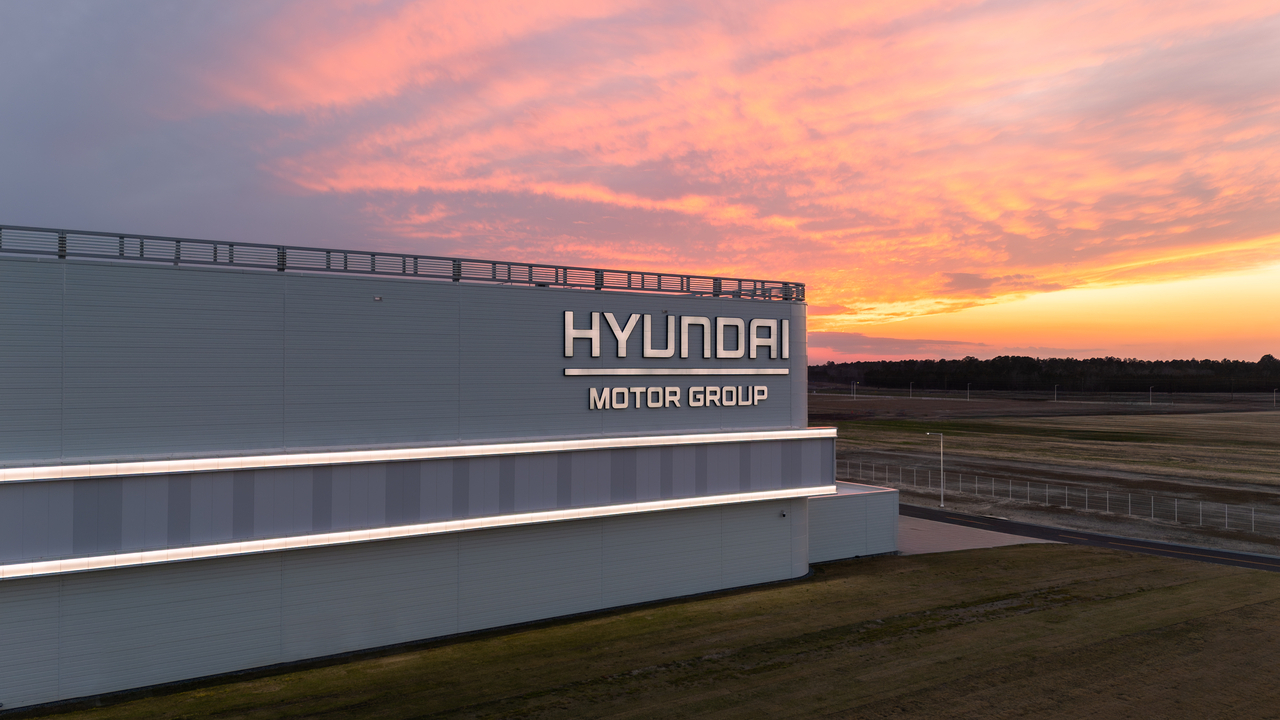
Hyundai Motor Company has hinted at a possible hike in vehicle prices in the US in response to the upcoming 25 percent tariffs on imported vehicles and auto parts introduced by President Donald Trump, Reuters reported Monday.
Hyundai and Genesis Motor North America CEO Randy Parker recently sent a note to local dealers stating, “Current vehicle pricing is not guaranteed and may be subject to change for units wholesaled after Apr. 2.”
“Tariffs are not easy,” Parker told dealers, indicating that the review of pricing strategies is in response to the tariffs imposed by the Trump administration. Despite these uncertainties, Parker noted, “Fortunately, we do not heavily rely on imports from Mexico and Canada and we have firmly established our footing in US investments.”
When asked about the company’s price adjustments in the US, an official from Hyundai Motor Group’s Seoul headquarters said, “We are closely monitoring new policy developments and continuously reviewing various business strategies to ensure long-term profitability. Nothing has been determined at this stage.”
Hyundai Motor Group announced a $21 billion investment in expanding US production alongside Trump at the White House on Mar. 24, only two days after Trump declared “permanent” 25 percent tariffs on all auto imports, scheduled to take effect on Apr. 3. The US government also stressed that it will not be negotiating any exceptions.
In 2024, Hyundai and Kia exported 637,638 units and 377,367 units from South Korea to the US, respectively, totaling approximately 1.01 million vehicles, according to data from the Korea Automobile Manufacturers Association. Despite selling 1.7 million vehicles in the US during the same period, even with increased local production capacity -- including the new Hyundai Motor Group Metaplant America in Georgia -- reaching 1 million units, around 700,000 vehicles could still be subject to tariffs.
Hyundai and Kia each aim to sell 710,000 and 3.46 million units domestically and 550,000 and 2.66 million units abroad this year. However, achieving these sales targets is uncertain due to potential trade measures in the US, the carmakers’ largest market.
To mitigate the tariff impact, Hyundai Motor has decided to bolster its domestic sales efforts. Hyundai’s domestic business division reportedly increased its March sales target from 60,000 units to 63,500 units last week. Following these revised goals, regional sales offices are looking to boost sales through discounts and shorter delivery times.
“While leveraging the company’s new Georgia plant can partially alleviate tariff burdens, it will take at least three years to expand its annual production capacity to 300,000 vehicles,” said Kim Pil-su, a car engineering professor at Daelim University. “And it would still not be enough to manage the current export volume of approximately 1 million units from Korea.”
hyejin2@heraldcorp.com


![[Exclusive] Ateez to return in November](https://wimg.heraldcorp.com/news/cms/2026/09/02/news-p.v1.20260902.76162fb0ba55493aad1c076f240d0750_R.jpg?type=h&h=120)