Despite the planned stationing of advanced U.S. antimissile assets here, Seoul will not join Washington’s global missile defense shield, Defense Minister Han Min-koo said Tuesday.
The allies’ decision to deploy a Terminal High Altitude Area Defense battery here came after South Korea’s years-long pondering due chiefly to the rigorous opposition of China and Russia.
Last Wednesday’s announcement rekindled the debate at home and abroad, with opponents portraying the THAAD’s presence on the peninsula as de facto participation in the U.S.-led global MD program that Beijing and Moscow say is directed at them.
“We have no such plans. … We’re pursuing our own MD program,” Han said during a parliamentary questioning.
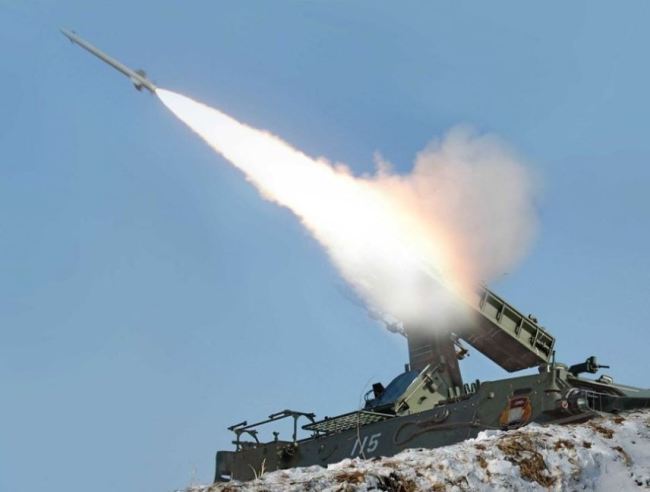
South Korea is currently working to establish the Kill Chain and Korea Air and Missile Defense preemptive strike schemes by the early 2020s. The military says they will be interoperable with -- but not part of -- the U.S. systems.
“The THAAD system to be positioned here is for the protection of South Korea. It’s way too much to see it as part of the U.S.’ global MD system,” the minister added.
As the two-day session kicked off, an intense debate unfolded, as the rival parties and the government relayed polarized views on the plan’s potential domestic and diplomatic impact.
Citing North Korea’s test-firing of three missiles earlier in the day, the administration and the ruling Saenuri Party stressed the need for the THAAD system to safeguard the South from evolving nuclear and missile threats from across the border.
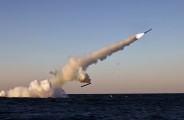
The latest launch, which took place from Hwangju, North Hwanghae Province, at around 5:45 a.m. over the span of 55 minutes, was seen as a protest against the allies’ THAAD deployment scheme. The projectiles flew some 500 to 600 kilometers, putting within their range the southern part of the peninsula within reach including Busan near the system’s intended site of Seongju, North Gyeongsang Province, Seoul’s Joint Chiefs of Staff said.
In contrast, the opposition parties focused on the government’s one-sided disclosure of the battery’s location without any consultations with residents there, while raising the possibility for diplomatic and economic retaliation from China and Russia.
Rep. Yi Wan-young of the ruling Saenuri Party, whose constituency includes Seongju, lashed out at Han for making a “unilateral decision and announcement for the sake of military intelligence.”
“I had enquired many times on where the site would be, and did so just one day before the announcement, and you said it was still being reviewed. Why did you lie to me?” Yi prodded Han.
He also took issue with the government’s failure to notify the visit to Seongju by Prime Minister Hwang Kyo-ahn during which the residents staged an intense protest.
“I don’t oppose the deployment if THAAD is really critical to national interests, but not this way,” Yi said.
Kim Jong-dae, a lawmaker of the minor opposition Justice Party and a prominent military expert, warned that the decision was the “outcome of North Korea-instigated fears” and may cause “pricey aftermath” in terms of diplomatic ties with China and Russia.
“A best policy would be to preclude provocations using the already available strategic assets, while engaging defusing cross-border tension through preventive diplomacy. Now is the time to pursue a strategic balance on the peninsula,” he said.
In response, Hwang argued that the decision was part of the government’s “innate responsibility” and “all-out efforts” to protect its people’s lives and safety.
“The key is how to counter North Korea’s nuclear and missile provocations in the face of its escalating threats.”
To help alleviate the resistance in Seongju, the premier vowed to ramp up efforts to convince them by visiting the area again if needed, and carry out environmental impact assessments and other necessary action. He also said the government would explore measures to boost the region’s development “from an intra-agency aspect” at a cabinet meeting earlier.
Foreign Minister Yun Byung-se also cautioned against stimulating “excessive responses by prejudging” potential diplomatic impacts.
“At this point, we don’t have to presume any ‘unbalance’ in the situation in Northeast Asia or future diplomatic damage in relations with China and Russia. And no clues of any concrete (retaliatory) steps have yet to come out of them,” he said at the parliamentary session.
The defense minister sought to ease Seongju residents’ concerns that the North’s latest show of force indicated the southeastern county would be its first target should it commit a military provocation. The lineal distance between Hwangju and Seongju is about 380 kilometers.
“I think (The test-firing) was rather meant to be a protest-like provocation aimed at the ongoing internal debate over the THAAD issue,” Han said.
Saenuri floor leader Rep. Chung Jin-suk also said it is time to unite to defend national interests and national security and end “chaos that keeps coming back after major national projects one after another.”
“A sustained south-south confrontation regarding the THAAD would only benefit the Kim Jong-un forces,” he at a general meeting of party members before the questioning.
Saenuri Rep. Kim Jin-tae called for the anti-THAAD camp to change course, saying Pyongyang’s newest provocation represented the plan’s legitimacy. He also referred to Monday’s demonstration in Guam during which electromagnetic radiation from a radar there were shown to be far below feared levels.