
Korean court rules voter assistance measure necessary in lawsuit filed by individuals with developmental disabilities

Ballot papers in Korea feature the candidate's name, party affiliation and the corresponding number, but not a photo. Wouldn’t having photos make voting easier for those with cognitive or language difficulties?
A recent court decision in South Korea has raised hopes that this idea may become reality.
The Seoul High Court in a Dec. 18 decision ruled that the government must provide auxiliary tools, such as picture-enhanced ballot papers, to assist individuals with special needs, including those with developmental disabilities.
The lawsuit was filed in 2022 by two individuals with developmental disabilities, Park Kyung-in and Lim Jong-woon, who claim that the government is not doing enough to ensure individuals with developmental disabilities can fully exercise their right to vote.
A lower court dismissed their claim, citing a potential conflict with the Public Official Election Act.
Regarding the litigation, Kim Soo-won, secretary-general of local disability rights group People First Korea, said, “Developmentally disabled individuals often make their choices based on party logos or candidate photos in campaign materials. However, when presented with ballot papers containing only text, they experience considerable confusion.”
In October, 1,054 individuals with developmental disabilities submitted a petition to the court urging the introduction of picture-enhanced ballots.
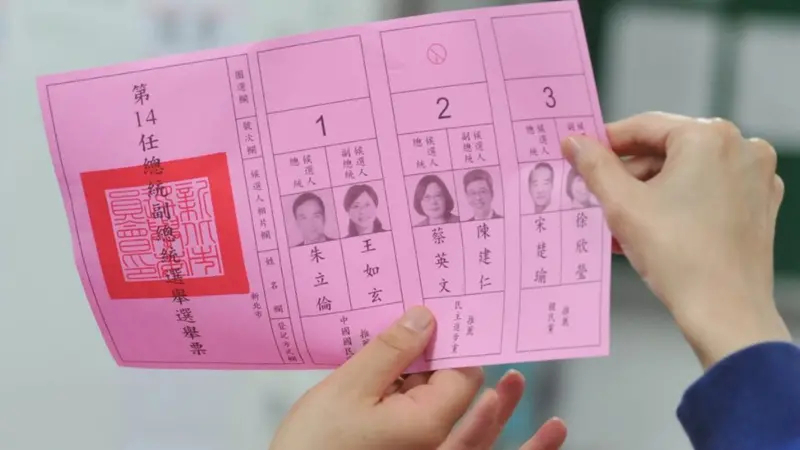
Over 50 countries worldwide, including South Africa, Taiwan, Scotland and Egypt, use candidate photos on ballot papers as a voter assistance measure.
The high court ruling does not mean that ballots will include nontextual information immediately in the next election, as it specified that the ruling should apply to elections one year after the judgment. There also remains the possibility that the Supreme Court could overturn the decision.
Joanne0901@heraldcorp.com



![[Exclusive] Ateez to return in November](https://wimg.heraldcorp.com/news/cms/2026/09/02/news-p.v1.20260902.76162fb0ba55493aad1c076f240d0750_R.jpg?type=h&h=120)