Poll shows Woo Won-shik has become most trusted politician after martial law crisis
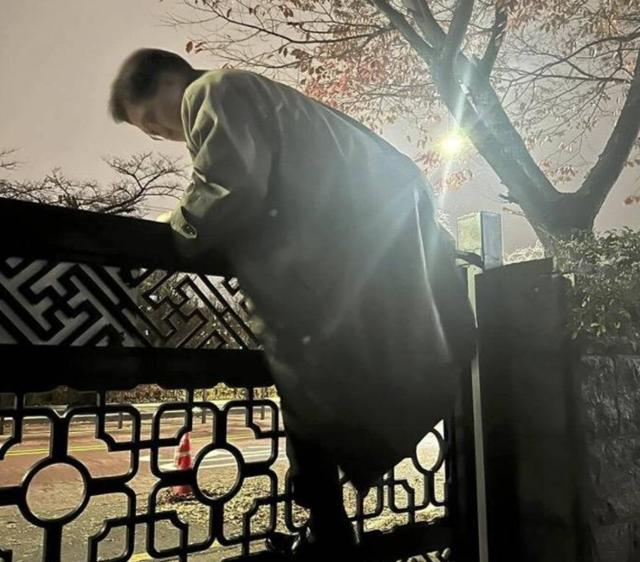
President Yoon Suk Yeol's unprecedented declaration of martial law on Dec. 3 dominated headlines, but a photo of a man climbing a wall to enter the National Assembly compound that same night also went viral.
The man, identified as National Assembly Speaker Woo Won-shik, led an emergency vote in the chaos-filled Assembly despite the absence of most ruling party lawmakers, ultimately lifting Yoon's martial law.
Eleven days later, an impeachment bill was passed amid fierce disputes between rival parties. The speaker who stressed the need to follow legal procedures even in the most urgent hours has now been listed as one of the most trusted politicians here, according to recent polls.
In a Gallup Korea survey conducted from Dec. 10 to 12 on 1,002 adults nationwide, Woo was ranked as the most trusted politician in the country, with 56 percent of respondents expressing confidence in him compared to 26 percent who did not.
This is a notable lead over other prominent political figures, including Lee Jae-myung, leader of the main opposition Democratic Party of Korea and the presidential candidate for the liberal bloc in the 2022 election. Forty-one percent of respondents said they trust Lee, while 51 percent distrust him.
Acting President Han Duck-soo showed 21 percent trust and 68 percent distrust, while former Justice Minister Han Dong-hoon, who was ruling People Power Party leader until the impeachment vote passed, recorded 15 percent trust and 77 percent distrust.
Moreover, in Gallup Korea’s presidential preference survey released Friday, Woo became the first sitting National Assembly Speaker to be mentioned. The survey, conducted from Dec. 17 to 19 with 1,000 eligible voters, showed Woo with a support rate of 1 percent. Although the figure is low, some observers highlight the significance of his inclusion, given that the survey was based on open-ended responses.
Woo has garnered recognition for his leadership during Korea's martial law and impeachment crises, which emphasized strict adherence to legal procedures. In response to rising concerns over a deeply polarized National Assembly, Woo took steps to reassure both domestic and international stakeholders about Korea's political stability.
Notably, he sent letters to the parliaments of 119 countries seeking support for Korean democracy and met with Philip Goldberg, the US ambassador to Korea, to discuss the Korea-US alliance. Domestically, Woo engaged with leaders of major economic groups, visited a military division near the DMZ to assess vigilance, and toured the Bank of Korea.
Following these actions, stocks tied to Woo, often referred to as "politically themed stocks," have surged. For instance, Kolon Mobility Group’s preferred shares reached the upper trading limit on four out of five trading days last week. The company’s connection to Woo stems from personal ties between Woo and its CEO, Ahn Byung-duk, who share the same alma mater and other affiliations.
As Woo emerges as a potential presidential candidate, some supporters of Lee, a fellow liberal, have voiced growing criticism of the Assembly Speaker. Local reports suggest this reflects anxiety among Lee’s base, as Woo’s rising popularity could challenge Lee’s dominance within the liberal bloc. Lee, meanwhile, faces escalating legal troubles that threaten to derail his political future entirely.
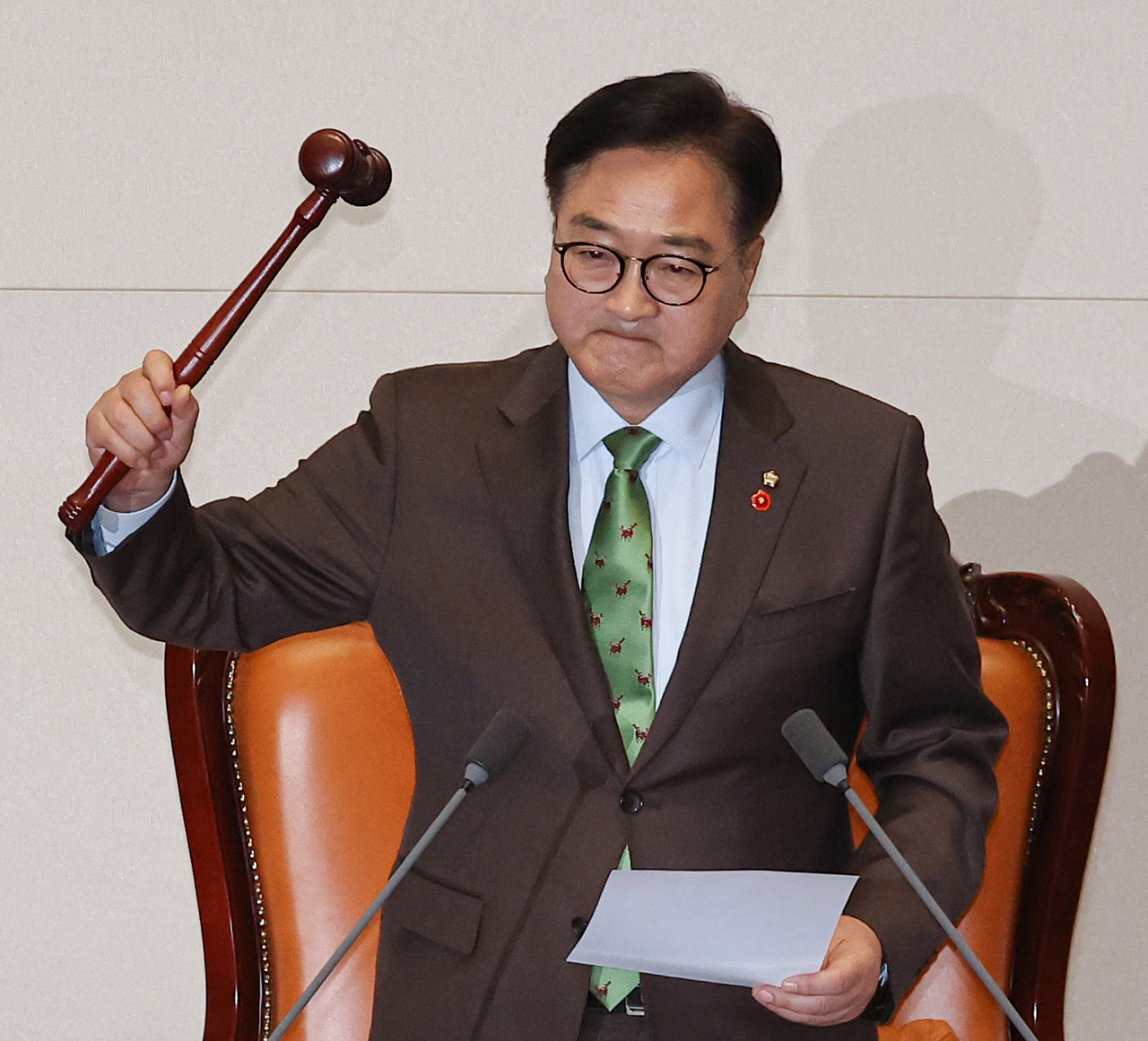
Born in 1957 in Seoul, Woo was deeply involved in student activism during his campus years at Yonsei University where he majored in civil engineering.
As president of the Christian Student Association, he led movements calling for the resignation of former President Park Chung-hee, an act that resulted in his forced conscription.
Later, during his opposition to the Chun Doo-hwan regime, he was sentenced to three years in prison. Due to both punishments, his university graduation was delayed by 21 years.
Woo’s political career began when he was elected to the Seoul Metropolitan Council during his first local election in 1995. In 2004, he was elected to the National Assembly and has since established himself as a dominant figure by being reelected four more times, achieving five terms in total.
Woo then served as the party's floor leader from 2017-2018 under the then-Moon Jae-in administration.
jenn@heraldcorp.com