
Overtime still seen as sign of diligence in Korea
야근, 한국에서는 여전히 성실성의 표시로 여겨져 For 26-year-old office worker Lee Hye-ri, it seems like a far-fetched dream to exercise and enjoy her hobbies after work every day. It is quite difficult to imagine life outside her workplace as she works as late as 11 p.m.
직장인 이혜리(26)씨의 경우, 매일 업무 후 운동을 하고 취미생활을 누리는 것은 터무니없는 꿈같아 보인다. 저녁 11시까지 일하기 때문에 직장 밖에서의 생활을 꿈꾸는 것은 매우 힘들다.
The newcomer, who was employed by a state-run company last year, often works overtime and sometimes works at home on weekends. She dozes off on the bus while commuting and sleeps a lot on weekends to fight a chronic lack of sleep.
지난 해, 한 공기업에 입사한 신입사원 이씨는 번번히 야근을 하고 주말에는 때때로 집에서 일을 한다. 그녀는 출퇴근을 하면서 버스를 타고 졸며 만성적인 수면부족과 싸우기 위해 주말에는 많은 잠을 잔다.
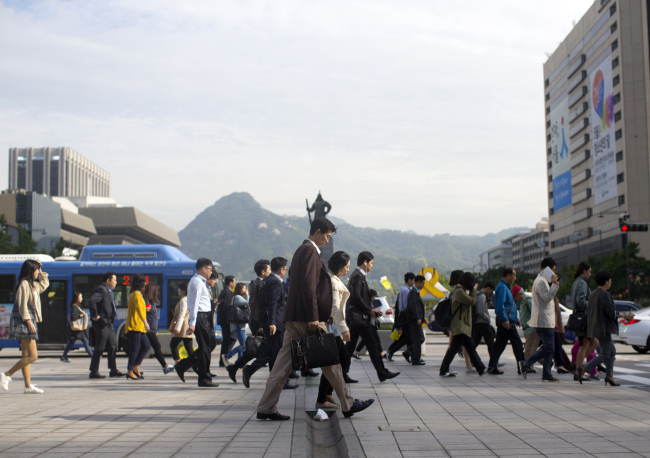
"It has become a habit to work overtime. I might be able to finish my job during working hours if I focus, but I just think to myself, ‘Let’s just work overtime,’” she told The Korea Herald. “For workers, going back home in time is a special occasion and working late is part of everyday routine.”
그녀는 코리아헤럴드에 “야근이 습관이 됐다. 집중한다면 업무시간 중에 일을 끝낼 수 있을 지도 모르지만 단지, 스스로가 '그냥 야근을 하자'고 생각한다,”면서 “직장인에게 제시간에 집에 가는 것은 특별한 경우로, 늦게 일하는 것은 일과가 됐다,”고 말했다.
Lee is one of many Korean workers who suffer from chronically long working hours in a society where overtime work is seen as a symbol of diligence.
이씨는 야근이 성실성의 상징으로 비춰지는 사회에서 만성적인 오랜 근무시간으로 고통 받고 있는 수많은 한국 직장인들 중 한 명이다.
According to a 2014 survey by the Labor Ministry on 1,300 workers on Korea’s work culture, only 26.5 percent of laborers left work on time five days a week. Among those who could not leave the office in time, 35.1 percent cited the nature of their job as the reason behind their long working hours, followed by company culture taking overtime work for granted at 25.8 percent and low productivity during working hours at 20.9 percent. Some 10 percent of them could not leave work because they felt pressured, while 6.4 percent cited a heavy workload.
한국의 직장 문화에 관해 직장인 1,300명을 대상으로 노동부가 실시한 2014년 설문조사에 따르면, 근로자의 26.5%만이 주5일 칼퇴근을 했다. 칼퇴근을 할 수 없는 이들 중, 35.1%는 자신들의 업무 성격을 오랜 근무시간의 이유로 들었으며 25.8%는 야근을 회사 문화로 받아들였으며 20.9%는 업무시간 동안의 낮은 생산성을 이유로 들었다. 이들 중 약 10%는 부담감을 느꼈기 때문에 퇴근을 할 수 없었으며 6.4%는 과도한 업무량을 이유로 들었다.
South Koreans including salaried employees, self-employed and part-timers worked 1,706 hours in 2015, the second-longest hours among Organization for Economic Co-operation and Development countries, according to OECD statistics. It marks 300 hours longer than the average for OECD countries, which stands at 1,706 hours per year.
OECD 통계에 따르면, 2015년 임금 근로자와 자영업자, 임시직을 비롯한 한국인들의 근무시간은 1,706시간으로 OECD 국가 가운데 두 번째로 길었다. 연간 1,706시간 대인 OECD 국가들의 평균 근무시간 보다 300시간이 더 길다.
To root out the practice of working long hours in Korea, Rep. Lee Chan-yeol of The Minjoo Party of Korea submitted a package of revisions to the existing labor acts to reduce working hours, on May 30 upon the opening of the 20th National Assembly.
이찬열 더불어민주당 의원은 5월 30일 20대 국회가 개원하자마자 한국의 장시간 근로 관행을 뿌리뽑기 위한 근로시간을 감축을 위해 기존 노동법에 대한 개정안을 제출했다.
The bill -- dubbed the “kal-twegeun bill, referring to leaving on time from work -- includes imposing financial penalties on companies who violate legally-mandated working hours and making it mandatory for companies to record when workers come to work and leave work.
직장에서 제시간에 퇴근한다는 “칼퇴근법”이라 불리는 이 법안은 법정 근로시간을 위반한 회사에 과징금을 부과하는 방안과 회사가 직원의 출퇴근을 의무적으로 기록하는 방안이 포함된다.
“We welcome the symbolic bill. We expect the bill to tackle the prevalent overtime work culture in the country and create significantly more jobs,” said Lee Joon-young, spokesperson for the Federation of Korea Trade Unions. “Once the bill is passed, it would take time for small and medium-sized companies to root out overtime work, but the bill will certainly affect larger companies and their employees.”
이준영 한국노총 대변인은 “상징적인 이번 법안을 환영한다. 이 법안이 국내 만연한 야근 문화를 퇴치하고 일자리를 크게 늘릴 것으로 기대한다,”면서 “법안이 통과되면 중소기업들이 야근을 근절하는 데는 시간이 걸리지만 대기업과 대기업 근로자들에게는 분명 영향을 줄 것,”이라고 말했다.
The long working hours cause health problems for laborers, which is linked to low labor productivity, the level of output for every hour of work, an expert said.
오랜 근로시간은 근로자들에게 건강문제를 유발하는데 이는 근로 시간당 생산량 수준인 노동생산성의 저하와 연관된다고 전문가는 말했다.
“Many studies have shown that laborers working more than 50 hours a week are more likely to be exposed to work-related accidents and cardiovascular diseases because they grow more stressed and fatigued,” said Lee Hye-eun, a professor for occupational and environmental medicine at Catholic University of Korea.
카톨릭대 직업환경의학과 이혜은 교수는 “많은 연구에서 주당 50시간 이상 일하는 근로자들은 갈수록 스트레스가 늘고 피로해지므로 업무 관련 사고와 심혈관 질환에 노출될 가능성이 높은 것으로 나타났다,”고 말했다.
“Long working hours create a social structure which disrupts work-family balance and makes it hard for workers to exercise, take care of their health and relieve stress. That seems to be linked to low productivity of workers in Korea.”
“오랜 근로시간은, 일과 가정생활의 균형에 지장을 주고 근로자들이 운동을 하고 건강을 돌보고 스트레스를 푸는 것을 힘들게 하는 사회구조를 만들고 있다. 그것은 한국 근로자들의 노동생산성 저하와 연관된 것으로 보인다.”
According to OECD data, South Koreans’ labor productivity was $31.90 per hour in 2014, much lower than the OECD average of $49. It is a stark comparison with France, where laborers work for 35 hours a week, but with productivity scores of $64 per hour.
OECD 자료에 따르면, 한국의 노동생산성은 2014년 시간당 31.90달러로 OECD 평균인 49달러보다 크게 낮다. 노동시간이 주당 35시간이지만 생산성은 시간당 64달러인 프랑스와는 확연한 대조를 이룬다.
Behind the culture of working overtime, Kim Jong-jin, a researcher from the Korea Labor & Society Institute, pointed to a social structure exploiting laborers for low wage.
한국노동사회연구원 김종진 연구원은 야근 문화의 원인으로 저임금으로 노동력을 착취하는 사회 구조를 지적했다.
“Companies can save costs such as training fees and severance pay by making their skilled employees work overtime rather than hire and train another staff member,” he said. “For laborers, as they receive low wages without sufficient social safety nets, they are forced to work overtime to take home more money.”
그는 “회사들은 다른 직원들을 고용해서 훈련시키는 것보다 숙련된 근로자를 야근시킴으로써 훈련비용과 퇴직수당 같은 비용을 절약할 수 있다,”면서 “근로자들의 경우, 충분한 사회안전망 없이 저임금을 받으면서 집게 더 많은 돈을 가져가기 위해 야근을 할 수 밖에 없다,”고 말했다.
Park Hye-young, a labor attorney for the nongovernmental group Solidarity for Workers’ Health, cited the country’s rapid industrialization and economic growth. “As the country was lifted out of poverty so rapidly, the society has justified long working hours and wrongful labor practices to achieve economic growth at the expense of laborers,” she said. “And laborers have become accepting of it.”
비정부 기구인 노동건강연대 박혜영 노무사는 한국의 급속한 산업화와 경제성장을 이유로 꼽았다. 박 노무사는 “한국은 너무 급속하게 가난에서 벗어나면서 노동자들을 희생시켜 경제성장을 이루기 위해 사회가 오랜 근로시간과 부당한 노동관행을 당연시해왔다,”고 말했다.
Park views the bill as a crucial step to trigger the public debate on long working hours in Korea, but questions remain on whether it can be properly enforced. “Even the legally-binding minimum wage is not respected at all the workplaces in Korea despite existence of the relevant act,” she said, addressing the need for the government’s “will” to slash working hours for Koreans.
박 노무사는 이번 법안을, 한국의 오랜 근로시간에 대한 공개 논쟁을 촉발시킨 중요한 조치라고 봤지만 제대로 시행될 수 있을지 여부에 관해서는 여전히 의문이 남아있다. 그녀는 “법적 구속력이 있는 최저임금은 관련법이 있음에도 불구하고 국내 사업장에 전혀 반영되지 않고 있다,”고 말했으며 정부의 근로시간 단축 의지가 필요하다고 언급했다.
"The Labor Ministry’s administrative measures such as stepped-up monitoring and crackdown should come in line with the passage of the bill to change the practice.”
"이러한 관행을 바꾸기 위해서는 감시활동과 단속 강화 같은 고용부의 행정적 조치가 법안 통과에 따라 이뤄져야 한다.” (코리아헤럴드 06월03일자 기사)