
Foreign Ministry cites Kyiv's lack of meaningful response and persistent security threats; consular services to continue
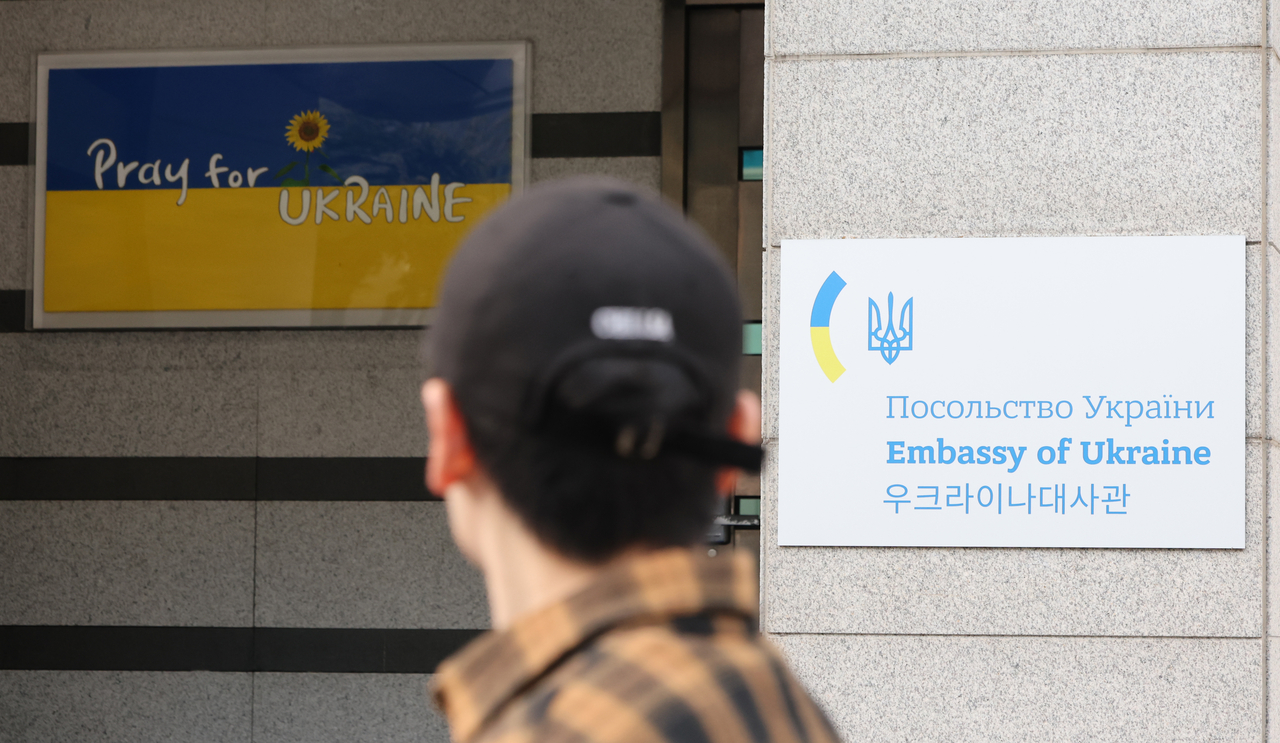
South Korea has decided to withdraw roughly half of its embassy personnel from Ukraine, the Foreign Ministry said Tuesday, marking an escalation of its diplomatic protest against Kyiv over the disclosure of the confidential transfer of two North Korean prisoners of war to Seoul.
The decision follows the recall of South Korean Ambassador to Ukraine Park Ki-chang earlier this month, as Seoul maintains that Kyiv has failed to take sufficient steps to address the diplomatic dispute, despite repeated demands for an apology and an explanation.
"The government has decided to withdraw some embassy personnel, taking into account the absence of any constructive steps by the Ukrainian side following the recall of our ambassador, as well as the persistent threat of airstrikes across Ukraine, which makes it difficult to ensure their safety," Foreign Ministry spokesperson Park Doo-soon said during a regular press briefing Tuesday.
The ministry plans to withdraw approximately half of its embassy staff, although the exact number of personnel stationed at the diplomatic mission remains classified, a Foreign Ministry official, requesting anonymity, told reporters Tuesday afternoon.
The timing of the withdrawal has yet to be determined and will depend on security conditions on the ground and the progress of diplomatic consultations with Kyiv. Seoul has already notified the Ukrainian government of its decision.
Despite the partial withdrawal, the embassy will maintain essential diplomatic and consular operations, with Yoon Ji-wan, chargé d'affaires ad interim to Ukraine, remaining in Kyiv alongside all personnel responsible for consular affairs.
"Even after the withdrawal, necessary diplomatic communication between the two countries will continue under the leadership of the charge d'affaires," Park said. "All consular personnel will remain in place to ensure the continued protection of South Korean nationals."
Asked whether the decision constituted an additional diplomatic protest, Park said Seoul had repeatedly conveyed its position to Kyiv, but had yet to receive a satisfactory response.
"We have already communicated our government's position to the Ukrainian side in various ways," he said. "Nevertheless, we determined that no constructive steps had been taken, which led us to adopt these measures."
The latest move marks a further deterioration in bilateral relations following a diplomatic row that erupted last month when Ukrainian President Volodymyr Zelenskyy publicly disclosed the transfer of two North Korean prisoners of war to South Korea during his address to the United Nations General Assembly on Sept. 23.
Seoul accused Kyiv of unilaterally breaching a bilateral understanding to keep the transfer confidential, arguing that the disclosure violated an agreement reached between the two governments.
South Korea subsequently summoned Ukraine's acting ambassador in Seoul on Sept. 28 to lodge a formal protest and demand an apology. Ukrainian officials, however, denied that any confidentiality agreement had existed and rejected Seoul's demand.
The dispute continued into October, with Foreign Minister Cho Hyun telling lawmakers during a parliamentary audit on Oct. 6 that Seoul had received a message from Ukraine containing an expression of apology.
However, Cho said the message fell short of what the South Korean government considered acceptable.
"The level was different from what we had expected, so we intend to take firm measures," Cho said.
Seoul subsequently recalled Ambassador Park, who returned to South Korea on Oct. 10 and is expected to remain in the country for the time being.
The partial withdrawal of embassy personnel represents another diplomatic measure taken by Seoul amid the unresolved dispute, although the government has also emphasized the deteriorating security environment in Ukraine.
A separate Foreign Ministry official, who declined to be named, cited persistent threats from missile and drone attacks across the country, where South Korea maintains its highest Level 4 travel advisory, effectively prohibiting travel.
The official said the government had concluded that it was increasingly difficult to guarantee the safety of embassy personnel under prevailing security conditions.
South Korea previously withdrew diplomatic personnel from Libya in 2015 and Afghanistan in 2021, amid worsening security situations. Unlike those cases, however, the latest decision also comes against the backdrop of an ongoing diplomatic dispute with the host government.
According to the Foreign Ministry, 85 South Korean nationals remained in Ukraine as of Tuesday afternoon, excluding embassy personnel.
mkjung@heraldcorp.com