
For Comico, making people laugh across languages starts with understanding culture
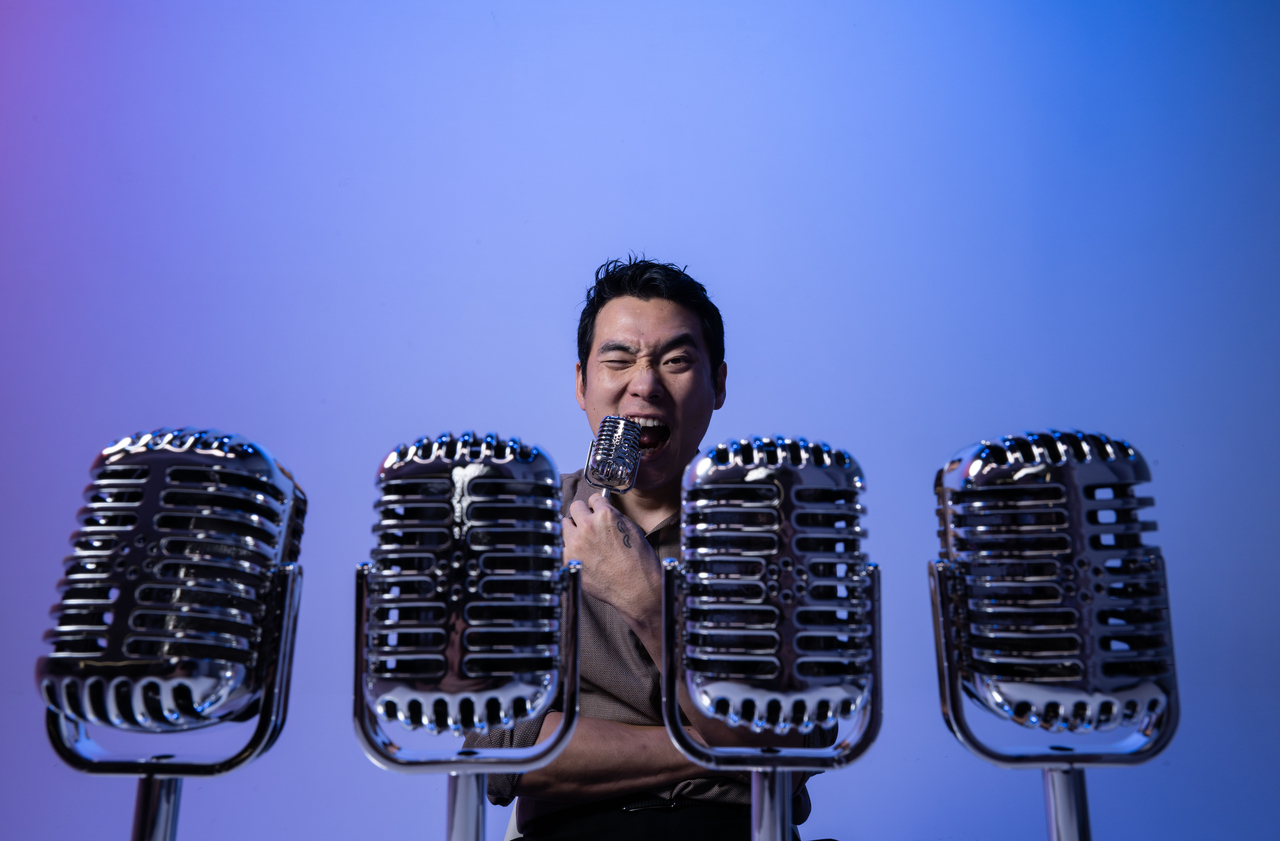
Comico, whose real name is Kim Byung-sun, believes the best way to learn a foreign language is not in a classroom.
"The best language textbook is comedy," the Korean stand-up comedian told The Korea Herald in an interview in Seoul on Sept. 4.
"To understand comedy, you have to know the culture, the society and the economy," he said. "It's all embedded in comedy. Comedy is making that fun. News is making it boring."
He learned that distinction the hard way. When Comico moved to Mexico City in May 2022, he already spoke Spanish and had performed stand-up in Spain. He tried a joke at a Mexican open mic that had reliably worked in Spain, but nobody understood it.
It was a small failure, but one that captures much of his unusual career. He has repeatedly placed himself in unfamiliar rooms and figured out, joke by joke, what makes the people inside them laugh.
There is another philosophy behind those choices.
"The attitude that encompasses my whole life is: I just do whatever I feel like doing at the time," he said.
Learning there is no single answer
Comico did not grow up planning to become a comedian.
Inspired by taekwondo, the TV drama "Bodyguard" and his admiration for singer Uhm Jung-hwa, he once wanted to become a bodyguard. He considered Yong In University, known for sports and martial arts, but thought its security studies program looked too difficult.
So, somewhat improbably, he aimed instead for Seoul National University's physical education program. Seoul National University is widely regarded as South Korea's most prestigious university. He failed his first attempt, tried again and got in.
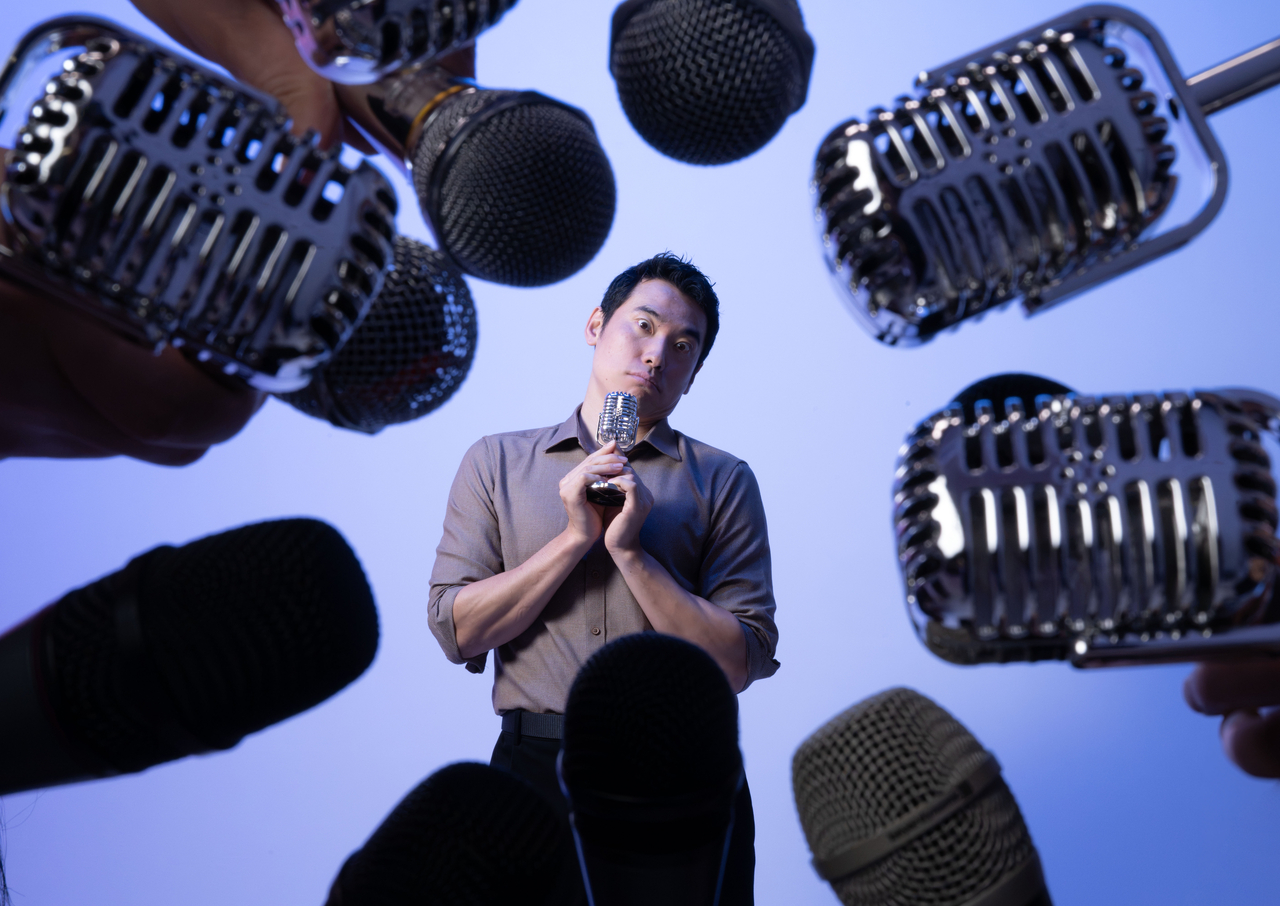
The experience that profoundly shaped his outlook came in Peru.
Comico spent 2 1/2 years there from 2010 to 2012 through an overseas service program, fulfilling his military obligation while working as a physical education teacher.
But Peru challenged his assumptions about how life should be lived.
"In Peru, day laborers would make about 8,000 won ($5.78) a day. You'd see these guys carrying bricks, and they'd spend 7,000 won on beer and just sit there drinking," he said.
At first, Comico thought their choices were wrong. Over time, however, he saw people with far less than he had enjoying each day, laughing and living with their neighbors.
When he returned to Korea, smartphones and Wi-Fi had spread rapidly. On the subway, he saw people frowning because the Wi-Fi was slow.
The contrast stayed with him: There is no single correct way to live.
Back in Korea, he tried jobs including clown work and hosting first-birthday parties. Then, in 2013, he heard KBS was recruiting comedians and applied "for the experience."
He got in.
Success before the craft
For aspiring Korean comedians, passing a broadcaster's open recruitment was a coveted gateway into mainstream comedy, particularly KBS's "Gag Concert."
Comico had barely trained. When asked for another talent at the audition, he simply did a backflip.
"Momentum," he said. "Life is about momentum."
One of 12 selected that year, the breakthrough came almost too easily. Comico had earned the title of comedian before he had built the craft to go with it.
"As soon as I became a comedian, I thought, 'My life is completely on the road to success,'" he said. "But that was the road that ruined my life."
"I realized that a person without ability shouldn't wear the crown," he said. "I was just a completely ordinary person. I couldn't do anything."
He began performing at small theaters in Seoul's Daehangno district, building the stage experience he had skipped.
Then a friend invited him back to Peru to emcee a K-food event in Lima. He translated Korean crowd-work jokes into Spanish.
Comico, the Korean stand-up comedian active in Mexico City #shorts
"The fact that an Asian person was saying funny things in Spanish was surprising to them," he said. "That's when I thought, 'This character could work.'"
That idea eventually took him to Spain.
In Madrid, Comico stumbled upon a stand-up show where one man with a microphone kept the room laughing for nearly two hours. He waited afterward, asked the performer what the genre was and how he could try it, and was pointed toward an open mic.
Spain became the comedy apprenticeship he had missed before KBS. Speaking Spanish, he discovered, was different from being funny in Spanish: Jokes depended on local assumptions that could not simply be translated.
After about a year, visa problems sent him back to Korea, nearly broke.
He started uploading Spanish-language comedy videos to YouTube, but almost nobody watched. Then he saw Spanish-language news about a teenage Lee Kang-in, then at Valencia, and made a four-minute video explaining the local reaction.
It drew about 300,000 views. His previous videos had typically peaked at around 300.
Football content soon brought hundreds of thousands of views and substantial advertising revenue. Comico described the pull simply as "the sweetness of views."
But he "didn't want to be a reporter," he said. "I wanted to do comedy."
It took him about two years to walk away.
Starting over in Mexico
As Korea's fledgling stand-up scene began taking shape, Comico returned to the stage, only for the COVID-19 pandemic to sharply limit performances.
He wanted more stages. That search took him to Mexico City in May 2022, where he could perform virtually every day.
Despite already speaking Spanish, he felt like a beginner again.
One joke that had worked in Spain played on a stereotype of Chinese people working constantly, contrasted with Spaniards. In Mexico, the audience did not understand it.
"This is different here too," he remembered realizing.
The language was the same. The cultural premise was not.
He began going to open mics from Monday through Thursday, testing five minutes at a time.
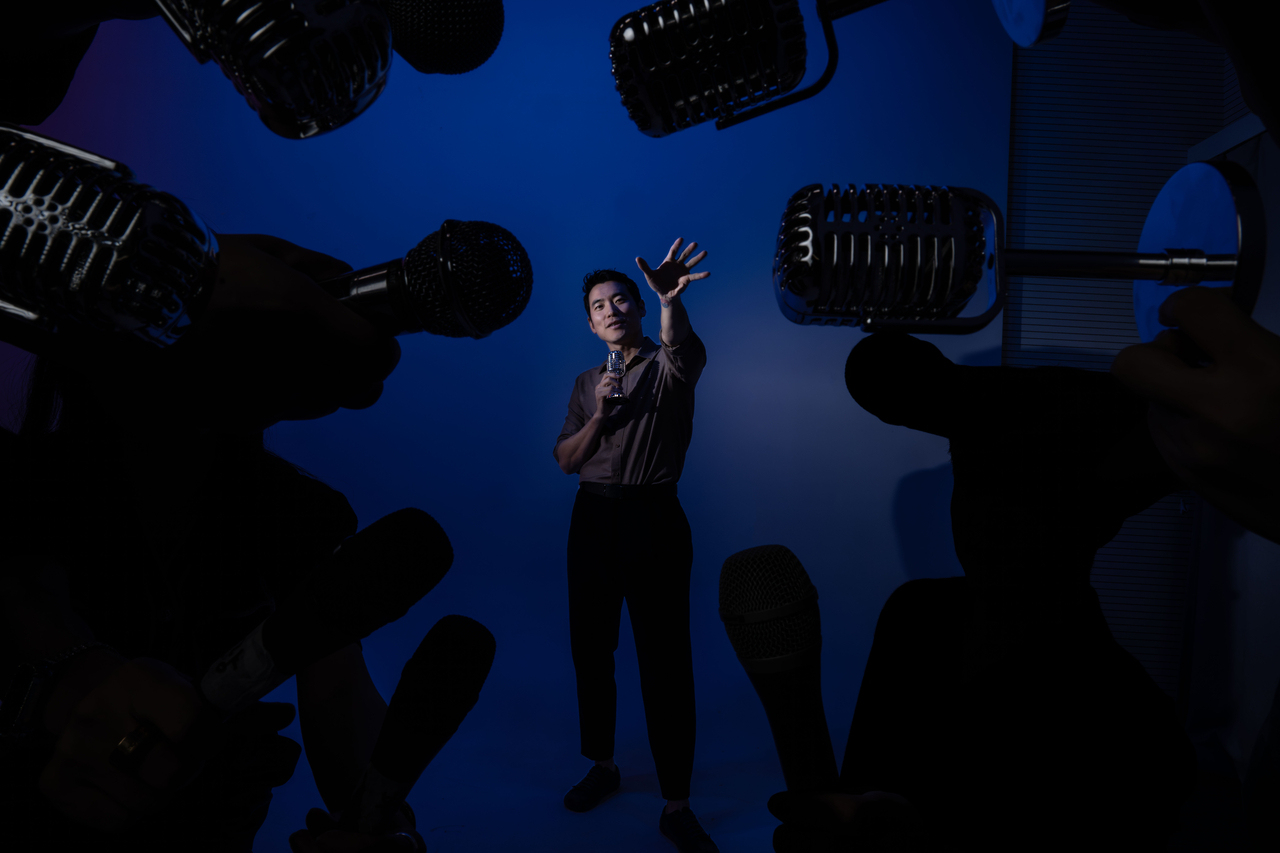
"You go up and bomb. They don't laugh. Then you think, 'I need to write something else,' and go back," he said. "Then they laugh. Sometimes something catches. Then you have 10 seconds of material."
Those seconds accumulated. Five minutes became 15, then longer sets and eventually an hourlong show. Today, he performs three or four times a week, but when asked why he had succeeded in Mexico, he challenged the premise.
"Have I succeeded?" he said. "I'm still in the process of succeeding."
His next goal is to create three specials and eventually draw audiences who come specifically to see him.
"I didn't go to Mexico to succeed in Mexico," he said. "I went to Mexico because I wanted to get better at comedy."
The point, he said, is to become quicker at identifying what people in any new place share and adapting his material around it.
"My goal now is the Earth," he said. "Mexico, Korea, the US — it doesn't matter. Anywhere I can make people laugh."
jaaykim@heraldcorp.com