

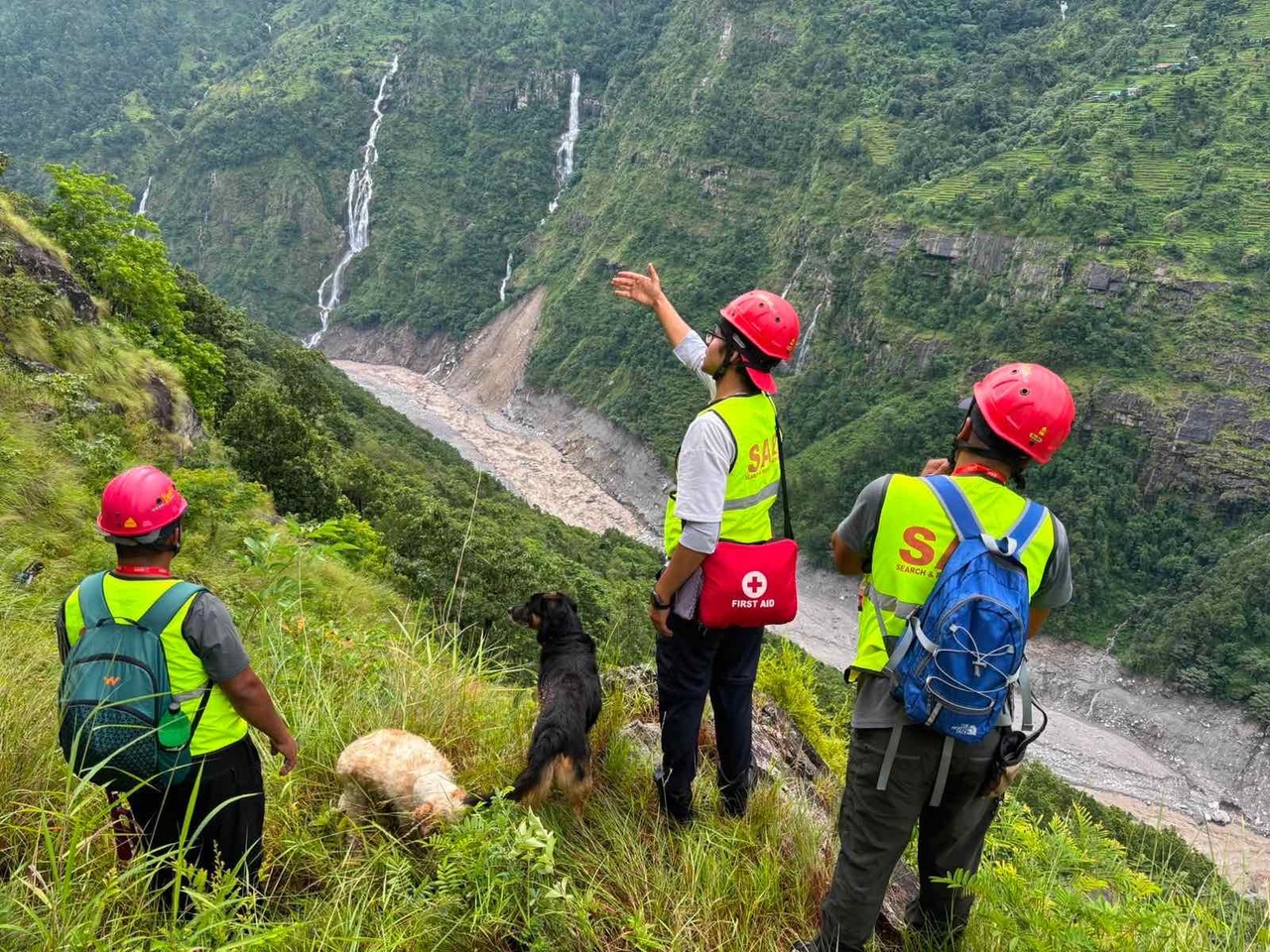
South Korea's disaster relief team is intensifying its search for nine Koreans missing in Nepal, deploying helicopters, thermal-imaging drones and ground teams to possible evacuation routes after severe weather hampered aerial operations a day earlier, a Foreign Ministry official said Friday.
The Korea Disaster Relief Team plans to resume helicopter searches Friday using two aircraft provided by the Nepali military, weather permitting, according to the official, who declined to be named.
An attempted aerial search Thursday was disrupted by dense fog and deteriorating weather. Of the two helicopters provided by the Nepali side, one was forced to return early after taking off, while the other was unable to get off the ground.
Visibility fell to less than 1 meter at one point, preventing the helicopter from reaching areas where the missing Koreans may have sought shelter before it turned back after about 30 minutes.
“Following consultations between the KDRT chief and the Nepali military commander, we immediately moved to conduct an aerial search with two helicopters, but one returned early due to worsening weather conditions, and the other was unable to take off,” the official said.
The team plans to carry thermal-imaging drones aboard the helicopters to help detect signs of life. Separately, two South Korean rescue personnel stationed in Dhunche are expected to continue ground searches.
Search efforts are being concentrated on areas the missing workers may have reached while evacuating, including mountainous terrain behind the main camp of the Upper Trishuli-1 Hydropower Project and an area near a bridge locally known as the “Yellow Bridge.”
South Korean and Nepali teams have already searched the mountainous area behind the main camp, but the terrain around the Yellow Bridge has received less coverage. Muddy ground in the area has made helicopter landings difficult, according to officials.
KDRT chief Lee Kyoo-ho met a Nepali military commander in Batar the previous day and requested that areas of particular interest to the South Korean side be prioritized. The two sides are continuing consultations over the locations and methods for joint search operations.
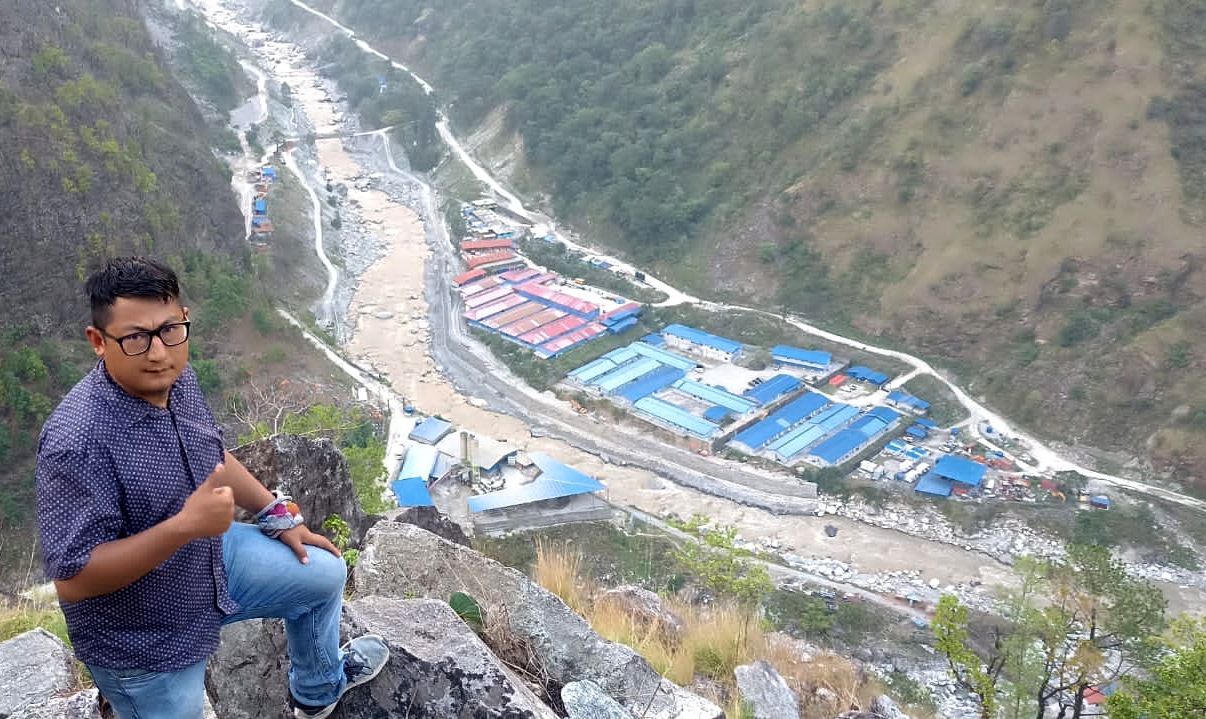
The nine Koreans — six employees of Doosan Enerbility and three of Korea South-East Power — went missing while working at the Upper Trishuli-1 Hydropower Project in Rasuwa district after catastrophic floods struck Nepal on Aug. 26.
The KDRT is operating alongside other South Korean teams. A government joint rapid response team dispatched earlier remains on the ground. Doosan Enerbility and Korea South-East Power have also mobilized personnel and equipment, including helicopters and drones, to help locate the missing workers.
The difficult terrain has complicated efforts to locate them. Steep mountains and dense vegetation surround the affected area, while severe erosion along the river has left some sections resembling cliffs. Repeated rainfall has also weakened the ground, limiting the scope of detailed searches on foot.
Hopes that more survivors could still be found received a boost Friday after two Nepali workers were rescued alive from a tunnel at the Trishuli 3A Hydropower Plant, nine days after the floods.
The two, a mechanical foreman and a mechanical supervisor at the plant, were found alive during search operations by rescue teams including the Nepali Army and were taken to a hospital, according to Nepali authorities.
Rescuers reportedly heard voices from inside the tunnel before locating the workers. Nepali authorities believe others could remain trapped inside and are continuing search operations.
Meanwhile, South Korea will provide an additional 130 million won ($96,000) worth of emergency relief supplies for people displaced by the floods.
The government plans to send 38,320 thermal blankets to Nepal aboard a commercial flight Friday after Nepali authorities expressed a need for the supplies.
Seoul previously announced $1 million in humanitarian assistance for Nepal on Aug. 27.
mkjung@heraldcorp.com