
Historian Shim Yong-hwan notes implausible regency storyline, near impossibility of a royal restoration in Korea, and inaccuracies in palace fashion
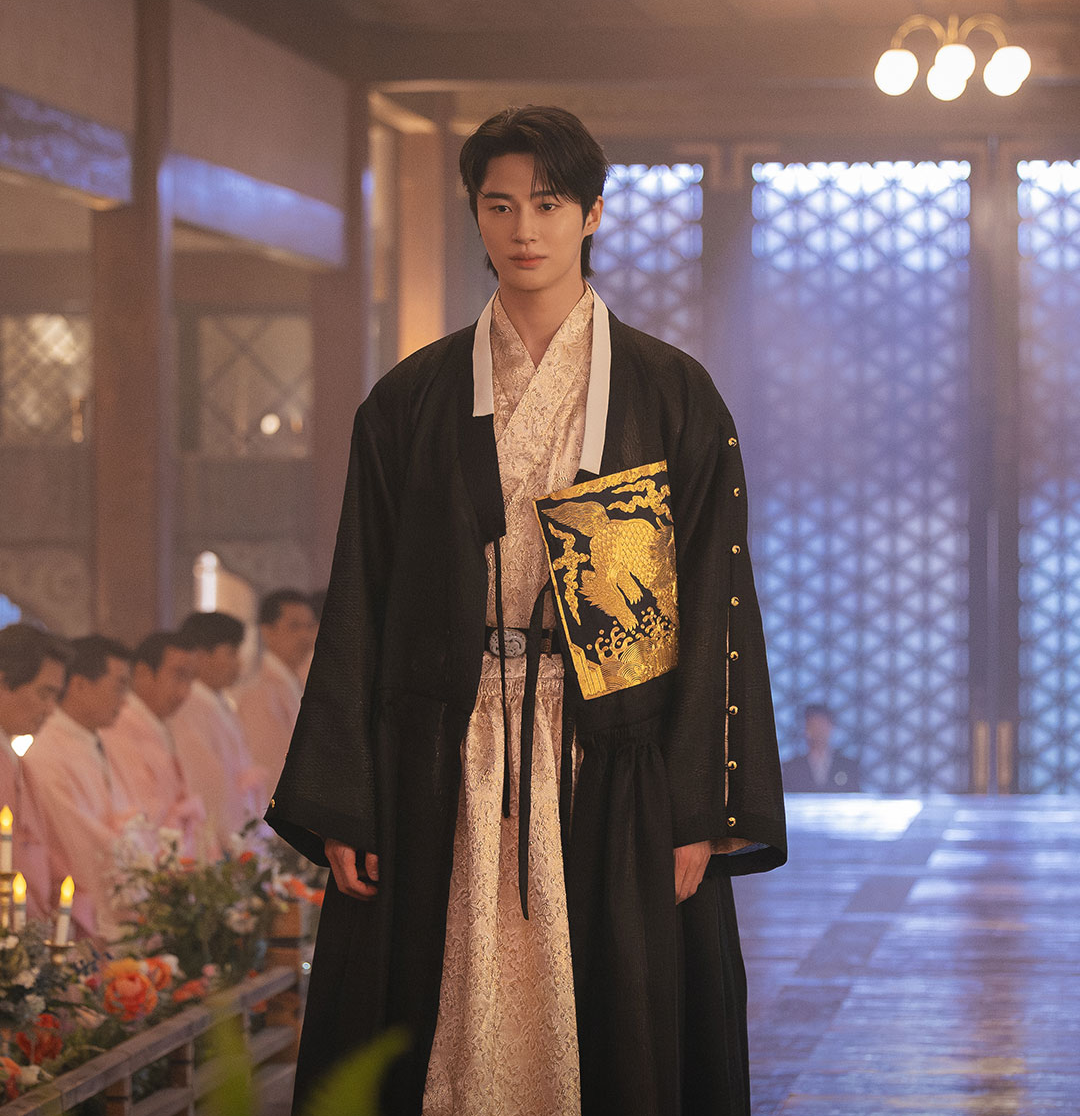
“Perfect Crown” focuses on a hypothetical royal family of the Joseon era, which, in reality, ended in the early 20th century.
Despite the hit series' fictional nature, historian Shim Yong-hwan says it still contains many historical inaccuracies, especially in its regency storyline and portrayal of a continued royal family after the fall of Joseon.
The series follows chaebol heiress Hui-ju (IU), who orchestrates a contract marriage with royal prince I-an (Byeon Woo-seok) in a fictional 21st-century constitutional monarchy. In the drama, I-an serves as regent in place of a young king after his older brother’s death. The story unfolds in a contemporary Korea where Joseon-era royal court traditions live on within a constitutional monarchy system.
According to the visiting professor at Sungkonghoe University, the most significant flaw lies in the depiction of Grand Prince I-an acting as regent for a young king.
“What made Joseon remarkable was that it was one of the states that most effectively prevented interference from royal relatives," he said.
“There were occasional cases of regency, such as Queen Jeong-hee or Queen In-mok, where power was exercised on behalf of the king. But these were carried out under strict supervision, with the consent of officials and through a step-by-step process, so once that period ended, they had no choice but to relinquish power.”
Shim emphasized the era's complex and systematic governing structure, which he says "makes this scenario impossible ... Especially since Joseon had already experienced the betrayal of Sejo in its early period, it would never allow such a situation again.”
The betrayal Shim mentions refers to King Sejo’s violent seizure of the Joseon throne from his 12-year-old nephew, King Danjong, in 1455, followed by the systematic murder of his family members and loyalists.
Shim also addressed the show's central premise of a constitutional monarchy, noting that there is little possibility it could have continued in reality. “Unfortunately, after the fall of the Joseon Dynasty, the royal family has played no meaningful role,” he said, adding that, given the trajectory of the former imperial house, there has been little to suggest it could have endured into the present.
He also noted inaccuracies in the drama’s use of costumes.
“Wearing one’s clothes loosely undone is not in keeping with proper etiquette,” he said, adding, “how to evolve the design of hanbok is something that needs careful consideration."
Nevertheless, Shim added that the series is an interesting experiment on its own.
"Works like 'Perfect Crown' may seem like low-level alternate history from a rigid academic perspective, but in reality, they are interesting cultural experiments. They are part of the process of creating something new and, only now, shaping what truly Korean and distinctly Hallyu is," he added.
yoonseo.3348@heraldcorp.com