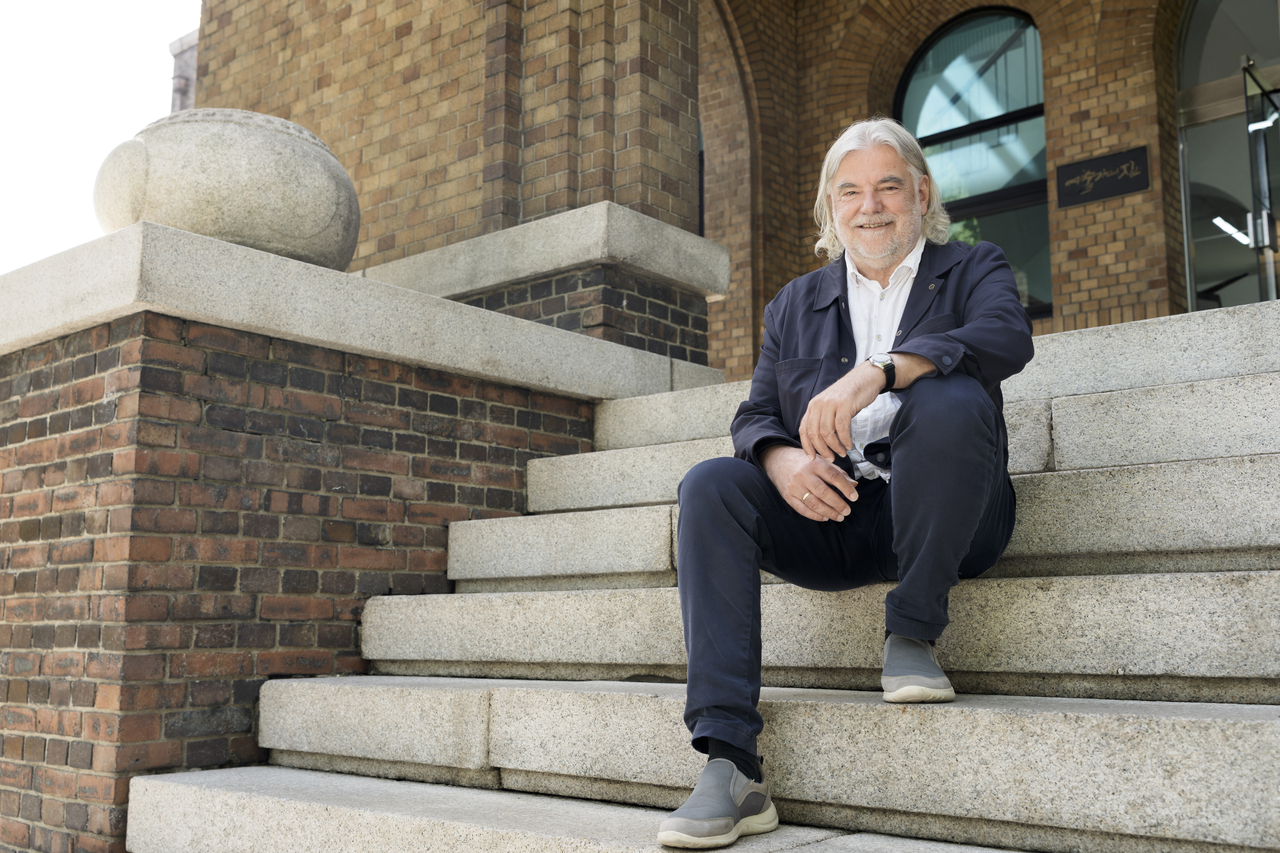
People lament that children don’t read these days. But according to Austrian author Heinz Janisch, the more pressing question we should be asking is: Are adults reading enough?
Janisch, whose work spans picture books, poetry, prose, plays and dance theater scripts, received the Hans Christian Andersen Award in 2024, widely regarded as the highest honor in children’s literature. His books have been translated into more than 20 languages.
“If parents read, children will naturally follow.”
The Austrian writer has spent much of his career listening to others. Alongside his literary work, he has long worked as a radio journalist with Austria’s national public broadcaster, ORF, producing in-depth interviews that trace the contours of individual lives.
Over time, he said, a pattern emerged: Formative moments in childhood shape the course of a life.
“Interviewing people who have achieved great things, I realized that small experiences in childhood can have a profound impact later in life,” he said.
He recalled stories about someone who decided to pursue music after hearing an organ in church. Another happened to see a play with classmates at school, which later led them to become a theater director.
“I’ve seen many such cases. My own interest in books also began in childhood.”
His father, a police officer, would return home from long days and still spend an hour each evening reading. As a child, he became curious, wondering what exactly was in those books that commanded such attention.
Janisch emphasized the role of adults in shaping a child’s imaginative world.
“Children have many questions. Everything is new to them, and not easy,” he said. “Instead of handing them a smartphone, it’s important for adults to read with them and show affection and attention through that shared process.”
The concern that children are reading less, he added, may obscure a more uncomfortable truth. “We should ask whether adults are setting an example,” he said.
The International Board on Books for Young People, which organizes the Andersen Award, described his work as that which “illuminates the special in seemingly trivial objects and features of daily life,” and noted his preference for poems, miniatures and aphorisms.
Janisch said that he deliberately leaves space for readers’ imagination.
“Books are the first space where imagination can take flight. I want to invite readers into that space.”
Children, he added, possess a particular capacity for wonder. “They experience everything for the first time and embrace it as an adventure. Those emotions are never small.”
Literature, in that sense, carries a responsibility. “Writers should be people who bring light to those in darkness. To offer warmth, to spark curiosity, to give courage,” he said.
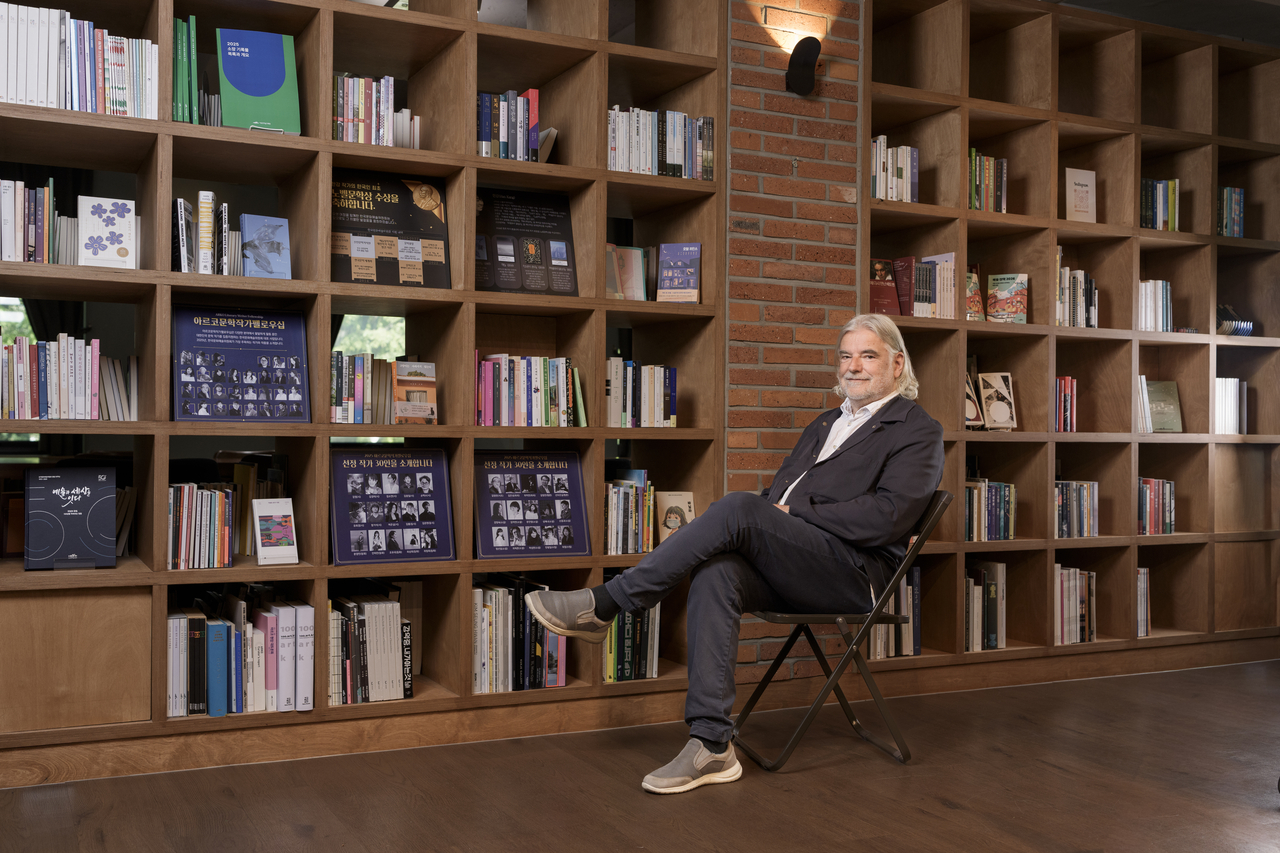
Janisch recently visited Korea as part of a literary residency program organized by the Arts Council Korea. In early April, he spent two weeks on Nami Island in Chuncheon, Gangwon Province, which he described as “very productive.”
He said he completed a Mozart-themed fairy tale that he had begun writing in Austria and also developed a series of short stories inspired by a 1920s collection of Korean folktales. He added that while the work may be published in Austria, he hopes to collaborate with a Korean illustrator.
hwangdh@heraldcorp.com