
Video art pioneer Paik Nam-june's first ever work in the medium has arrived in Seoul for “Nam June Paik: Rewind / Repeat.”
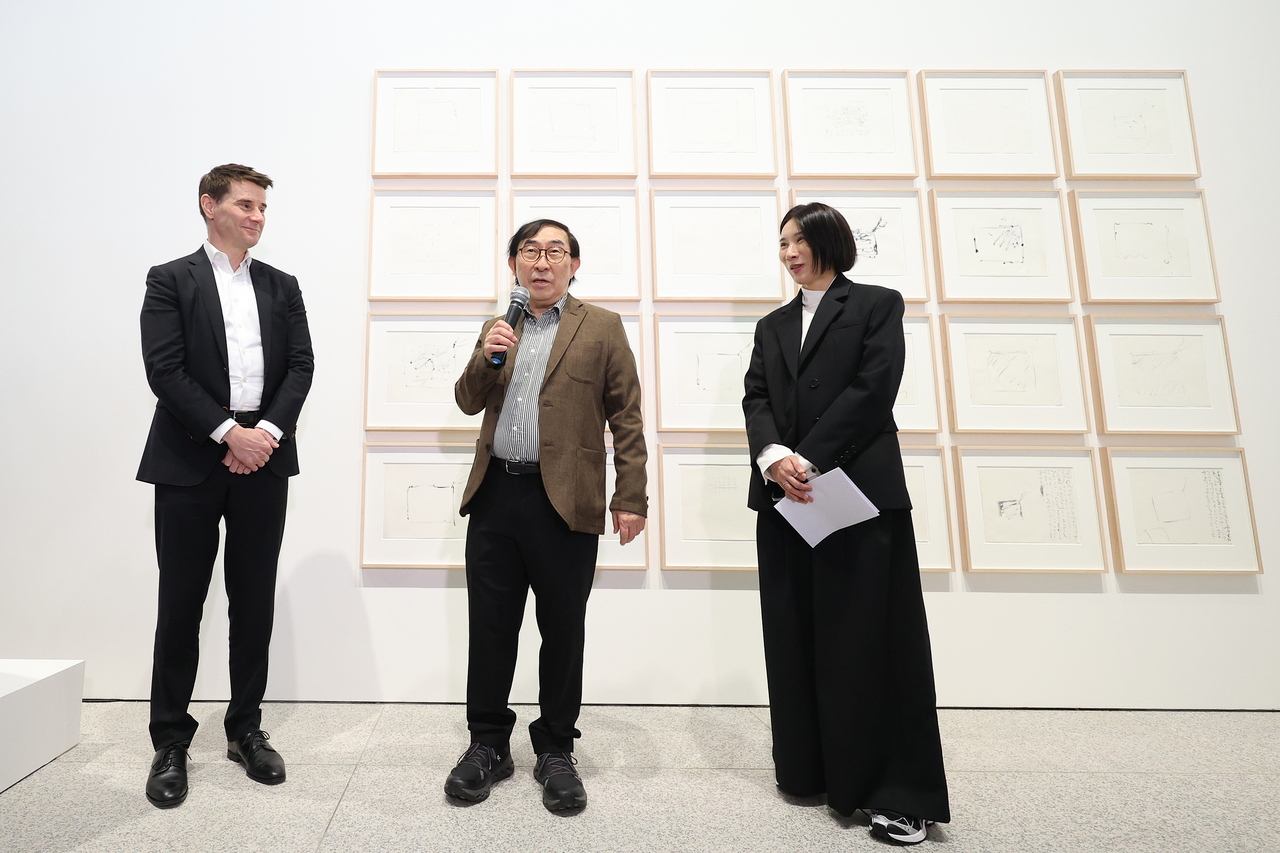
“I am sure today is a very happy day for Nam June Paik because he is back in his home city of Seoul. As you may know his ashes are at Bongeunsa not too far from here,” Ken Hakuta, Paik’s nephew and executor of the Nam June Paik Estate, told the press at the Amorepacific Museum of Art in Seoul.

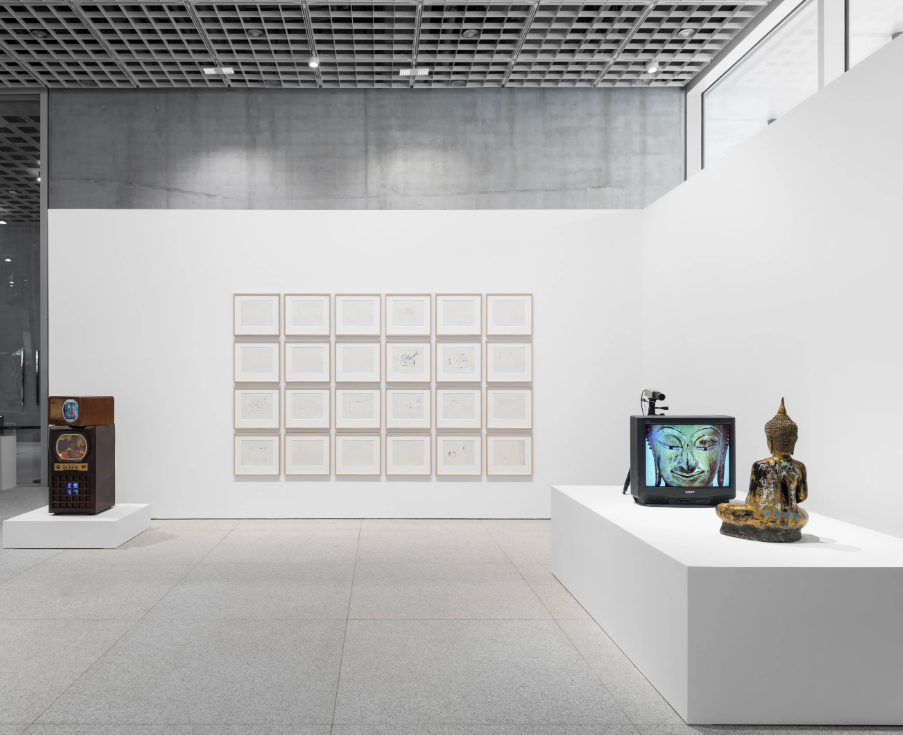
The exhibition is the estate's first Seoul show in 25 years. Organized by Gagosian gallery, the official partner of the estate, the show brings together around 11 pieces, spanning from Paik’s early experiments in the 1960s to his later work.
Hakuta described one of the early works on show, “Media Sandwich,” as one of the most significant pieces in the estate, as it marked a pivotal turning point in Paik's career.
“He decided he didn’t want to be a music composer anymore,” said Jon Huffman, who curated the exhibition. “Painting was already a crowded field, so he chose to invent a new genre — media art where no one is in the field.”

Widely recognized as a founder of video art, Paik trained in classical music and art at the University of Tokyo before moving to Germany in 1956, where he became associated with the Fluxus movement. He later relocated to New York.
His early experiments introduced television technology into fine art, anticipating later developments in global media and communication.
Standing before “For London and Abroad (Mailbox),” Hakuta said it reflects Paik’s enduring interest in communication and global connectivity. The video installation combines a physical mailbox with a live television feed showing real-time local broadcasts.
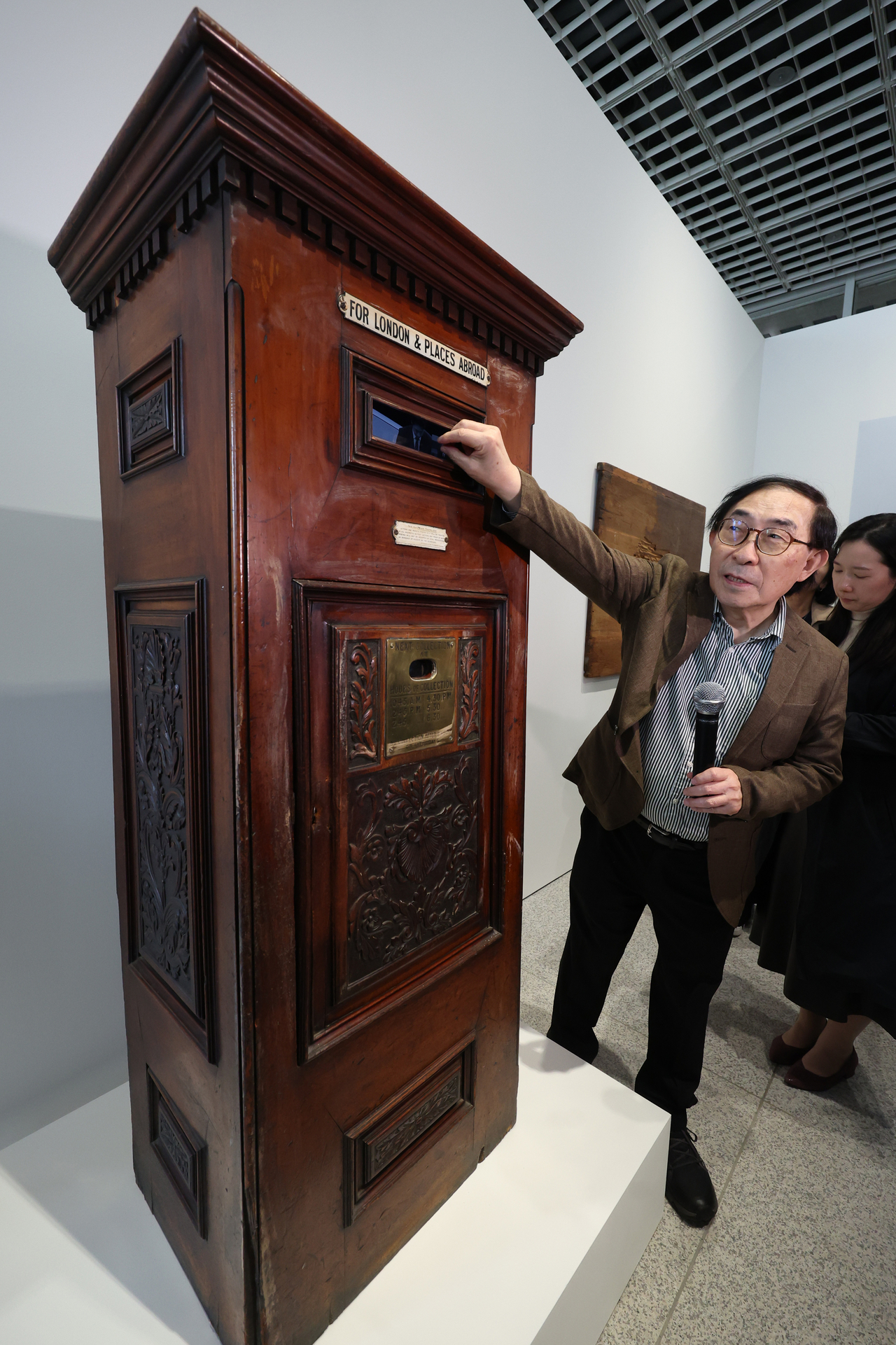
“There is a very interesting collector story. Back in the 1980s in New York, there was this Korean medical doctor, Matthew Kim, who passed away a few years ago. He supported several Korean artists in New York including Paik Nam-june. He acquired the piece after the Whitney Museum show in 1982,” he recalled. The Whitney Museum exhibition was the first video art show in New York.
Nick Simunovic, Gagosian’s senior director in Asia, emphasized the gallery’s long-standing collaboration with the artist’s estate since 2014, after Hakuta was responsible for the estate after Paik’s passing in 2006.
“We felt that this was the ideal moment to bring Paik’s work to Korea on the 20th anniversary of his passing. This is an honor for Gagosian to do this,” Simunovic said.
Hakuta opened up about his relationship with the Korean art world when reporters asked about the perception that it was strained.
He added that many of the challenges stem from miscommunication and differences in institutional systems.
“If they email me, I don’t know how to answer because the questions are very complex,” he said. “There are many misunderstandings because I don’t understand the Korean system.”
He further noted that decisions are sometimes made without clear confirmation from the estate.
“Sometimes I say no, and they do it anyway,” he said. “If I don’t answer, they proceed and say, ‘Oh, he didn’t say no, so it is okay.’”
Hakuta emphasized that such situations have contributed to a perception gap, rather than reflecting an unwillingness to collaborate.
When it comes to the estate, he said his goal was to place Paik’s most significant works in major museums and private collections. The estate, he added, would ideally “disappear” once the works are properly placed.
“Right now we don’t have any big plans, but we still have five years (for the 100th anniversary of the artist’s birth).
"Maybe, it (anniversary exhibition) should be in Korea you know, it should be in Korea. That would be a wonderful thing that we would love to work on,” he said.
“Nam June Paik: Rewind / Repeat” runs through May 16 at APMA Cabinet in Yongsan-gu, Seoul.
yunapark@heraldcorp.com