Iran’s ambassador to Seoul appeared to soften his stance on South Korean vessels transiting the Strait of Hormuz on Thursday, hours after hinting that Korean ships linked to US entities would be barred.
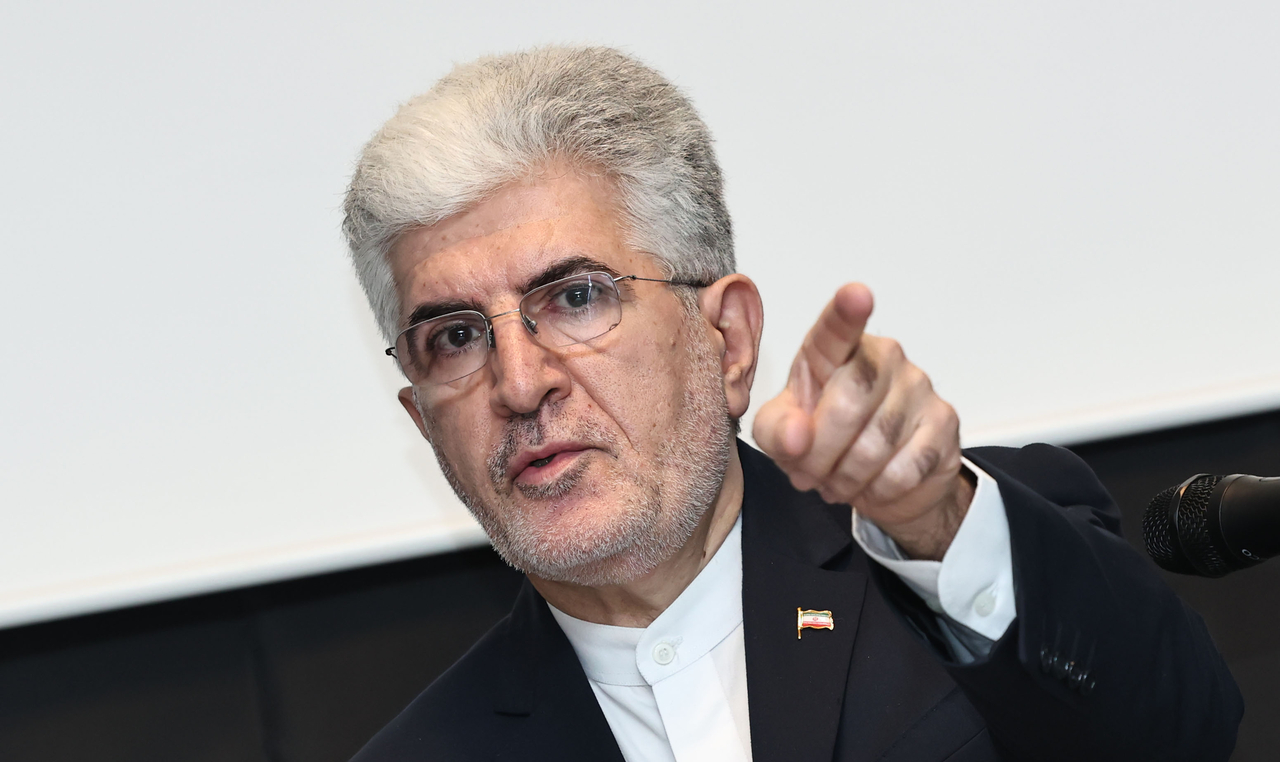
Saeed Kouzechi, Iran’s ambassador to South Korea, said in a morning radio interview that vessels associated with US companies would not be allowed to pass through the strategic waterway.
“We have stated that we will not permit passage through the strait for any targets related to the United States or Israel,” Kouzechi said, adding that companies doing business with US firms would be subject to sanctions during wartime.
“These sanctions also apply to US companies investing in energy and oil development in Gulf countries, as well as their shareholders,” he said. He added that “companies currently doing business with US firms are subject to sanctions during wartime,” in response to a question regarding South Korean ships transporting oil or gas from facilities involving US investment.
However, speaking at a press conference at the Iranian Embassy in Seoul just hours later, Kouzechi struck a more measured tone, describing South Korea as a “non-hostile country” and signaling conditional access for its vessels.
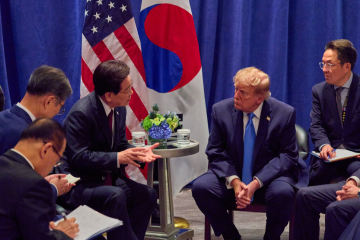
“South Korea is a non-hostile country,” he said, adding that Tehran “appreciates that South Korea did not join the US proposal,” in an apparent reference to Washington’s call for allied participation in a Hormuz security coalition. Seoul has so far been treading cautiously in responding to US President Donald Trump’s call for allied military support in the region.
Kouzechi said there would be “no issues” for South Korean nationals in Iran or crew members aboard Korean vessels, expressing hope that “through swift agreement, South Korean ships will be able to depart in sequence.”
Still, Kouzechi maintained that passage would require prior coordination and verification that vessels are not linked to the US or Israel.
“There is no problem with the safety of ships, but passage through the strait is only possible with coordination with the Iranian government,” he said.
He also underscored the wartime context, saying “we are at war, and the Strait of Hormuz cannot be excluded from the war situation,” while warning that “anything related to the United States or Israel, or benefiting them, will be subject to Iranian sanctions.”
Kouzechi emphasized that “the Strait of Hormuz is not closed,” noting that vessels may transit “under agreement with Iranian forces,” and that Tehran has requested that Seoul provide a list of vessels and related details through diplomatic channels.
His remarks came as Iran formally conveyed a similar position to the United Nations, stating that “non-hostile vessels” may pass through the Strait of Hormuz if they coordinate with Iranian authorities, according to a note seen by Reuters.
Seoul has responded cautiously to the development.
Foreign Minister Cho Hyun said the previous day during an emergency economic response meeting chaired by President Lee Jae Myung that Seoul had been informed of Iran’s position on allowing passage for “non-hostile vessels” through the Strait of Hormuz, but added that “it is too early to make a judgment,” citing the need to review whether Iran’s assurances can be broadly applied.
The Strait of Hormuz, widely regarded as the world’s most critical energy choke point, handles roughly a fifth of global oil and liquefied natural gas shipments. Traffic through the waterway has been severely disrupted amid the ongoing conflict between Iran and US-aligned forces.
Kouzechi also criticized a reported 15-point US peace proposal, calling it “illegal and unacceptable,” and reiterated that there are currently no negotiations between Tehran and Washington. The proposal, reportedly delivered through intermediaries, is said to include sweeping US demands such as the removal of Iran’s enriched uranium stockpile, a halt to uranium enrichment activities, limits on its ballistic missile program, and an end to support for regional militant groups. In return, Washington is believed to have offered sanctions relief and assistance for civilian nuclear development.
“We confirm once again that there is no dialogue between Iran and the United States at this time,” he said, adding that Iran is “not in a position to consider proposals from the White House.”
His remarks contrast with the White House’s assertion that talks remain ongoing. White House press secretary Karoline Leavitt said Wednesday that negotiations are “productive,” while warning that Iran would be “hit harder” if it fails to accept what she described as the reality of its military defeat.
mkjung@heraldcorp.com