Six-term right-wing lawmaker to lead bipartisan group to nurture parliamentary diplomacy with US 'on equal footing'
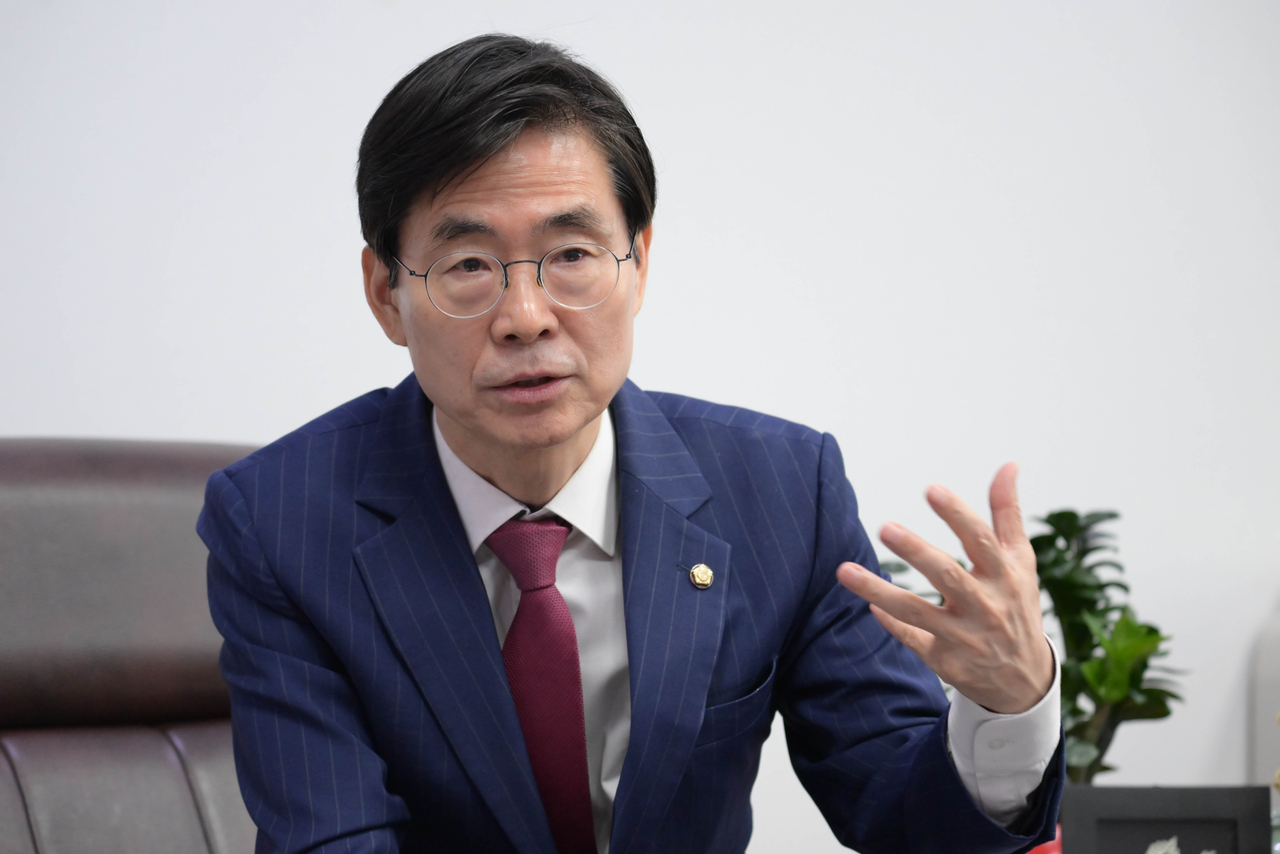
South Korea and US relations must be based on mutual trust as the allies navigate unexpected developments and challenges, a six-term lawmaker has stressed.
Rep. Cho Kyoung-tae of the main opposition People Power Party says matters such as sending naval support to the Middle East, as requested by US President Donald Trump, require a careful approach.
As deploying naval assets to the war-stricken region requires the National Assembly's consent, Cho said Trump's recent warship request points to South Korea's economic and security interests becoming increasingly intertwined.
"The request to dispatch Korea's warships does not seem to be only a military request," Cho said in an interview with The Korea Herald, citing the impact the conflict has had on maritime logistics and the global energy market.
He also said that certain "courtesy" is needed in requesting support from an ally, and that Seoul needs to act with its national interests.
"Especially at this juncture, when issues of trade and security are intertwined, an approach that attempts to trade one issue for another is undesirable," he added.
Cho, who co-chairs the bipartisan group Korea-US Parliamentarians' Union, will lead a delegation of lawmakers on a seven-day trip to the United States from Monday until March 29. The delegation will be composed of six South Korean lawmakers from major parties, but he declined to elaborate on who would be accompanying him on his trip, or which US officials they would meet, saying the schedule had not been finalized.
Time for respectful discussions
South Korea seeks to navigate several issues with the US, including tariffs and investment.
South Korea promulgated a bill regarding its $350 billion strategic investment package on Tuesday. The bill's passage came in the wake of Trump's social media threats to raise tariffs on Korea and accusing South Korea's legislature of "not living up to its deal," citing slow progress.
The bill, which would go into effect in June, provides a decision-making framework for strategic investment in the US.
Cho said South Korea was ready for discussions as an ally, on the premise that all matters related to the Seoul-Washington relationship were "judged based on mutual respect, national interests and institutional procedures."
"The point is that, if we create jobs for US industries, there must be corresponding benefits for Korea in return," he said.
"To me, this point has not been sufficiently emphasized until now. We have been somewhat defensive, simply complying with US demands. This seems far from being the optimal form of cooperation or negotiation between the allies."
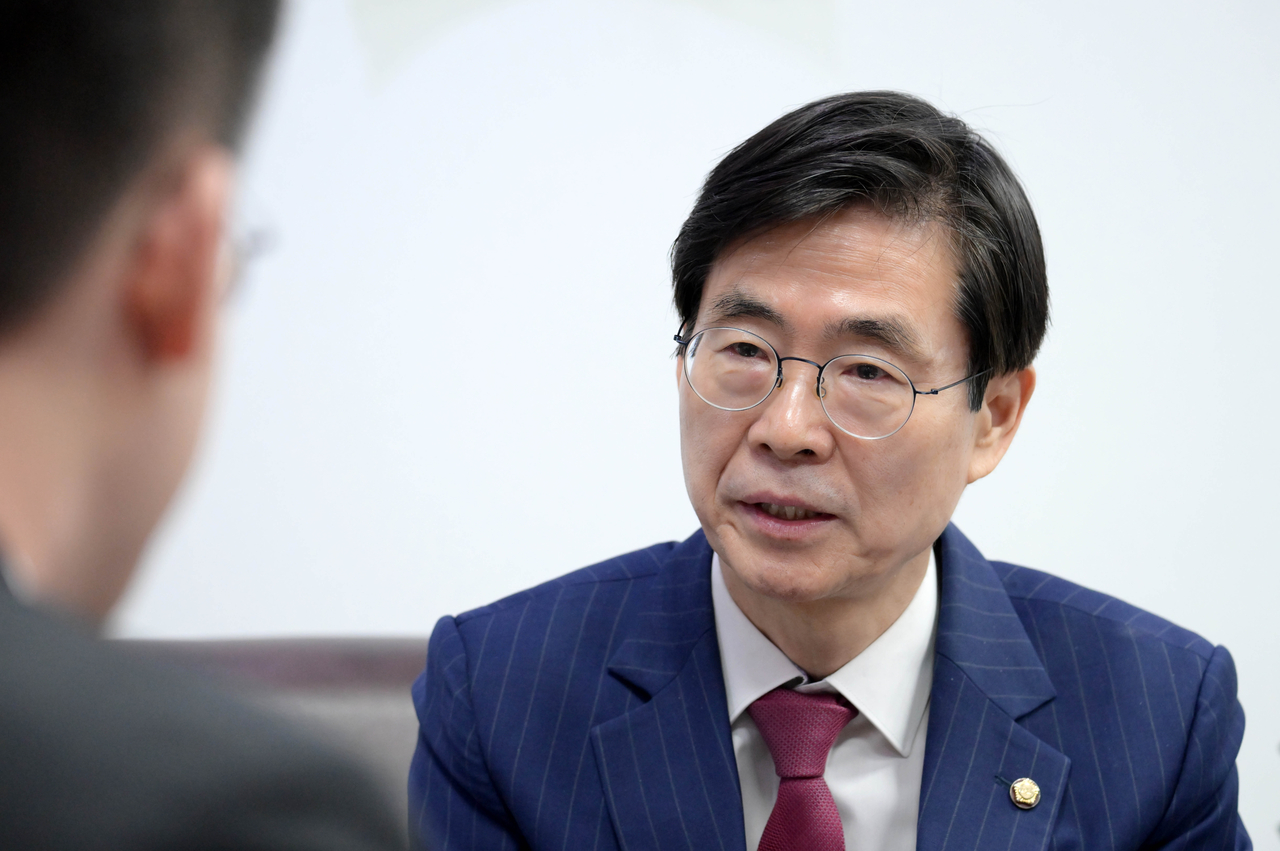
The upcoming US trip will be Cho's second as a lawmaker. He traveled there in February 2025 as the envoy of National Assembly Speaker Rep. Woo Won-shik.
Cho, who represents the Saha B constituency in Busan, has led the bipartisan lawmaker group dedicated to fostering parliamentary diplomacy between South Korea and the United States since its foundation in March 2025.
Among the agenda items in the upcoming trip would be the slower-than-expected progress in US support for South Korea's greater independence in civil-purpose nuclear projects, such as uranium enrichment, spent fuel processing and construction of nuclear-powered submarines, as stated in the joint fact sheet agreed by the two sides late last year.
"I will ask (counterparts in the US Congress) to take the lead in drumming up public attention to the joint construction of nuclear-powered submarines involving the two countries," Cho said, adding one of the delegations' destination would be the Philly Shipyard in Philadelphia, Pennsylvania, that is owned by South Korean shipbuilder Hanwha Ocean.
He added that US legislation to address visa complexity for South Korean workers in the US, as exposed in September through an immigration raid in a Georgia auto plant, could also be on the table in meetings with US congresspeople.
New negotiation channel
The channel for parliamentary diplomacy is of greater importance, Cho said, especially against the backdrop of looming US threats that stem from the US Trade Representative's Section 301 probe into unfair foreign practices and discriminatory foreign government practices of trading partners, including South Korea.
A US Supreme Court ruling in February struck down the Trump administration's tariff on trading partners based on the US' International Emergency Economic Powers Act, which in turn prompted the Trump administration's new global tariff levy, as well as the launch of Section 301 probes.
One of the ways the Korean delegation seeks to quell fears is to present to their US counterparts with accurate information concerning e-commerce firm Coupang, such as its consumer data leak, claiming that its US disclosure of the size of the data leak was much smaller than the Korean authorities' estimate of over 33 million.
"We cannot excuse a company for making false reports just because it is a foreign company, and pretend everything is alright," Cho said.
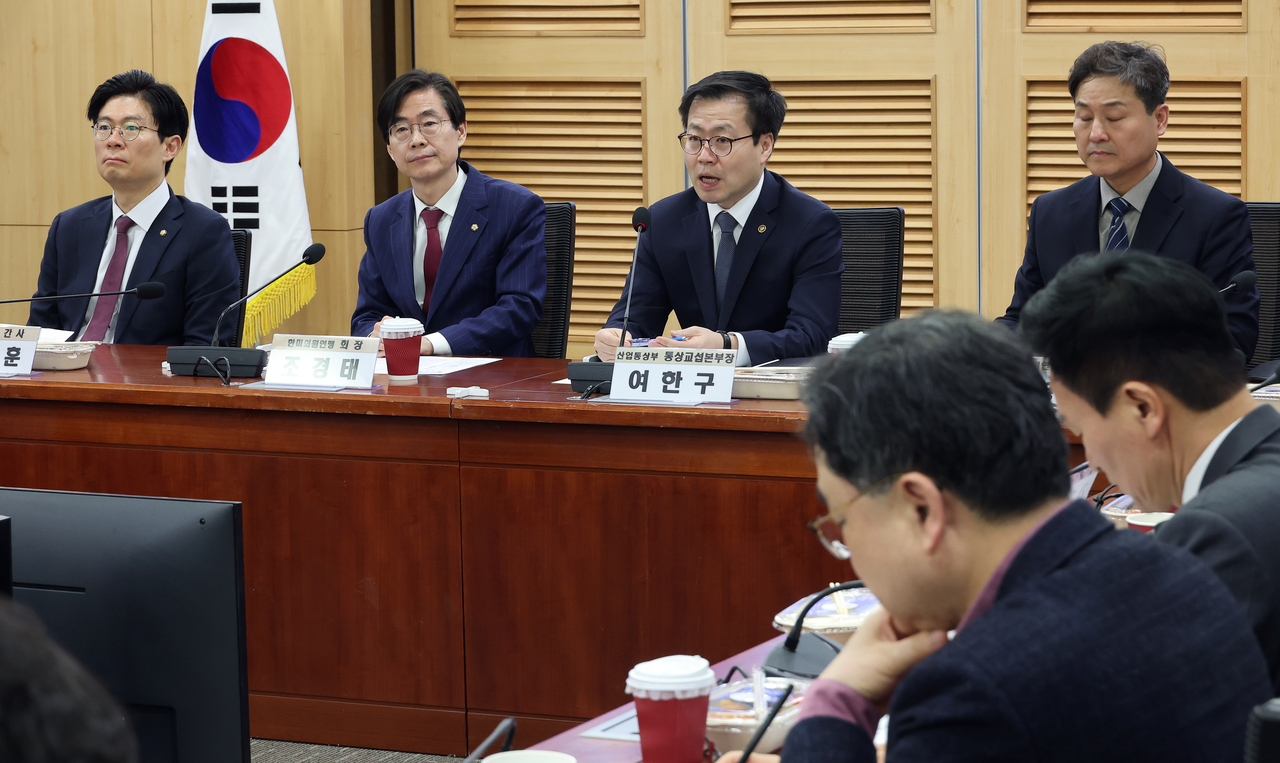
Cho, in the meantime, will be open to discussing the South Korean parliament's role in nurturing a business-friendly environment for foreign companies, adding he had met with the representatives of the American Chamber of Commerce in Korea over South Korea's business constraints before the trip.
"At the same time, if there are business constraints concerning doing a platform business in South Korea, we are willing to work together to improve them," Cho said, adding Rob Porter, chief global affairs officer for Coupang, is one of the people he would be meeting in the March trip.
To facilitate South Korea's parliamentary diplomacy with the US, the US Congress has its role to play: Passing a relevant law to create its own organization dedicated to its parliamentary diplomacy with South Korea's National Assembly.
"Someone needs to take the lead in moving forward, but it seems no lawmaker has done so yet," Cho said, adding he would make efforts to expedite the formation of its US counterpart during the trip.
consnow@heraldcorp.com