No matter how far science advances or how firmly one clings to rationality, death remains beyond human control.
British artist Damien Hirst, known for his direct and provocative works, confronts audiences with the inevitability of death in his Seoul exhibition “Damien Hirst Nothing Is True But Everything Is Possible.”
Raised by a single mother in a working-class household, Hirst developed a rebellious spirit early on, later emerging as a leading figure of the Young British Artists, whose rise began with a landmark exhibition in a disused warehouse on a derelict London dock.
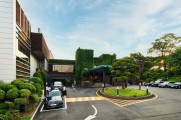
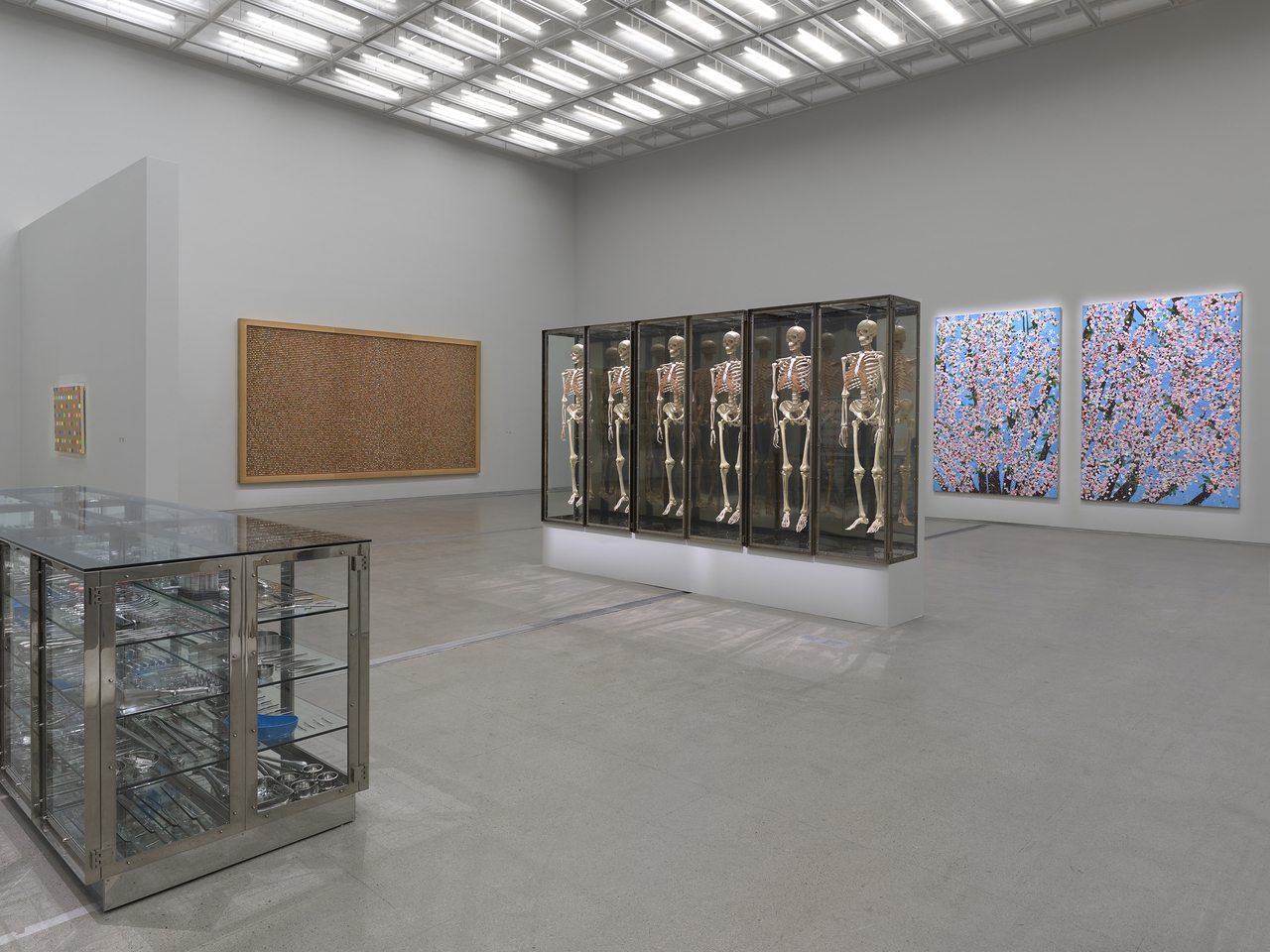
The National Museum of Modern and Contemporary Art, Korea presents the large-scale exhibition of the artist encompassing four decades of his artistic career, from his early works to his recent paintings.
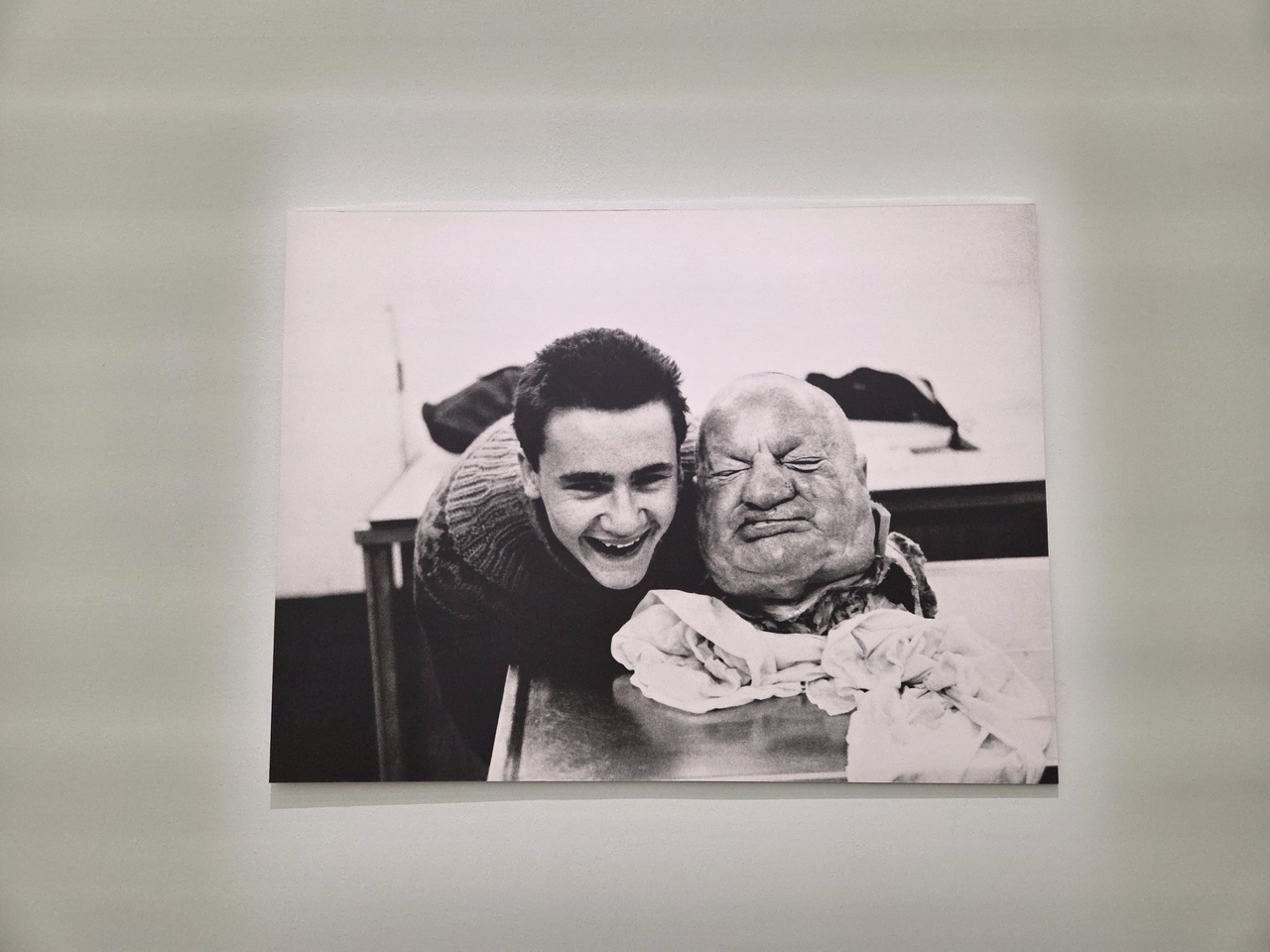
Hinting at the artist’s enduring preoccupation with death and mortality, the first work visitors encounter is “With Dead Head,” a photographic print on aluminium. Taken when Hirst was 16 during a visit to a morgue with a friend studying microbiology, the image captures the young artist grinning beside a corpse — a moment both mischievous in appearance and, as the artist later recalled, deeply frightening.
The museum’s decision to stage the artist’s show — despite criticism that Hirst is past his prime or that the show leans too heavily on popularity — reflects an effort to reassess his artistic legacy beyond public perception.
“He is an artist widely known to many, yet not fully understood,” said Song Su-jong, head of the exhibition division at MMCA on Wednesday.
“By presenting over four decades of his work, we hope visitors can trace the evolution of his practice and his current focus on painting. The works carry a palpable energy best experienced in person.”
Raised in a Catholic household, Hirst has long been interested in systems of belief.
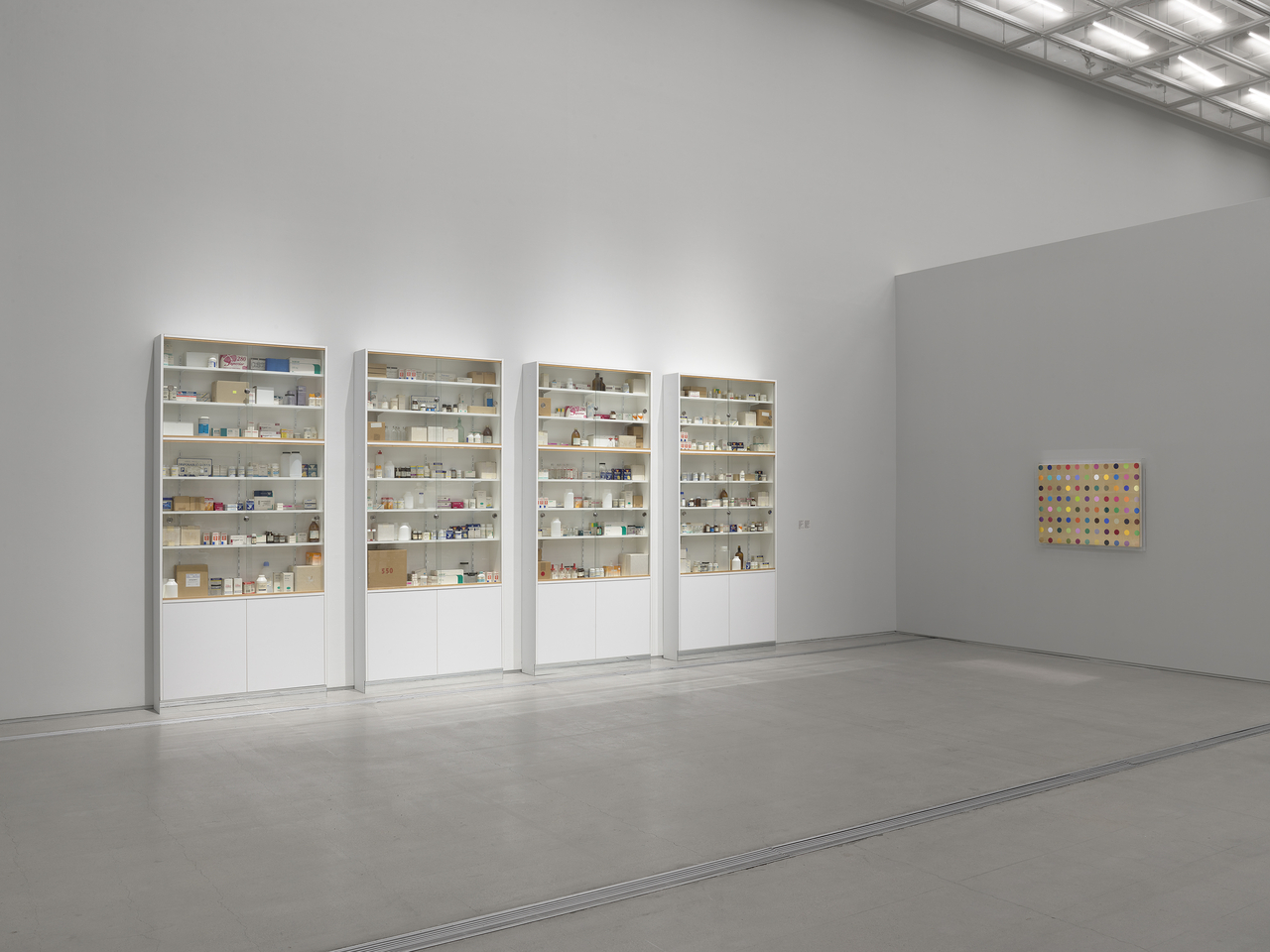
Resembling an altar, “Sinner” — his first work in the “Medicine Cabinets” series, created while he was at Goldsmiths — features empty pill bottles and packaging left by his late grandmother. Her medicine cabinet, constantly stocked by the National Health Service, came to represent for him a kind of modern faith.
“Art is like medicine — it can heal. Yet I have always been amazed at how many people believe in medicine but don’t believe in art without questioning either,” the artist once said. “I like the confusion you get between science and religion … that is where belief lies, and art as well.”
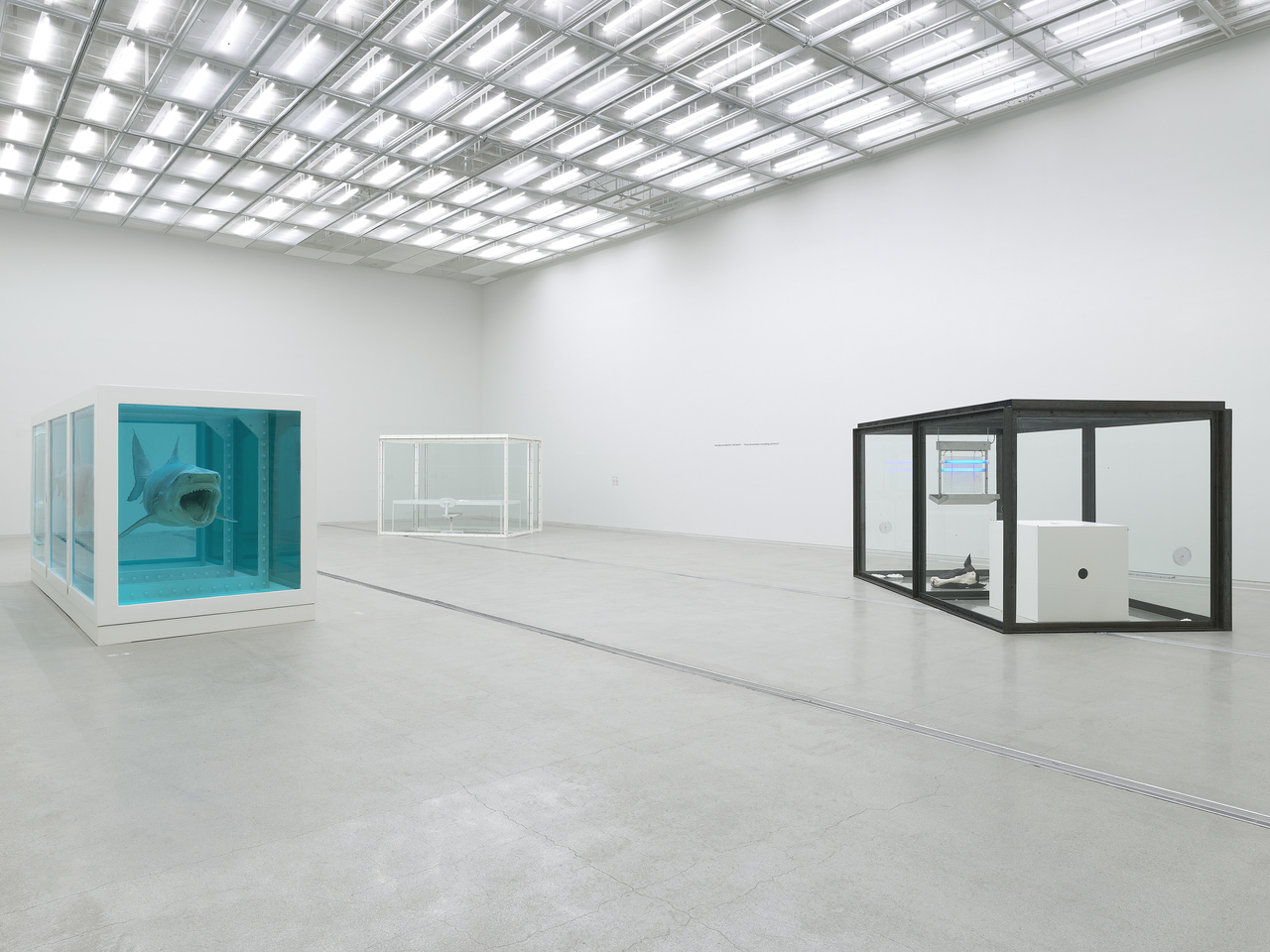
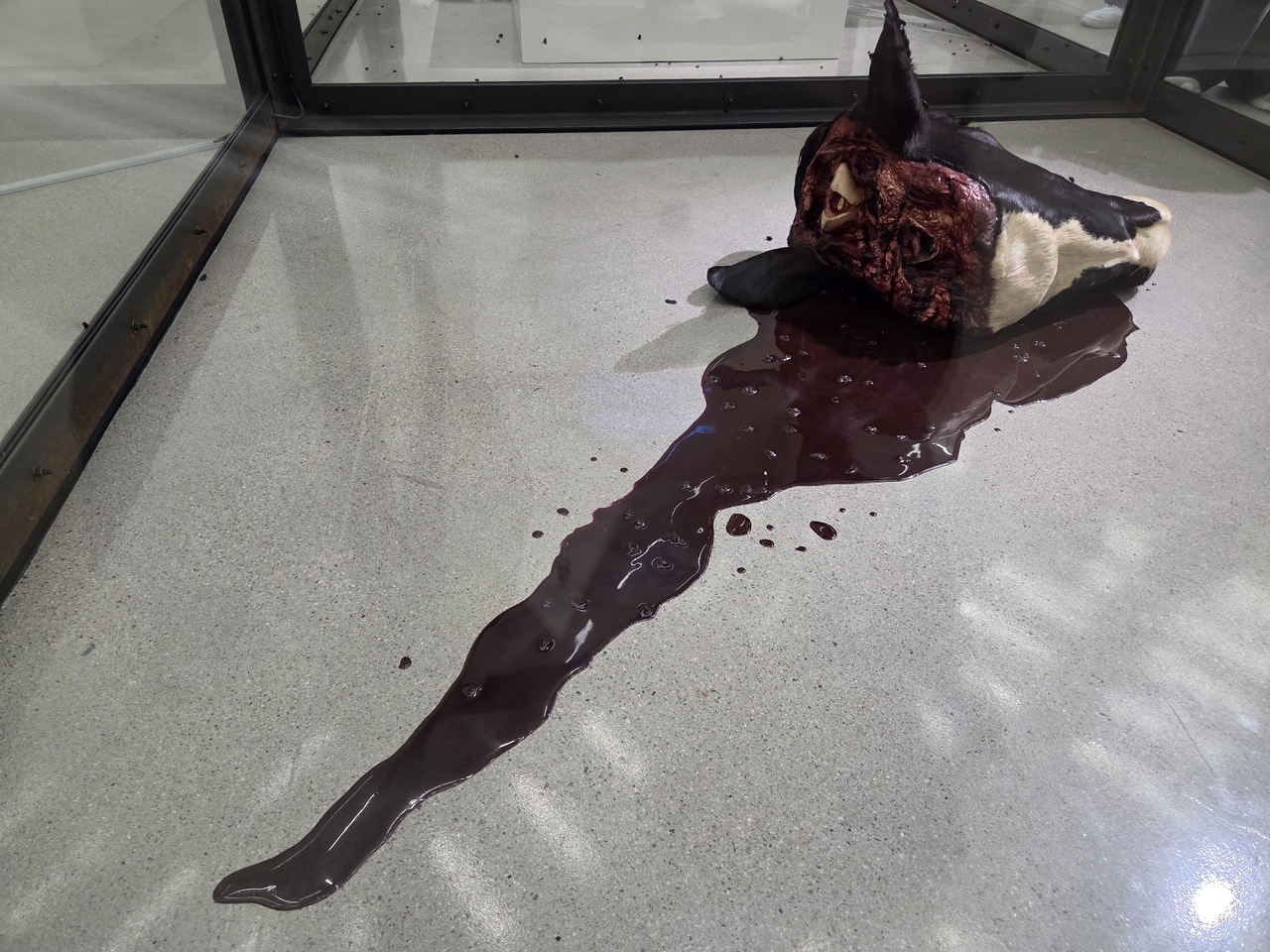
The confrontation with mortality intensifies in the section “We Live in Time,” where “A Thousand Years” — featuring a severed cow’s head, swarming maggots and an Insect-O-Cutor — draws viewers closer.
Nearby, a shark suspended in formaldehyde, “The Physical Impossibility of Death in the Mind of Someone Living,” embodies the paradox of human existence: living with the abstract fear of death while remaining unable to fully grasp it until the moment it arrives.
The artist turned his eyes to cherry blossoms recently -- the flower the artist’s mother liked most, according to the museum.
The triptych "The New Arrivals Blossom" captures their fleeting beauty — blooming in full before quickly fading — while also suggesting an evolution from his signature spot paintings.
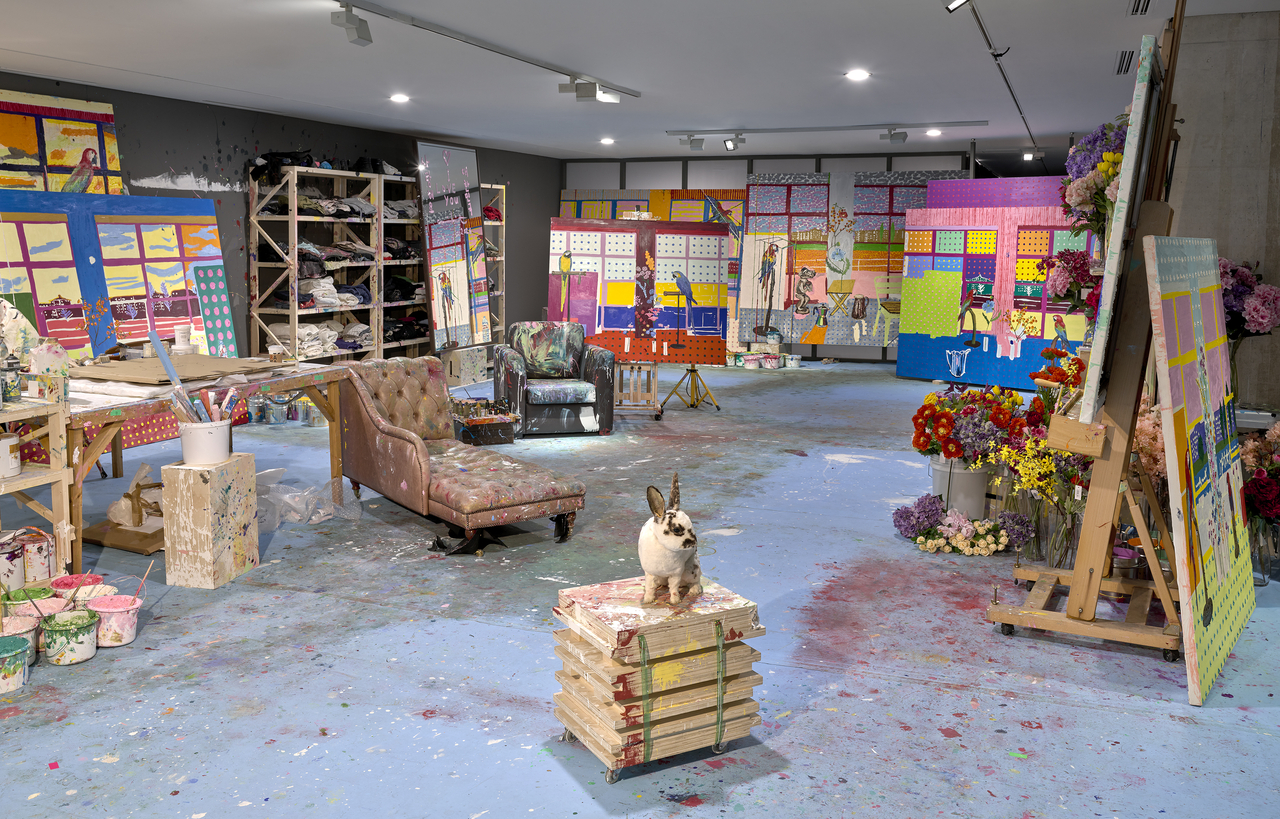
The exhibition concludes with the recreated space of the artist’s “River Studio” in London, offering a glimpse into his working environment. Paintbrushes, materials and workwear are displayed alongside previously unseen works, revealing a more intimate side of the artist’s practice.
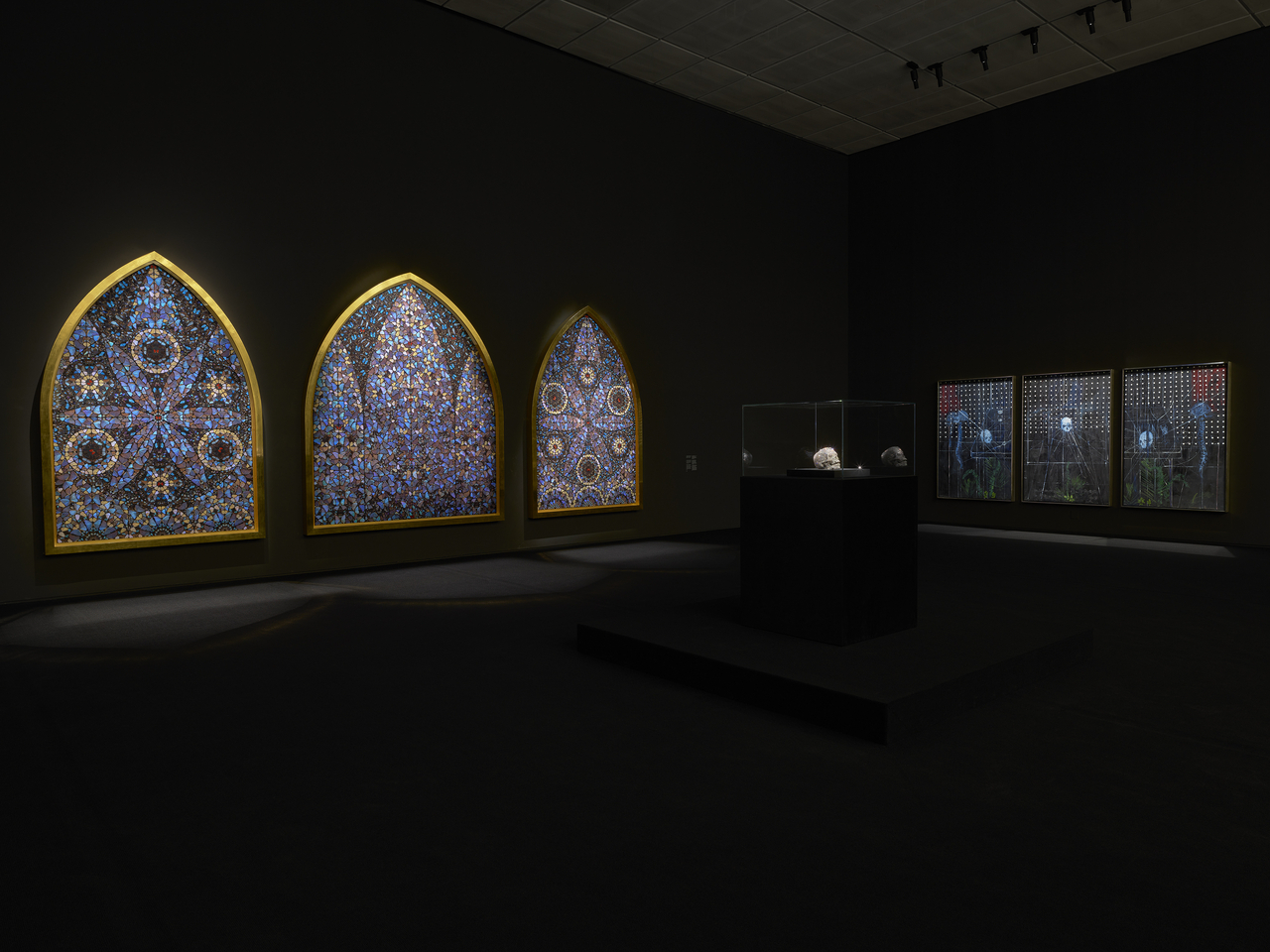
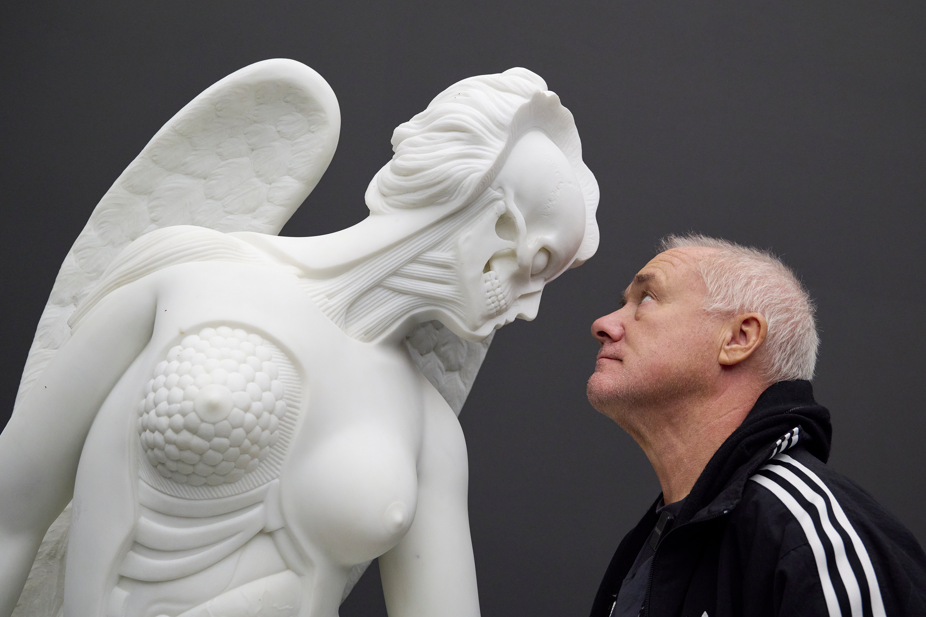
The skull “For the Love of God,” encrusted with 8,603 diamonds, reflects a desire for eternal glory while simultaneously confronting the inevitability that it, too, will come to an end. Its diamond surface glitters intensely in the darkness, heightening the tension between opulence and mortality.
The exhibition “Damien Hirst: Nothing Is True But Everything Is Possible” runs through June 28.
yunapark@heraldcorp.com


![[Exclusive] S. Korean Embassy to US woos Trump allies to expedite skilled visa talks](https://wimg.heraldcorp.com/news/cms/2026/09/29/rcv.YNA.20260924.PGT20260924167001009_R.jpg?type=h&h=120)