
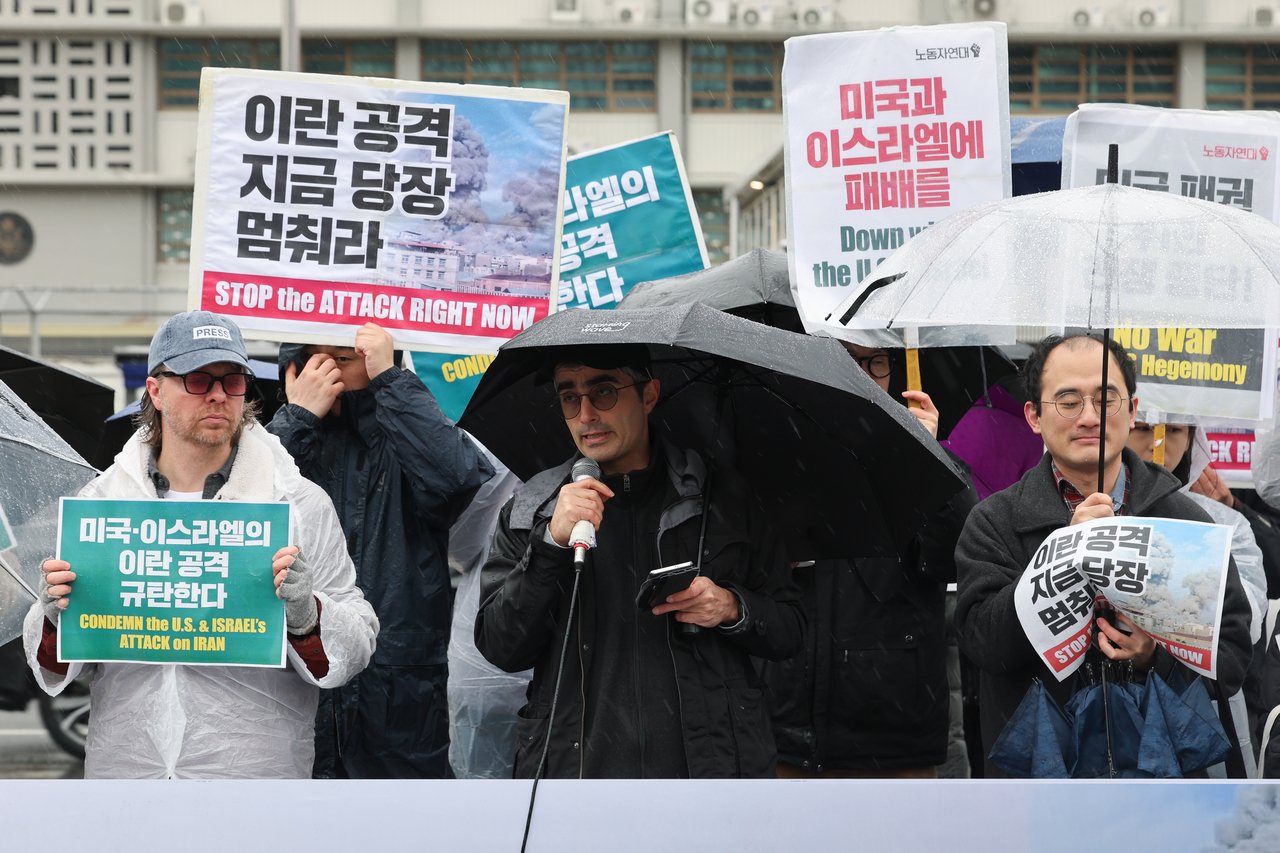
South Korea is heightening its emergency response posture as tensions escalate in the Middle East, with the government convening a series of high-level meetings to assess the impact on Korean nationals and national security.
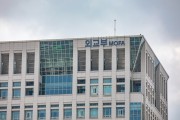
In a statement released by its spokesperson Park Il on Monday, Seoul's Foreign Ministry said it was closely monitoring developments with “serious concern,” and was taking steps to protect South Korean nationals in the region and "safeguard economic security, including stable energy supplies."
“As a party directly concerned with the North Korean nuclear issue, we maintain a firm commitment to upholding the international nonproliferation regime and have participated in the international community’s efforts to resolve the Iranian nuclear issue on that basis,” the statement added.
The statement expressed hope that the crisis would be resolved in line with international norms and that dialogue would be restored to ensure regional peace and stability.
An official at Seoul's Foreign Ministry told reporters Monday morning that approximately 60 South Koreans were currently in Iran and about 600 in Israel, including around 100 short-term visitors. No Korean casualties have been reported so far.
The ministry official said the Korean government would continue to provide consular assistance maintaining close communication with diplomatic missions across the Middle East to prepare for any contingency.
The ministry in the afternoon issued a temporary special travel advisory for seven Middle Eastern countries. The advisory, which falls between Level 2 and Level 3 advisories and urges citizens to cancel travel to a region and for those already there to leave or seek safety, went into effect at 6 p.m. Monday, covers the United Arab Emirates, Qatar, Oman, Bahrain, Jordan, Kuwait and Saudi Arabia.
Before the adjustment, the UAE, Qatar and Oman had no travel advisories in place. Bahrain had been under Level 1. Jordan and Kuwait had Level 1 and Level 2 advisories depending on region.
Saudi Arabia had Level 2 advisories ("reconsider travel") in some areas and Level 3 ("depart immediately") in others. Areas under a stronger Level 3 advisory remain at that level.
Seoul has maintained a Level 3 travel advisory for Iran, urging Koreans to leave the country and stay in close contact with diplomatic missions.
The Foreign Ministry has so far held two joint headquarters–overseas mission situation assessment meetings on the safety of Korean nationals, chaired by Second Vice Foreign Minister Kim Jin-a.
Separately, Defense Minister Ahn Gyu-back on Monday chaired a high-level situation assessment meeting in the afternoon to review security developments in the Middle East and ensure the safety of South Korean troops deployed overseas.
The Defense Ministry said it had already strengthened protection measures for overseas units as of Feb. 28 and confirmed that no South Korean troops had suffered casualties.
Ahn stressed that ensuring the safety of deployed personnel remains the top priority, urging commanders to minimize external activities and maintain full operational readiness within their bases to respond immediately to any contingency.
He ordered the military to remain fully prepared to deploy assets immediately if requested to support the evacuation of South Korean nationals from affected regions.
In addition, Ahn instructed commanders across the armed forces to maintain field-centered readiness, strengthen the combined defense posture with allies, and ensure thorough preparations for the upcoming annual South Korea-US Freedom Shield exercise, scheduled to run from March 9-19.
The meeting was held at the Joint Chiefs of Staff’s operations command center and attended by around 40 senior officials from the ministry and the JCS. Commanders of overseas deployment units — including the Dongmyeong Unit in Lebanon, the Cheonghae Unit, the Akh Unit in the United Arab Emirates, and the Hanbit Unit in South Sudan — joined the session via video conference.
At the legislative level, the National Assembly’s Foreign Affairs and Unification Committee will hold an emergency inquiry session Friday regarding the US and Israeli airstrikes on Iran. Foreign Minister Cho Hyun and Unification Minister Chung Dong-young are expected to attend the session.
Lawmakers are expected to examine the potential impact of the crisis on South Korea’s economy, energy security and diplomatic posture, as well as the government’s response strategy. The session is also likely to address related foreign policy issues, including ongoing tariff negotiations with the United States and developments surrounding North Korea’s Ninth Workers’ Party Congress.
Escalating tensions in the Middle East have triggered widespread airspace closures, disrupting commercial aviation routes and leaving South Korean travelers stranded across the region.
The wave of airspace shutdowns has rippled across major Middle Eastern transit hubs, complicating return plans for Korean tourists who had scheduled flights through the region. Travelers have reported chaotic conditions at airports, as departures were abruptly suspended.
According to the Korean Association in Egypt, a community organization representing South Korean nationals living in Egypt, on Saturday, inquiries from tourists seeking alternative routes home have surged since the previous day.
South Korean embassies across the region have activated emergency contact networks and issued safety advisories. The embassy in Qatar warned that Iran’s missile and drone attacks targeting Qatar could continue for several days, urging Korean nationals to exercise extreme caution and avoid going outside except when absolutely necessary, such as purchasing essential supplies.
In Egypt, diplomatic officials said preparations are underway to assist Koreans evacuating from Israel.
“We are fully prepared to ensure that Koreans evacuating from Israel can travel safely and rest as comfortably as possible,” said Choi Byung-sun, acting South Korean ambassador to Egypt. “We hope that everyone can evacuate without incident.”
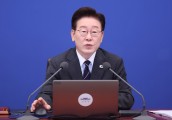
President Lee Jae Myung on Sunday directed the government to set up an emergency response system under the leadership of Prime Minister Kim Min-seok to address any fallout from the escalating crisis in the Middle East, his office said, as he departed for a trip to Singapore and the Philippines.
The instruction was issued shortly before Lee left for Southeast Asia, presidential spokesperson Kang Yu-jung said.
Lee also ordered officials to provide him with regular updates on the government’s response and the potential economic repercussions of the situation, while calling for the “utmost” efforts to safeguard South Korean nationals residing in the region.
The directive came a day after a joint US-Israeli strike on Iran reportedly resulted in the death of Iran’s Supreme Leader Ayatollah Ali Khamenei.
mkjung@heraldcorp.com