
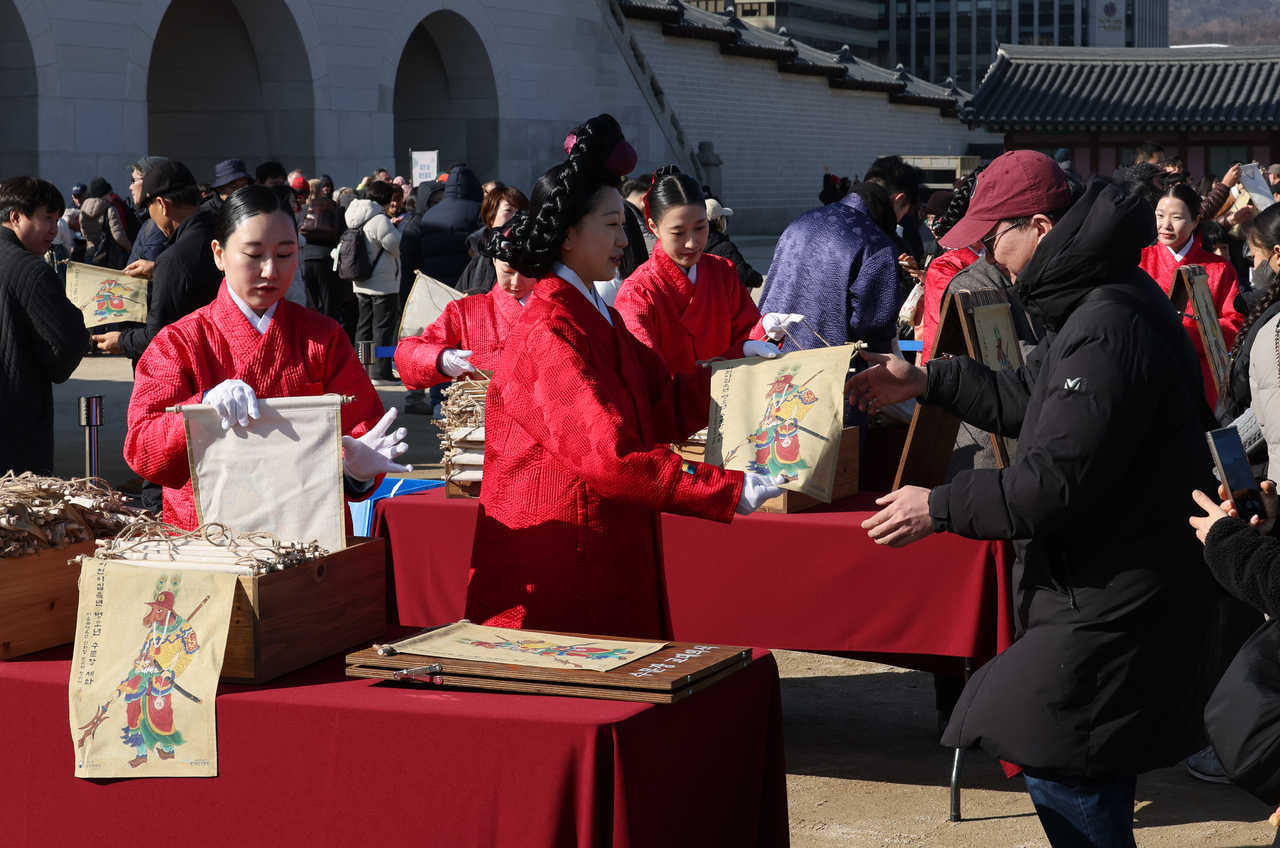
Visitors receive traditional New Year paintings at the “2026 Byeong-o Year Sehwa Sharing” event held at Heungnyemun Square of Gyeongbokgung Palace in Seou on Monday, a day before the Lunar New Year holiday. (Yonhap)

Royal palaces and Joseon-era royal tombs across South Korea are open to the public free of charge during the Lunar New Year holiday, offering visitors a chance to enjoy historic sites and seasonal traditions.

The four main palaces in Seoul, Gyeongbokgung, Changdeokgung, Deoksugung and Changgyeonggung, along with Jongmyo Shrine and 22 Joseon royal tomb sites nationwide, are open without regular closure days from Saturday to Wednesday.

During the five-day holiday period, admission fees are waived at all participating sites.

Jongmyo, which is normally operated through guided tours at designated times, allows visitors to explore the grounds freely during the holiday.

However, all four palaces, Jongmyo and the Joseon royal tombs are be closed on Feb. 19 after the free-admission period ends.
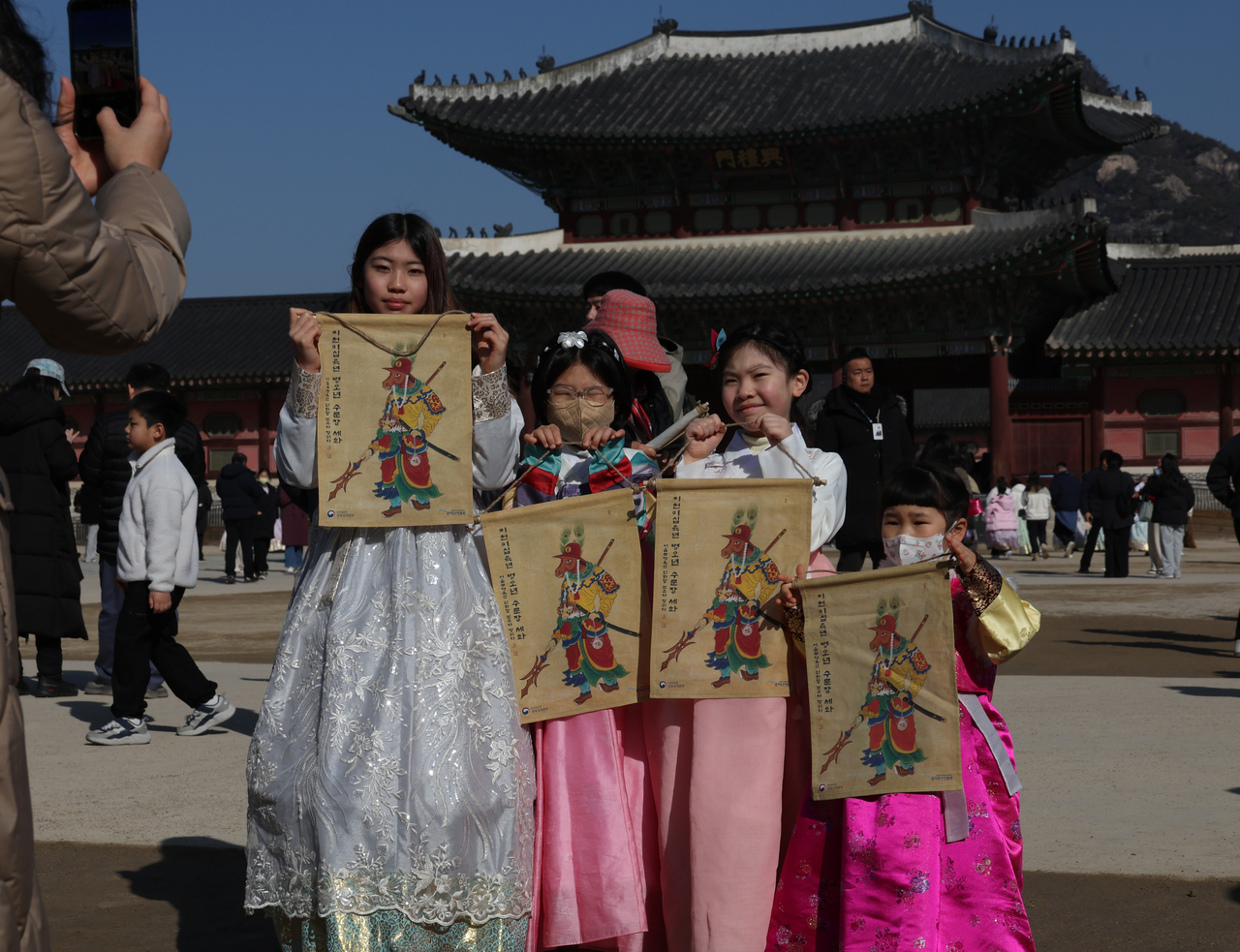
Visitors pose for a commemorative photo while holding traditional New Year paintings at the “2026 Byeong-o Year Sehwa Sharing” event held at Heungnyemun Square of Gyeongbokgung Palace in Seoul on Monday, a day before the Lunar New Year holiday. (Yonhap)

A special Lunar New Year event will take place at Gyeongbokgung Palace from Monday to Wednesday.

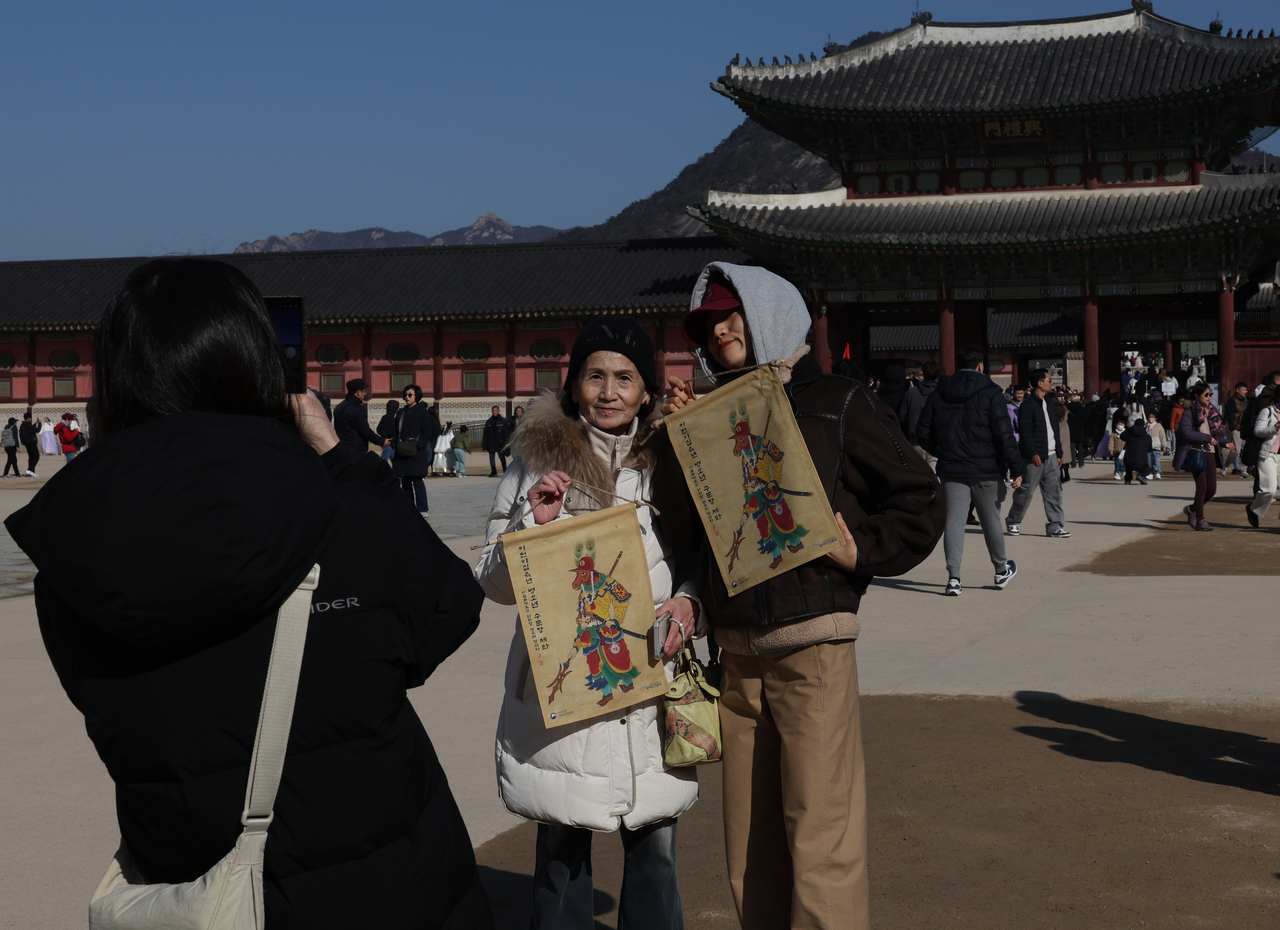
The “2026 Byeong-o Year Sehwa Sharing” event are held at Heungnyemun Square inside Gyeongbokgung, where visitors receive traditional New Year paintings wishing them good fortune in the year ahead.

“Sehwa,” meaning “New Year painting,” refers to pictures drawn with the hope of warding off disease, disasters and misfortune, while inviting luck and prosperity for the coming year.

The custom dates back to the Joseon era, when the king presented paintings to his officials at the start of the new year. Over time, the practice spread among the public and became a seasonal folk tradition.

The annual Sehwa event at Gyeongbokgung has become a popular attraction, blending cultural heritage with New Year celebration, and offering visitors a meaningful way to welcome the year.
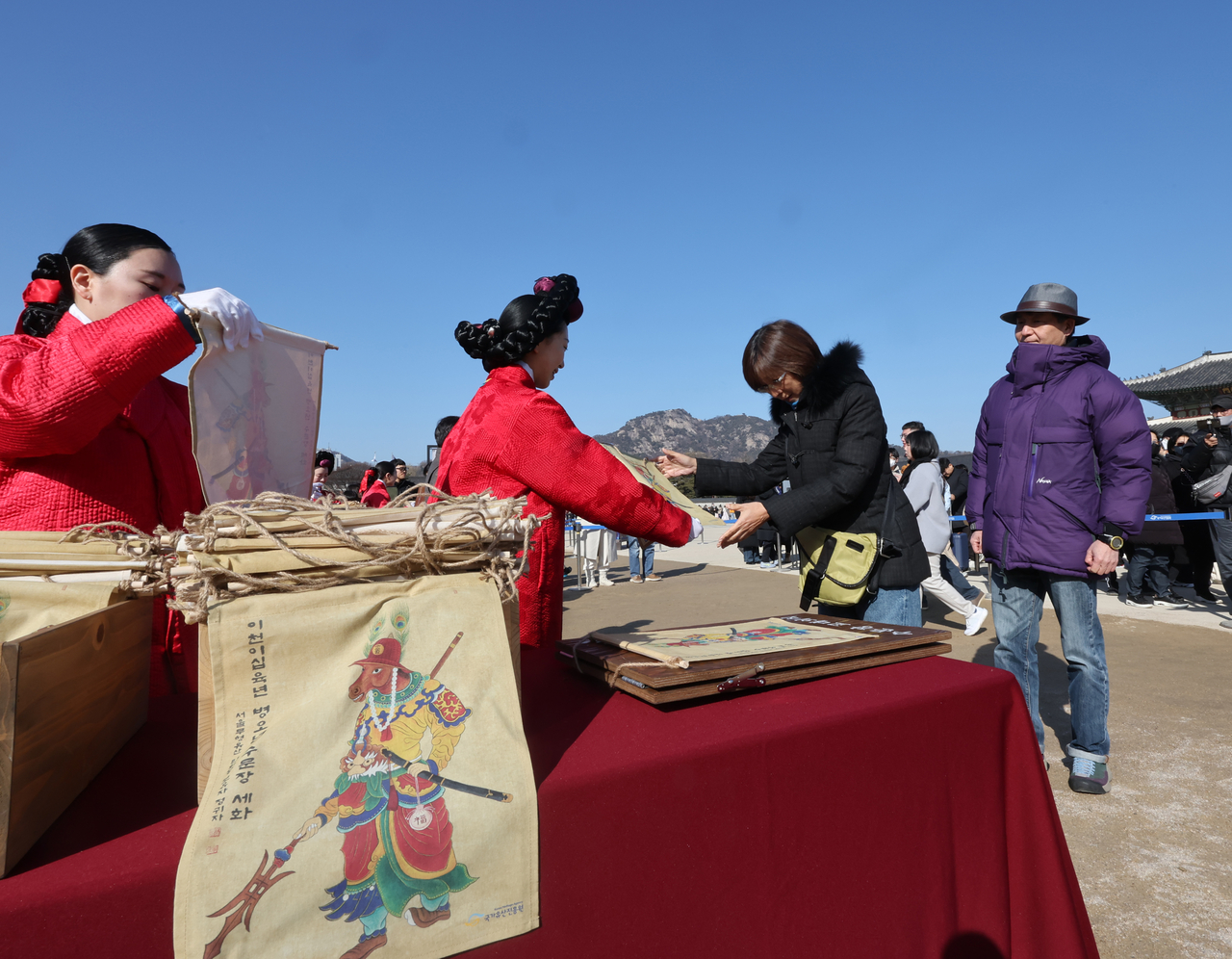
Visitors receive traditional New Year paintings at the “2026 Byeong-o Year Sehwa Sharing” event held at Heungnyemun Square of Gyeongbokgung Palace in Seou on Monday, a day before the Lunar New Year holiday. (Yonhap)
Visitors pose for a commemorative photo while holding traditional New Year paintings at the “2026 Byeong-o Year Sehwa Sharing” event held at Heungnyemun Square of Gyeongbokgung Palace in Seoul on Monday, a day before the Lunar New Year holiday. (Yonhap)

shinjh@heraldcorp.com