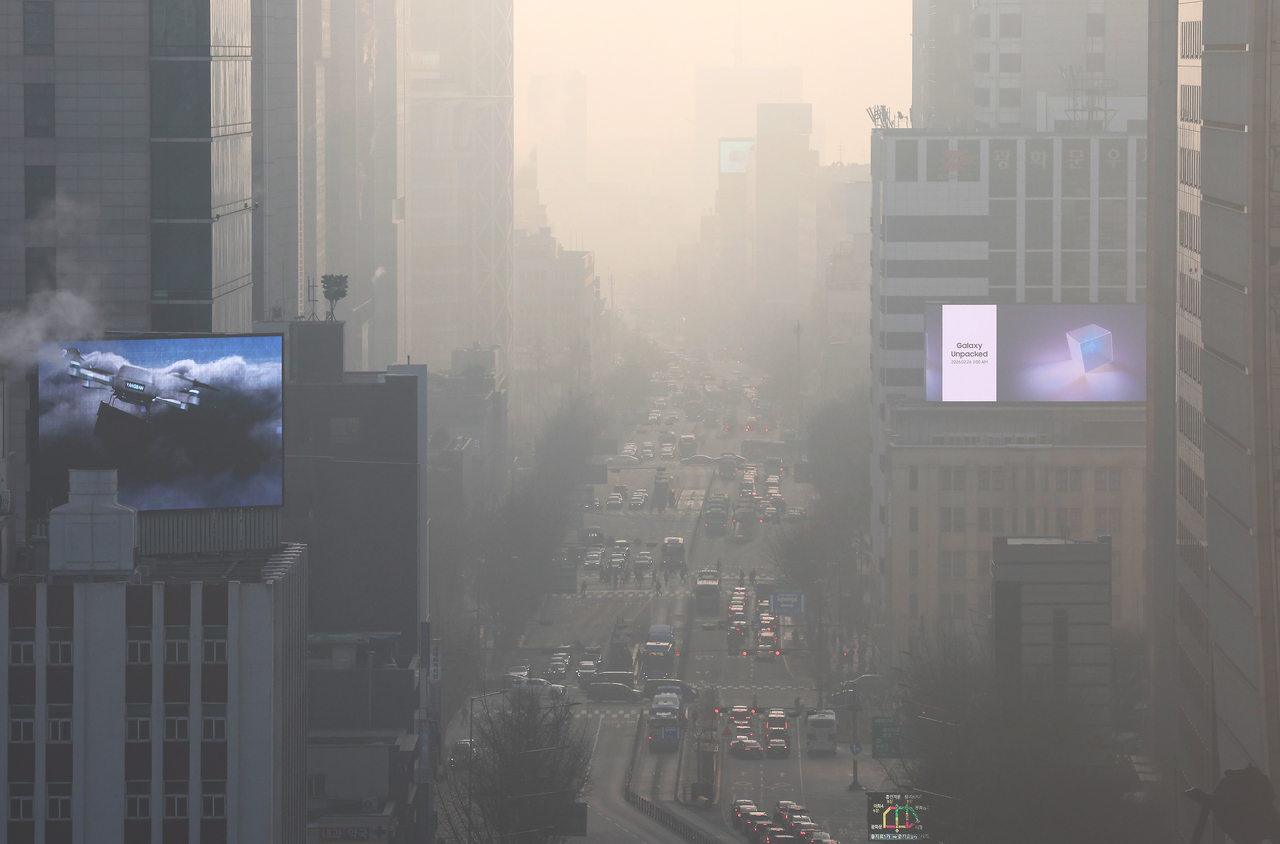
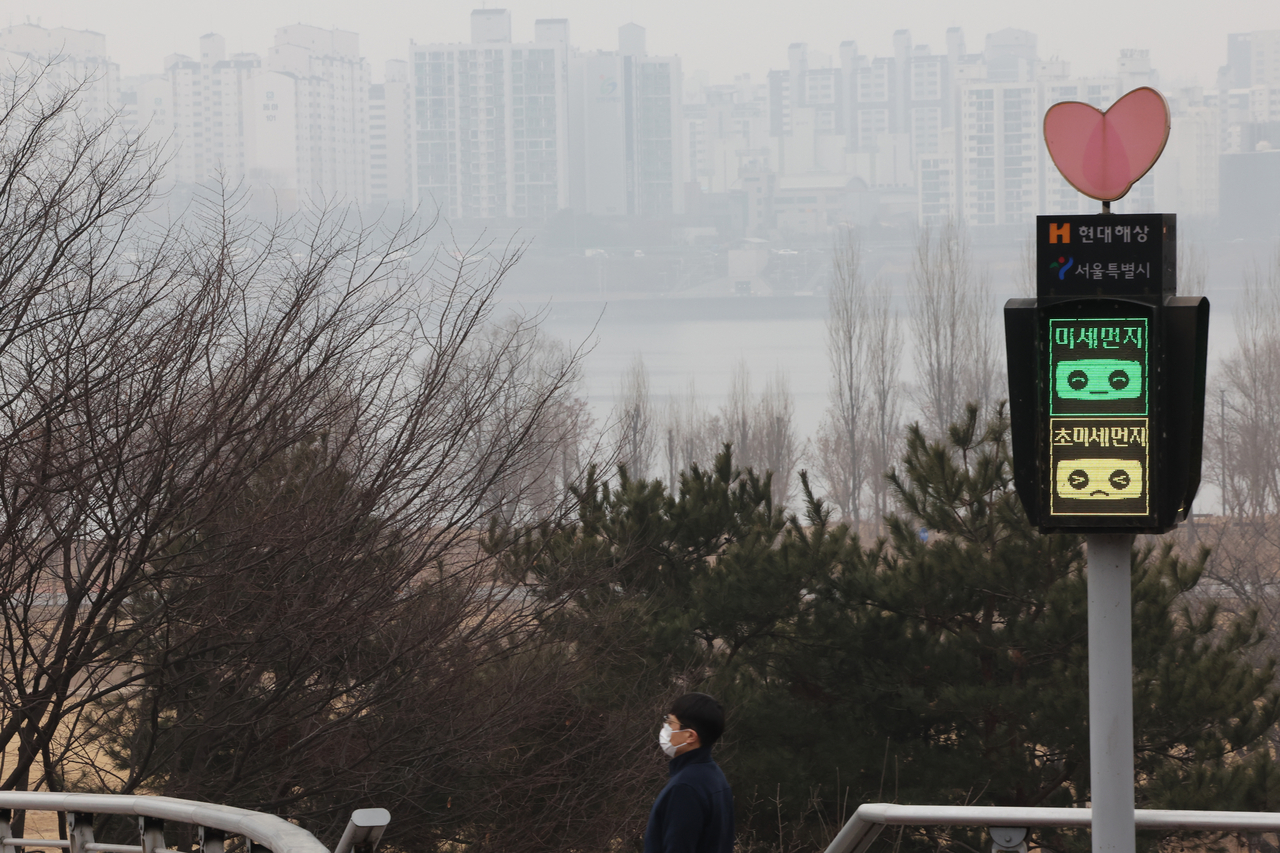
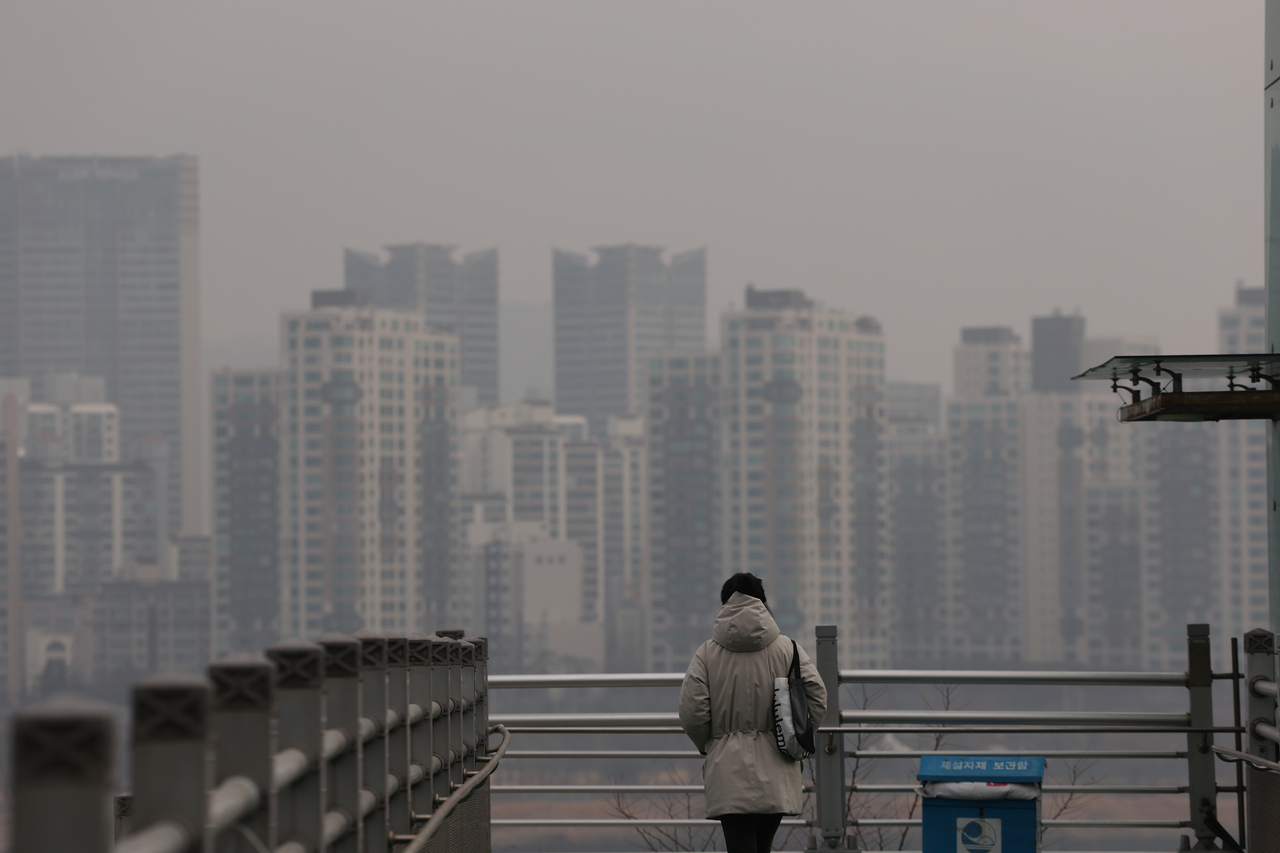
As the cold wave receded, toxic air blanketed much of South Korea on Thursday, prompting a dust advisory for Seoul and other central-western regions.
According to the Korea Meteorological Administration, ultrafine dust particles smaller than 2.5 micrometers in diameter — known as PM2.5 — are expected to remain at “bad” levels across most parts of the country through Saturday, including Seoul, parts of Gangwon Province and much of the central areas of the Gyeongsang and Chungcheong provinces.
As of 2 p.m. Thursday, a PM2.5 advisory, issued at 11 p.m. the previous day, was in effect for Seoul and Gyeonggi Province. The advisory is triggered when the hourly average concentration of PM2.5 exceeds 75 micrograms per cubic meter for more than two consecutive hours.
The National Institute of Environmental Research attributed the spike to stagnant air conditions that allowed domestic pollutants to accumulate, combined with smog flowing in from abroad starting Thursday morning.
With mild temperatures and continued atmospheric stagnation, high concentrations of ultrafine dust are expected to persist through Saturday.
ylee221@heraldcorp.com