Winner of the 2023 Karajan Young Conductors Award talks about adrenaline-fueled focus and flexibility
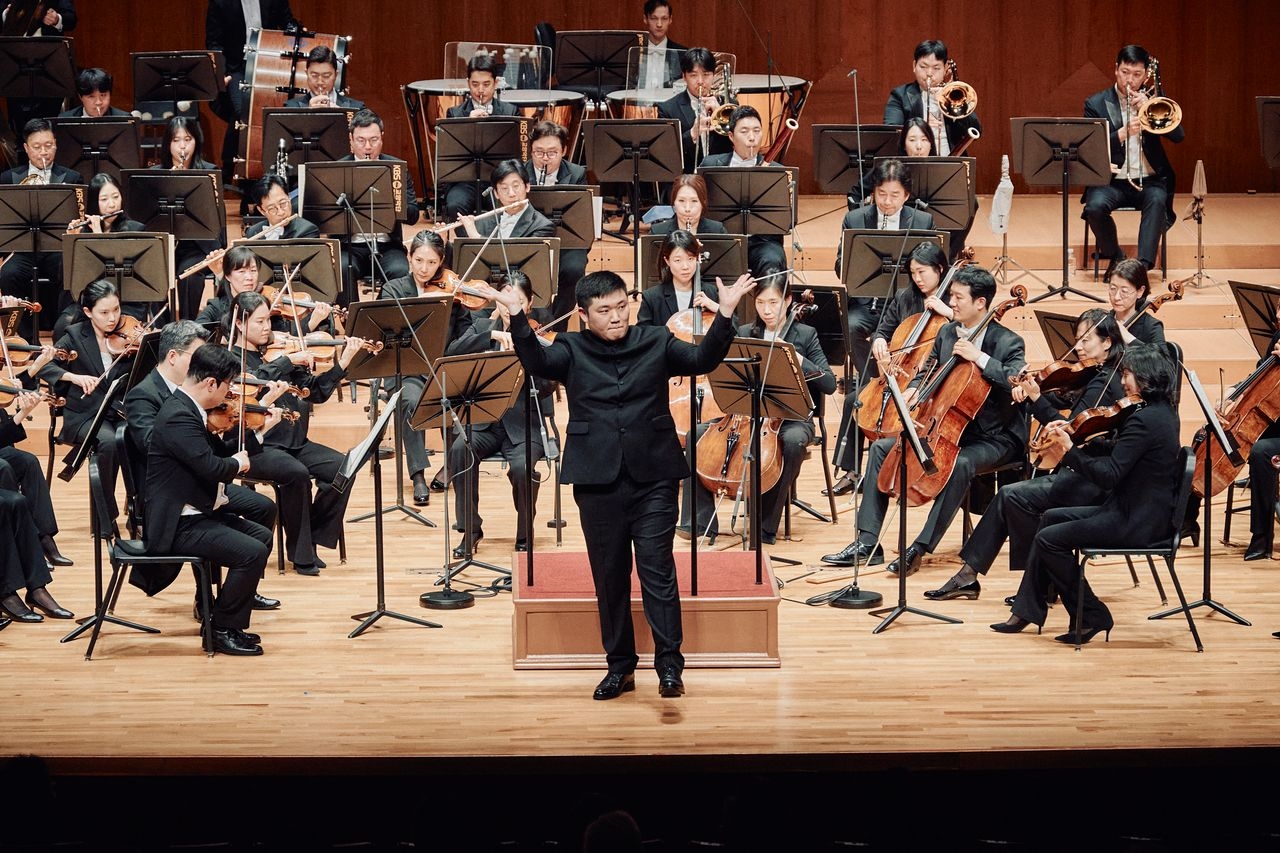
For most conductors, a phone call 48 hours before a major international concert across the continent is a nightmare scenario. For Yoon Han-kyeol, it is becoming a signature move.
The 32-year-old conductor and composer was originally slated to return to his native South Korea to lead a New Year’s concert -- his first homecoming in January after 15 years abroad. But when the phone rang with an urgent request from the Montreal Symphony Orchestra, plans changed instantly. Yoon flew to Canada to step in for Robin Ticciati to conduct a heavy-hitting program featuring Stravinsky, Tchaikovsky and Rachmaninoff's Symphony No. 3.
This marked his third high-profile "jump-in," following a last-minute replacement for the Orchestre National de Belgique in October and a stint with Spain’s Orquesta Sinfonica de Galicia that took place last week.
It was also a moment of deja vu for the young conductor: He had performed the Rachmaninoff symphony for the very first time just last March in Hanover, also as a last-minute replacement.
He received the call just a couple of days before he was scheduled to participate in rehearsals for the Niedersachsisches Staatsorchester Hannover -- so late, in fact, that he had to rush out and buy the score immediately.
Instead of getting nervous about learning a massive new piece just three days before the performance, Yoon channeled the pressure into adrenaline-fueled focus and flexibility.
"I listened to the recordings on repeat for hours, almost brainwashing myself with the music. I borrowed ideas from various interpretations and quickly sketched them into the score. Since the rehearsal process is inherently about absorbing the orchestra’s character and testing whether my ideas fit them, the lack of time wasn’t a major issue," he said in an interview on Jan. 27 in Seoul, two days before he took the podium for a signature New Year's concert by the Daewon Cultural Foundation along with the KBS Symphony Orchestra and rising violinist Kim Seo-hyun.
He contrasted this fluid approach with the rigid preparation required of soloists.
"It’s different for pianists, who must arrive with a fully completed interpretation. For conductors, we can never be 'perfectly' prepared in that sense. Even if we were, if our interpretation turns out to be ill-fitting clothes for that specific orchestra, we have to discard it and adapt on the spot. That inherent need for flexibility is what makes a last-minute jump-in possible."
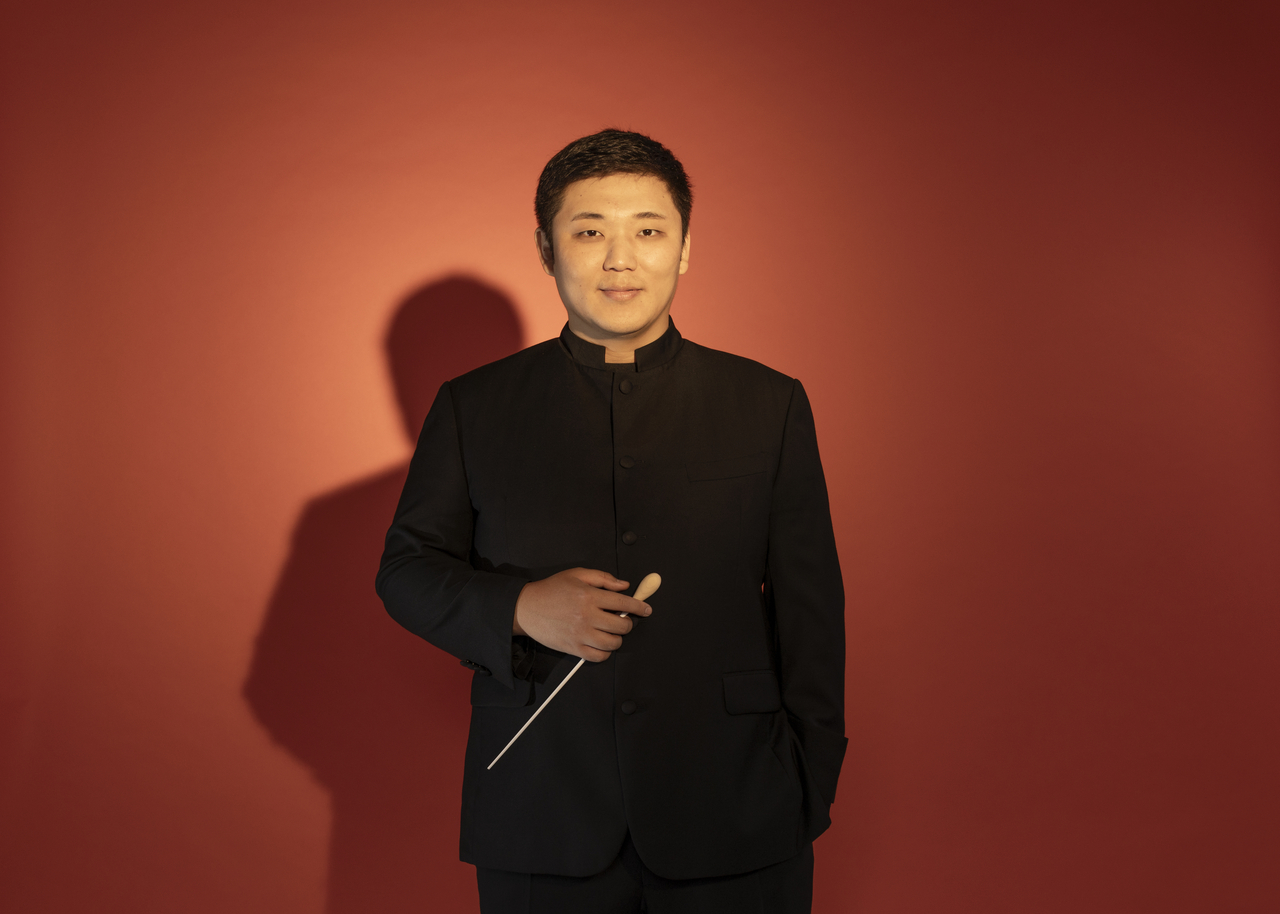
This adaptability mirrors a personal evolution in Yoon’s conducting philosophy. He admits that earlier in his career, he was obsessed with perfection, micromanaging every detail to the point of exhaustion. Today, he focuses on the "big picture -- the texture of the sound and the organic flow of the phrase."
"Too many details can kill the musicians' interest," Yoon noted. He now prefers to keep the atmosphere light, often using humor to break the tension, while deliberately holding back the emotional climax. He saves the true outpouring of energy for the live performance, believing that a conductor’s authority comes not from words, but from gesture, expression and atmosphere.
This desire for efficiency on the podium directly informs his work at the desk. As a composer, Yoon meticulously notes every articulation in his scores -- not to micromanage, but to ensure that the music speaks for itself without requiring lengthy explanations during limited rehearsal time.
His compositions are increasingly defined by a search for his roots -- especially "nonsensical" energy from the shaman ritual. In a recent work inspired by Byeolsingut, a traditional Korean shaman ritual, Yoon attempted to replicate the raucous sounds of the jing (gong) and taepyeongso (conical oboe) using Western instruments. He distinguishes his approach from predecessors like Yun I-sang, who captured the static beauty of Korean music; Yoon is interested in the driving, ecstatic rhythm of the shaman.
"Maybe it’s because I brainwashed myself by listening to it on a loop (to write Byeolsingut), even while sleeping, but I find gut (shamanistic music) truly fascinating. I don't know if it's because my own sense of rhythm is weak, but when I hear those unbelievable, almost nonsensical rhythms, I feel a genuine sense of awe," he said.
Behind Yoon’s rapid ascent is an unconventional background. He draws a direct line between his childhood obsession with gaming -- specifically mapping for StarCraft and the twitch reflexes of Counter-Strike -- and his conducting. The split-second judgment required to manage a virtual battlefield is not unlike managing the complex, real-time strategy of a symphony orchestra, he said.
His trajectory has also been shaped by his wife, fellow conductor Nam Eu-lee, whom he describes as "someone who loves music so much -- perhaps even more than I do." The couple met in Germany in 2020 and married in 2023. According to Yoon, her calm, focused personality provides a perfect balance to his own high energy.
It was she who pushed him to leave the safe, stable path of the German theater system to take the "hard road" of competitions and freelancing -- a gamble that paid off with a string of successes, from a second prize at the Korean National Symphony Orchestra's International Conducting Competition in 2021 to his major breakthrough at the Karajan Young Conductors Award in 2023.
"Even when I feel satisfied after a performance, her expression is dark. I actually think it’s a huge advantage to have a critic like that right by my side. She points out the blind spots I can't see myself. Since everyone has different tastes, I figure that if I have someone examining me that critically beforehand, it lowers the chances of being criticized by others later on," he said.
When asked about his dream project as a conductor, Yoon admitted that his specific goals are shifting.
"I used to have a list of dream pieces, but now I simply cherish the next performance and the present moment. I find happiness in focusing on the here and now -- delivering the most compelling performance I can for the orchestra that trusted me and the audience that came to watch."
He likened this joy to playing football, a hobby he picked up in Germany when he didn't have a computer for gaming.
"I played football almost every single day back then," Yoon recalled. "And honestly, I don't see a big difference between the thrill of the game and the joy I feel when conducting. I suspect that the adrenaline a player or a manager feels isn't all that different from what a conductor experiences on the podium."
gypark@heraldcorp.com