A culmination of her Asia project, touring 15 European cities through March
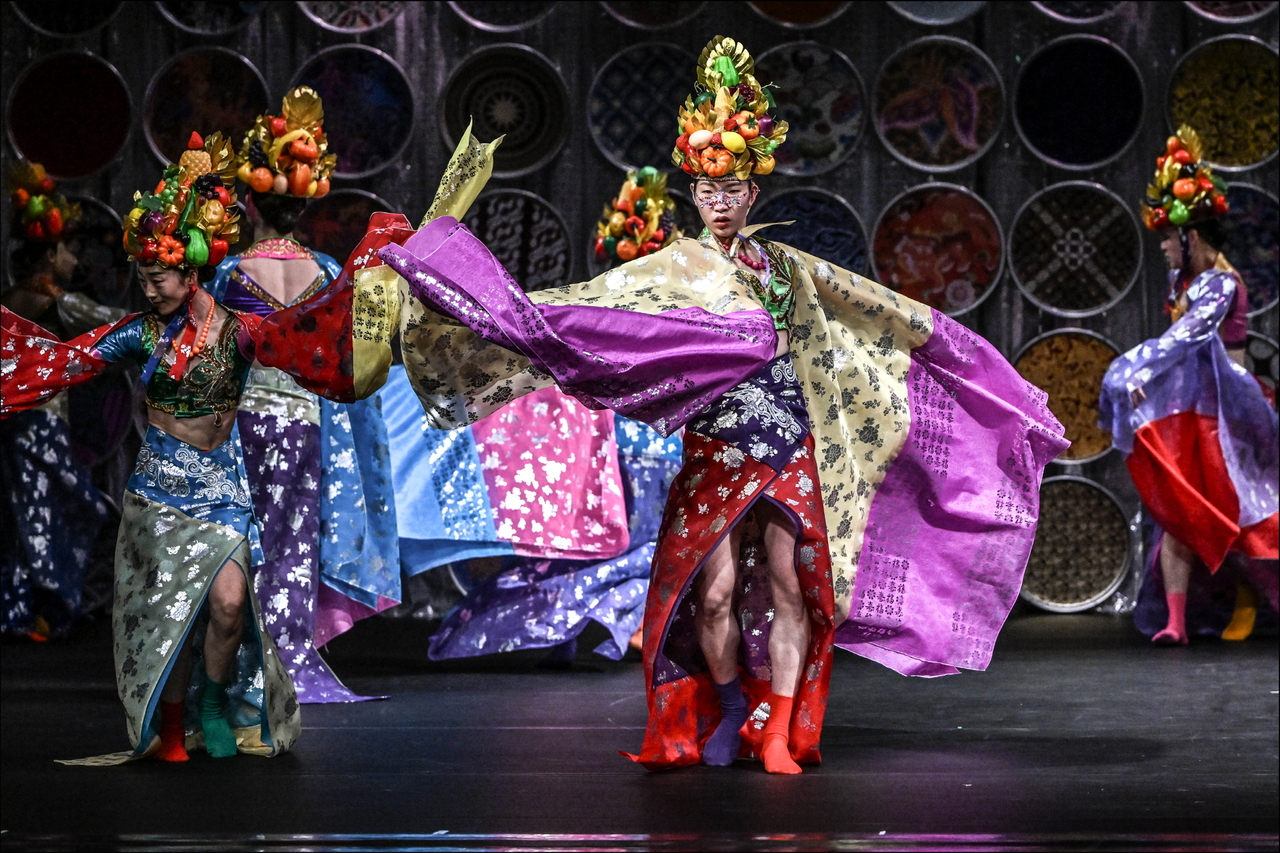
When told that overseas audiences had “never seen anything like this before,” choreographer Ahn Eun-me shot back without missing a beat: “Of course not! I’m here for the first time!”
Delivered half in jest and half with defiant pride, the remark captures the irrepressible confidence that has long made Ahn one of the most singular forces in contemporary dance.
Her latest work, “Post-Oriental Express,” has been rolling across Europe like a relentless train, cutting through borders and expectations and selling out theaters wherever it stops. The work premiered in May 2025 in Seoul by the Ahn Eun Me Company at the Sejong Center for the Performing Arts.
Its international tour pulled out from the Berliner Festspiele in Germany in November before continuing to Theater de la Ville in Paris. In December, the production made its next stops in Grenoble and Belfort, France, and in January, it reached Sydney, Australia. By the time the journey concludes in March, Ahn's "Express" will have completed an ambitious run of 31 performances across 15 cities in Europe and Australia.
This time, Ahn has stepped into the charged terrain of Orientalism — not to reproduce it, but to dismantle the mysterious images of “the East.” In doing so, she has imagined an entirely new cultural language.
“Instead of a sensuous, exotic image of Asia viewed from the West, I wanted to explore an Asia that is a living, evolving culture — one that people continue to inhabit, carry and renew,” Ahn said in a recent interview with The Korea Herald. “I wanted to say that we are creating our own language. This work does not represent all of Asia, of course. It is a dance language formed through my perspective and everything I have lived. Inside it are traces of the cultures labeled ‘the East,’ but it is not the East as imagined by others. My message is simple: the Orient you think you know no longer exists.”
Rather than offering a single portrait, the piece unfolds like a shifting kaleidoscope of Asia. Onstage, one can catch distinct movements inspired by traditional and folk dances: the refined hand gestures of Bali’s Legong give way to the grounded, earthy power of Mongolia’s Biyelgee. Dancers traverse the stage, wielding bamboo poles from the Philippines’ Tinikling. Intricate, Bharatanatyam-inspired handwork from India intertwines with gold-glimmering passages recalling Thailand’s Khon dance and bursts of cathartic energy drawn from Korea’s Salpuri.
“Creating this piece has been more than a choreographic process. It has been a journey of deep inquiry into cultural exchange and identity,” Ahn said.

The topic has been a preoccupation of Ahn's since her decade in the United States in the 1990s, shaped by her years working as an Asian woman in a predominantly European-centered contemporary dance scene.
Ahn felt a growing need to study and rethink how “the East” and “Asia” were being named, framed and consumed.
“The way Asia is perceived has clearly changed. It was time for a more open, healthier discussion about that gaze.”
Since 2018, Ahn has pursued field research across Asia, in more than 15 Asian cities across Indonesia, Vietnam, Malaysia and Japan, engaging with local artists, academics and critics. Her perspective evolved through collaboration projects beginning with “Dragons” (2021), created with Asian dancers born in the 2000s during the COVID-19 pandemic; continued with “Jalan Jalan” (2022), made with Indonesian performers; and expanded through “Welcome to Your Korea” (2023), a platform for emerging Asian choreographers.
In that sense, “Post-Oriental Express” stands as the culmination of this trajectory — a choreographic thesis on modern Asia.
The scale and weight of the research were daunting. “It was so difficult because I had to study so much,” Ahn admitted, and the program book for the Seoul premiere bore that out: nearly 200 pages of anthropological and cultural research rather than a conventional performance brochure.
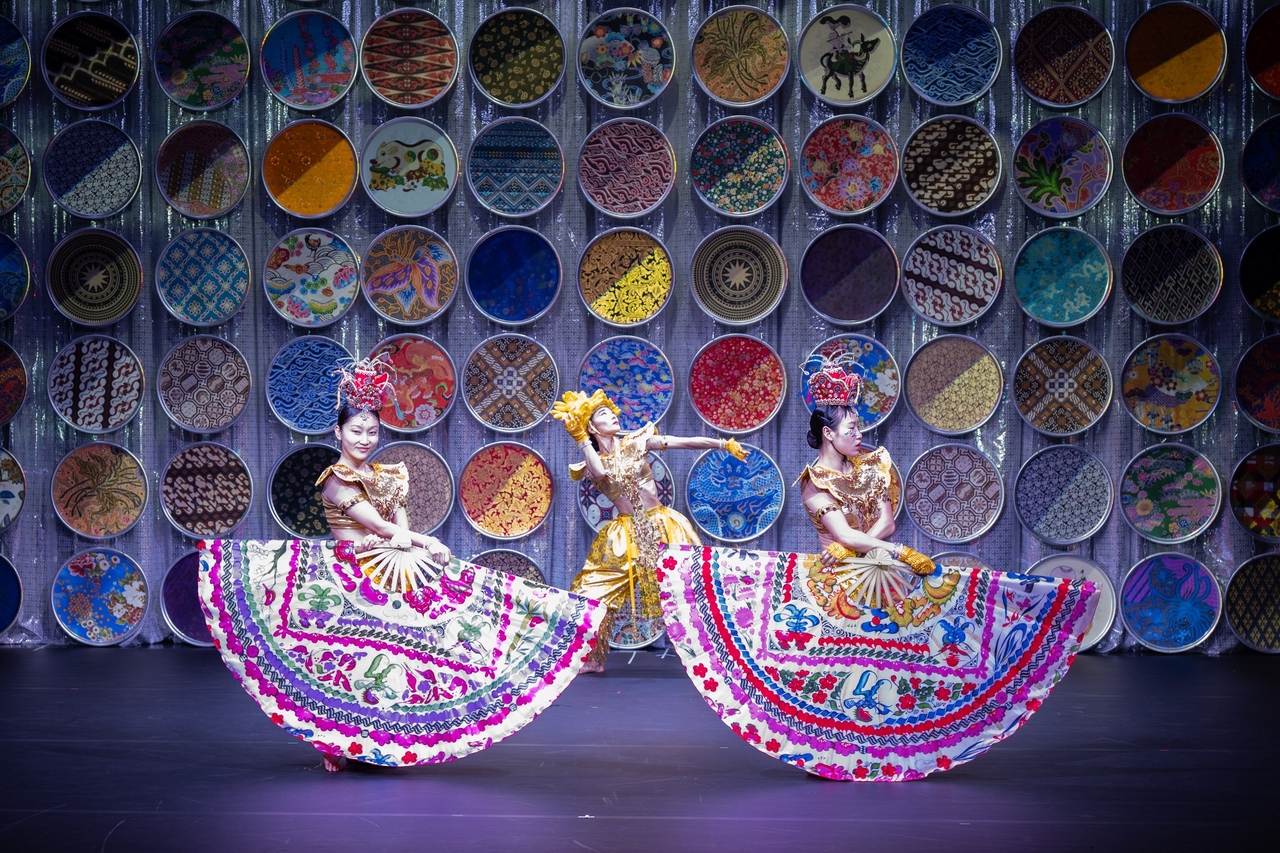
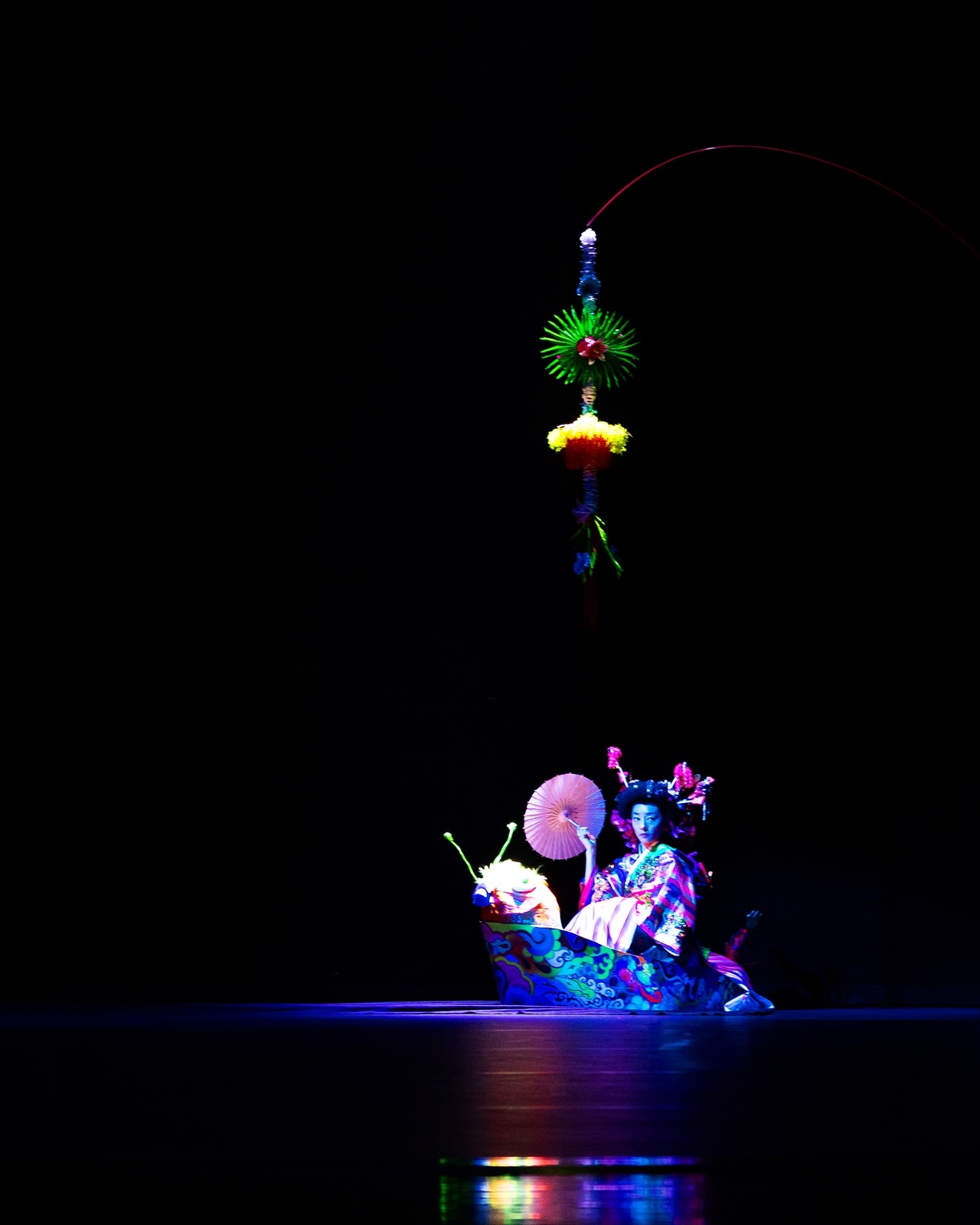
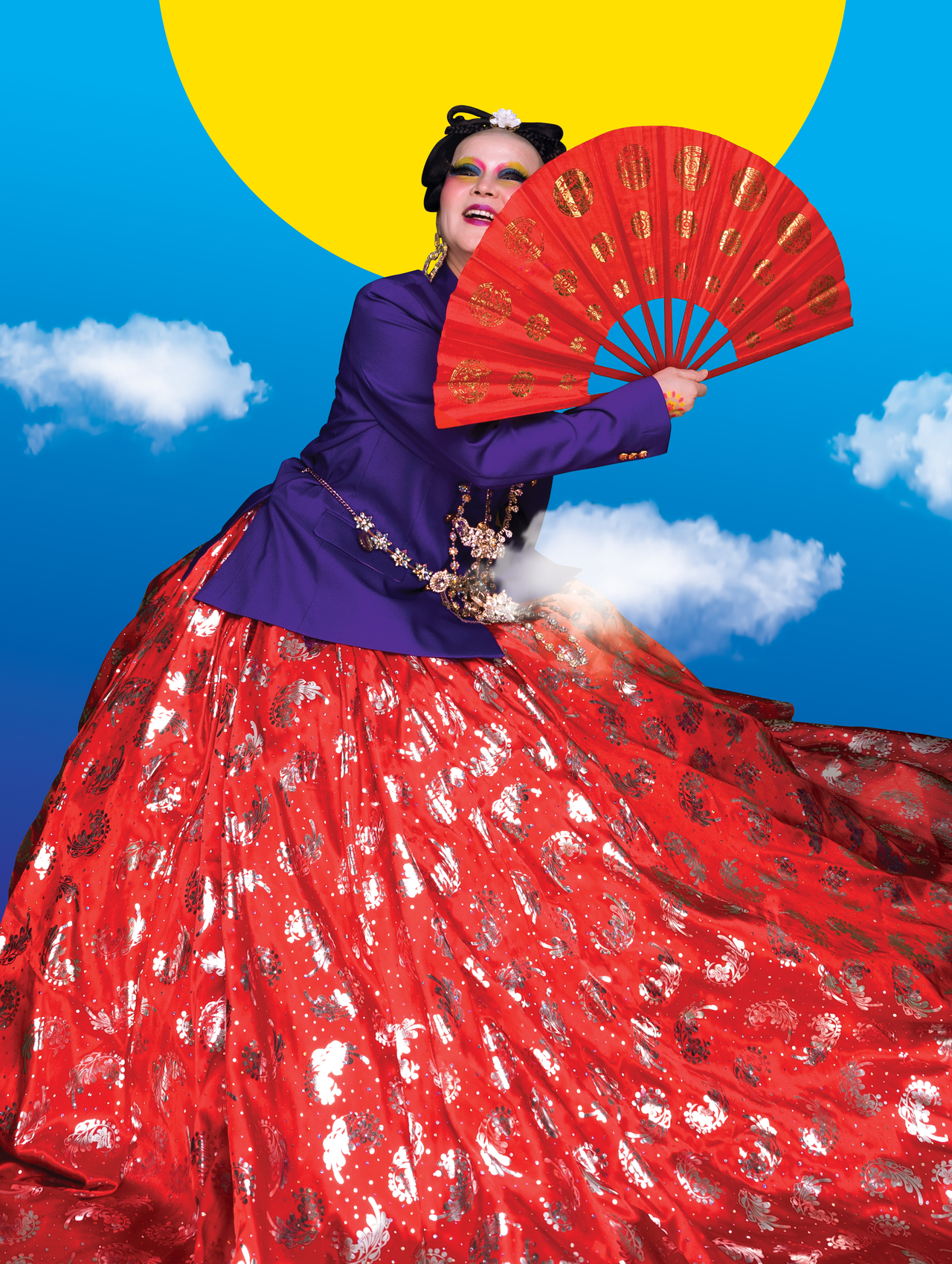
Ahn also led the stage design. The production is visually overwhelming yet distinctly her own. She personally designed more than 130 costumes and hundreds of props, describing them as “the most elaborate and costly” of her career.
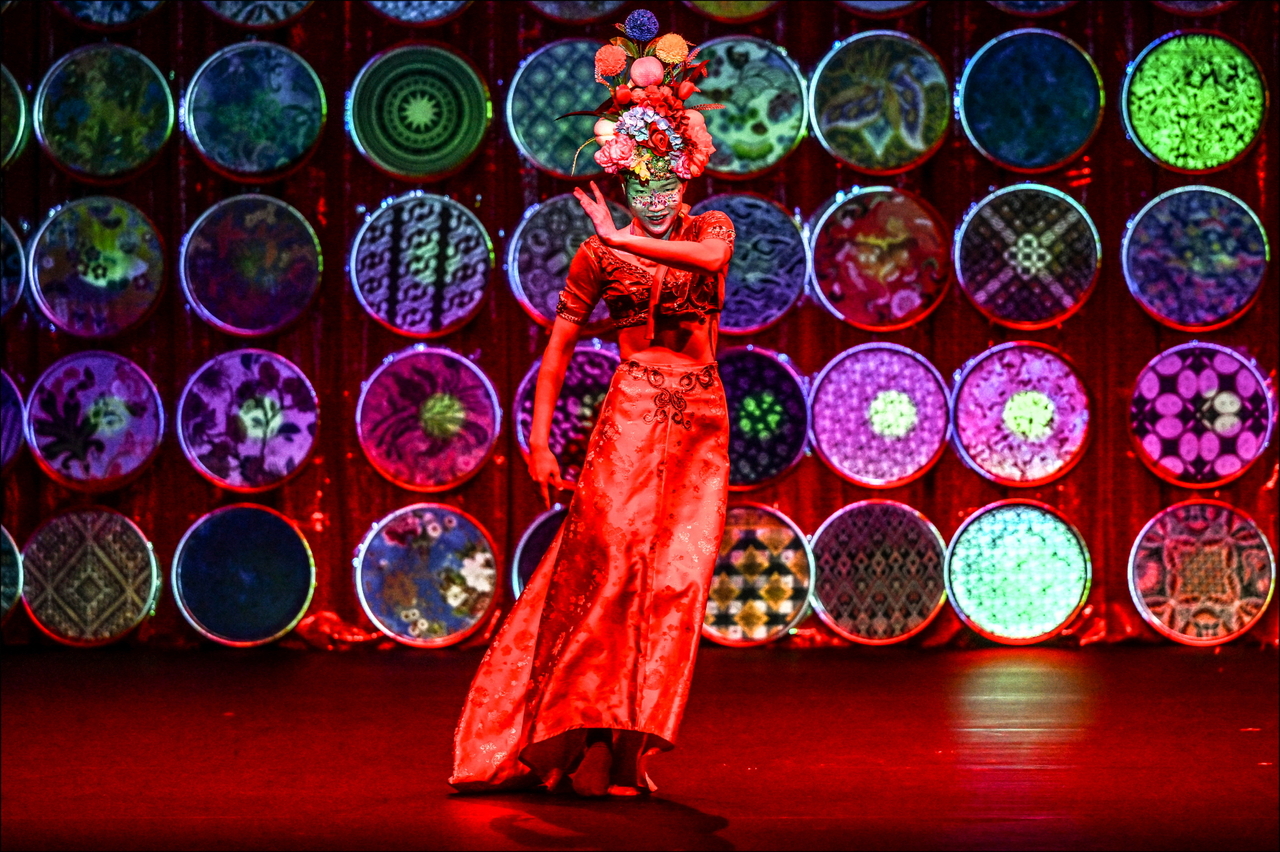
The three sides of the stage are draped with more than 800 circular metal trays, suspended like a shimmering curtain and wrapped in traditional fabrics and patterns from Korea and 10 other Asian countries. The trays form a topography that evokes Asia’s archipelagos and maritime geography. Each pattern signals a distinct local tradition, weaving visual meaning into the very architecture of the stage.
“The dancers become ghosts of time, dancing atop the ruins of an old East–West illusion. On this new map, we drift as spirits remaking the landscape.”
This is hardly the first time the avant-garde icon has chosen the radical over the conventional.
Ahn has built her reputation by overturning norms rather than obeying them. In “New Chunhyang,” she recast the classic heroine as a bald, unmarried woman in her forties who bared her chest onstage. In “Dancing Grandmothers,” she invited women in their 70s and older to perform spontaneous, untrained “makchum” that defied expectations of age and decorum. With “Geosigi Monologue,” she transformed the suppressed sexuality and lived histories of women who came of age between the 1960s and 1990s into a searing dance-theater work.
What began as controversy has become canon. Ahn and her works are now welcomed guests at major theaters, festivals, museums and cultural institutions around the world. Her productions continue to tour steadily, both in Korea and abroad.
For Ahn, dance is more than technique; it is a language unto itself.
“The language of dance is a kind of third language,” she said. “There is something that goes beyond language. There are things the body resolves that words cannot. I believe dance is the language of the body and that within it lies a kind of cosmic energy.”
Standing behind the prefix “post” in “Post-Oriental Express,” Ahn poses a set of open questions for the future: Where are we headed from here? What sentences will a new dance speak? And how will those sentences cross the borders of nations, continents, languages and cultures?
hwangdh@heraldcorp.com