At the Sharjah International Film Festival, festival director Sheikha Jawaher bint Abdullah Al Qasimi discusses why children need to see reality on screen
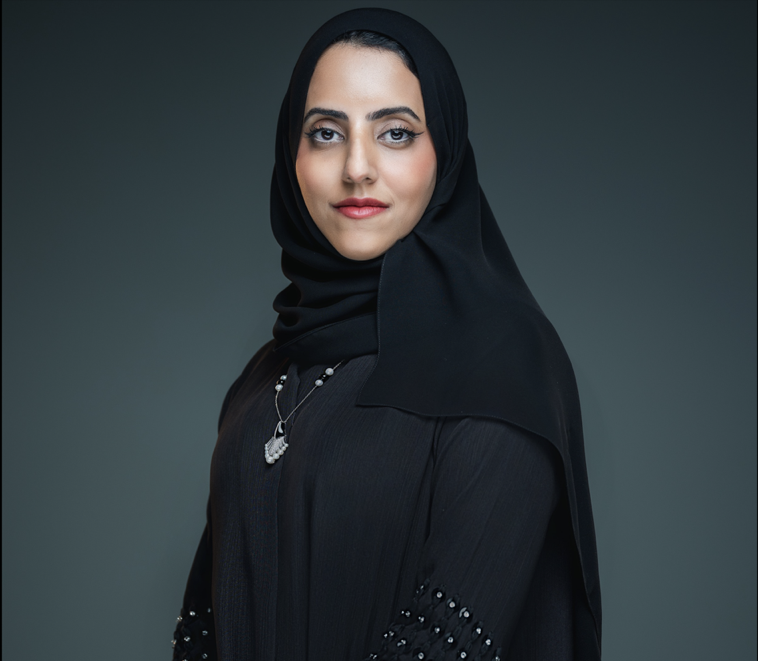
SHARJAH, United Arab Emirates — You might assume she's another royal dabbling in the arts for prestige. But Sheikha Jawaher, general director of the Sharjah International Film Festival for Children and Youth, has put in the work.
Before launching the festival 12 years ago, she spent a decade in classrooms teaching English. She studied family therapy in San Diego, where she first picked up a broader view of the world beyond her own. That grounding in education and child development shapes how she sees the festival: not as a showcase, but as a proving ground for young voices.
On stage, she's all energy and confidence, holding the room. An Arabic-to-English interpreter translates simultaneously, careful and staid, but her flair cuts through. Sit down one-on-one and she gets quieter, more measured with her words. It's the second day of this year's festival, and she's already thinking about where the work goes next.
When she first got started, people wondered why she was watching all these films that weren't in Arabic or English. Twelve years in, with the event now the leading children's film event in the region, Sheikha Jawaher feels the biggest change is seen in the films themselves.
"Before, it was more for entertainment. You'd just go and watch and have fun and leave," she says. "Now, we get affected by them, we learn from them, we relate to them."
The festival's reach keeps expanding — this year drew 76 films from 26 countries out of over 1,700 entries, including first-time participation from Sao Tome and Príncipe, Ecuador and Belize.
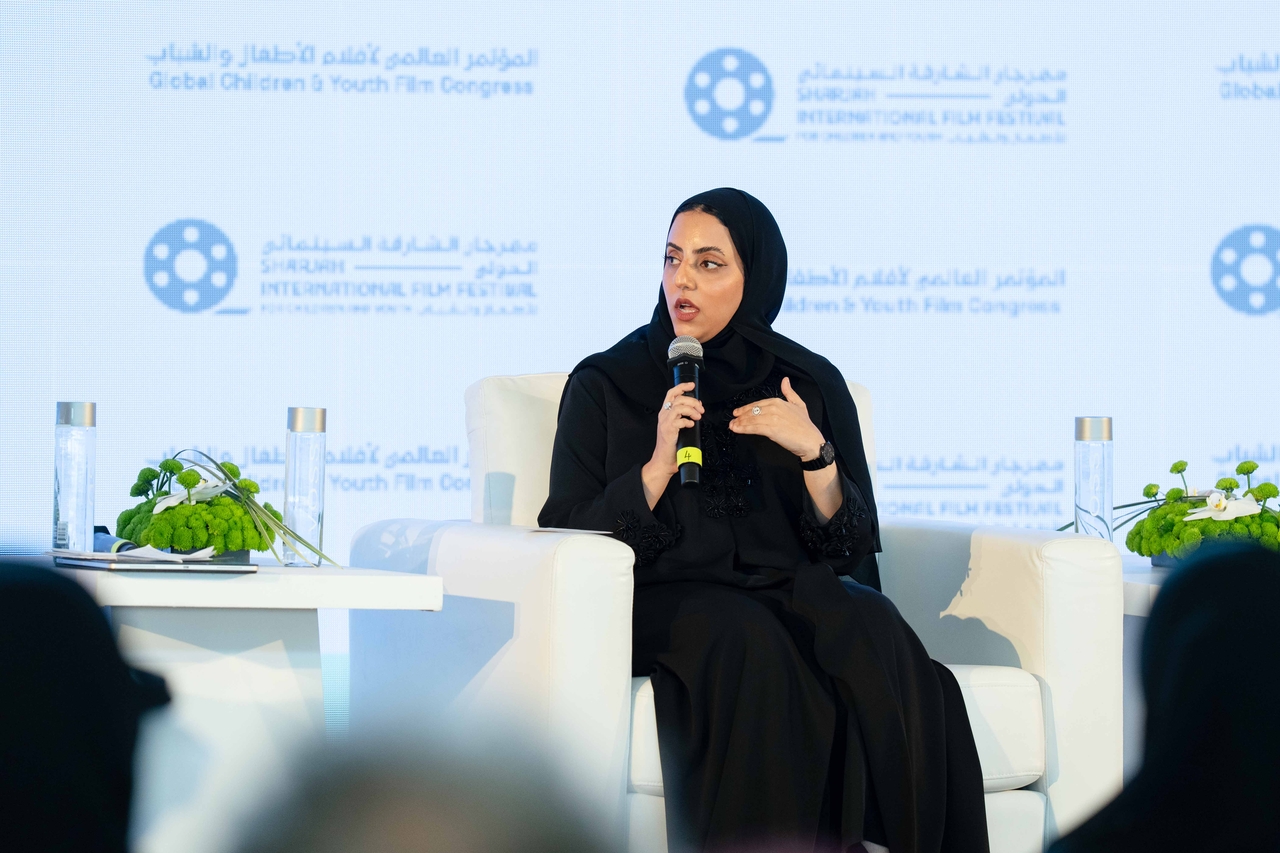
Sharjah's emphasis on culture and education makes it a natural home for an event that celebrates film. Under the patronage of Sheikha Jawaher bint Mohammed Al Qasimi, the wife of the ruler of Sharjah, the emirate has staked its reputation on cultivating arts from the ground up. But for a children's film festival — which features films for youth and by youth — the programming naturally operates differently than conventional showcases. "It's all focused on children and youth, on how to make them future filmmakers," the director says. "We were aware that we were not just launching a film festival, but a platform for media literacy in so many ways."
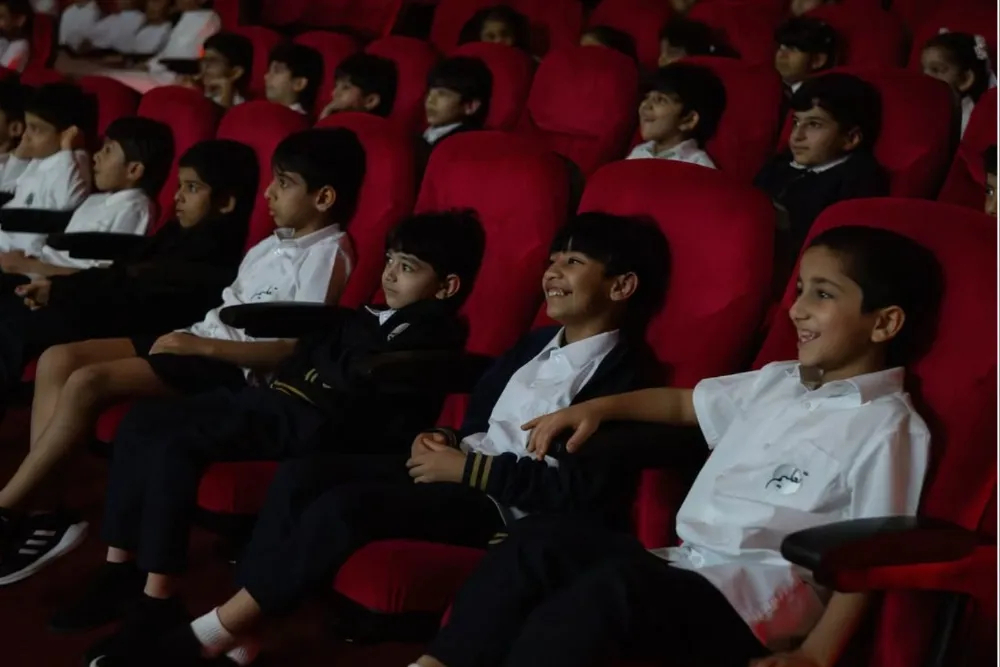
Staying true to that educational mission, the festival has evolved beyond just screenings. It offers feedback sessions for rejected films so that aspiring youth filmmakers may learn from the process. Films made by children now make up around 20 percent of the programming. A junior jury of critics aged 12-20 evaluates the work with their own criteria. This year's pop-up program featured hands-on workshops on everything from Emirati comics to documentary photography, plus panel discussions and keynote speeches exploring how cinema shapes youth culture.
Balancing global reach with cultural grounding is where things get tricky. The festival pulls stories from everywhere, but one might wonder whether a film festival in the Emirates can truly embrace all perspectives. Sheikha Jawaher's priorities remain clear.
"We focus on the good, on talent and creativity and effective stories and messages," she says. "We take the best from other cultures. Because of our religion or our culture, we might not align with certain aspects or views, but that doesn't mean there are no good things we can take from this country."
It's about finding common ground while staying open, she argues.
But the director is not interested in sugarcoating reality for kids. She wants them to see the truth — within frameworks of cinema and dialogue.
That philosophy drove last year's Country of Honor pick: Palestine.
"Since the beginning, we've always shared stories from displaced children, from poor places. Things are happening, we have a lot of refugees. We have to speak about the children of Gaza because they deserve to have a voice. Their stories need to be told."
Critics called it political. Sheikha Jawaher pushed back; ever since the Oct. 7 Hamas attacks and the ensuing war in Gaza, staying silent has not been an option.
"We were talking about Palestine — its stories, its history, its tradition. We had people talk about their food, their clothes, their music. It's a country that deserves to be celebrated."
This year, South Korea took the stage as the country of honor. The festival, which ended Sunday, featured sessions on Korean cinema's appeal, workshops on traditional Korean crafts and panel discussions on the country's expanding global reach. Korean films screened across multiple sections, including six works by student directors. Three South Korean jurors — including animation director Ahn Jae-hoon — evaluated the work alongside 13 international colleagues.
The region's appetite for Korean culture only keeps growing, Sheikha Jawaher notes. Last year, the festival screened a Korean film that sold out before screening day. They opened a second showing, and that one packed out too.
"We were shocked," she recalls. "In the UAE, there's a huge, huge audience for everything Korean — food, music, culture, films as well. My friends always tell me how much they love Korean films. Your stories are different, your messaging is different."
Her long-term vision stretches ahead. She wants success stories of adults who were child filmmakers in the early years of the festival coming back to give something to the next generation.
"Hopefully, we'll keep growing and expanding, and have more presence internationally. Hopefully it'll be run by children and youth — they'll be there as filmmakers themselves."
"I can die happy then," she says. "I've done my job."
moonkihoon@heraldcorp.com