

The government’s central document storage system, known as “G Drive,” was reportedly destroyed in last week’s fire at the National Information Resources Service in Daejeon, wiping out the work documents of nearly 191,000 civil servants.
According to the Ministry of the Interior and Safety on Wednesday, G Drive was among the 96 systems confirmed to have been directly destroyed by Friday’s fire at the NIRS.
G Drive is a cloud-based repository where government employees have been advised to save all work-related documents since 2018, rather than on their computers. This system, allotted to nearly 191,000 government employees as of August, had never been backed up externally. The country has 750,000 public-sector officials nationwide.
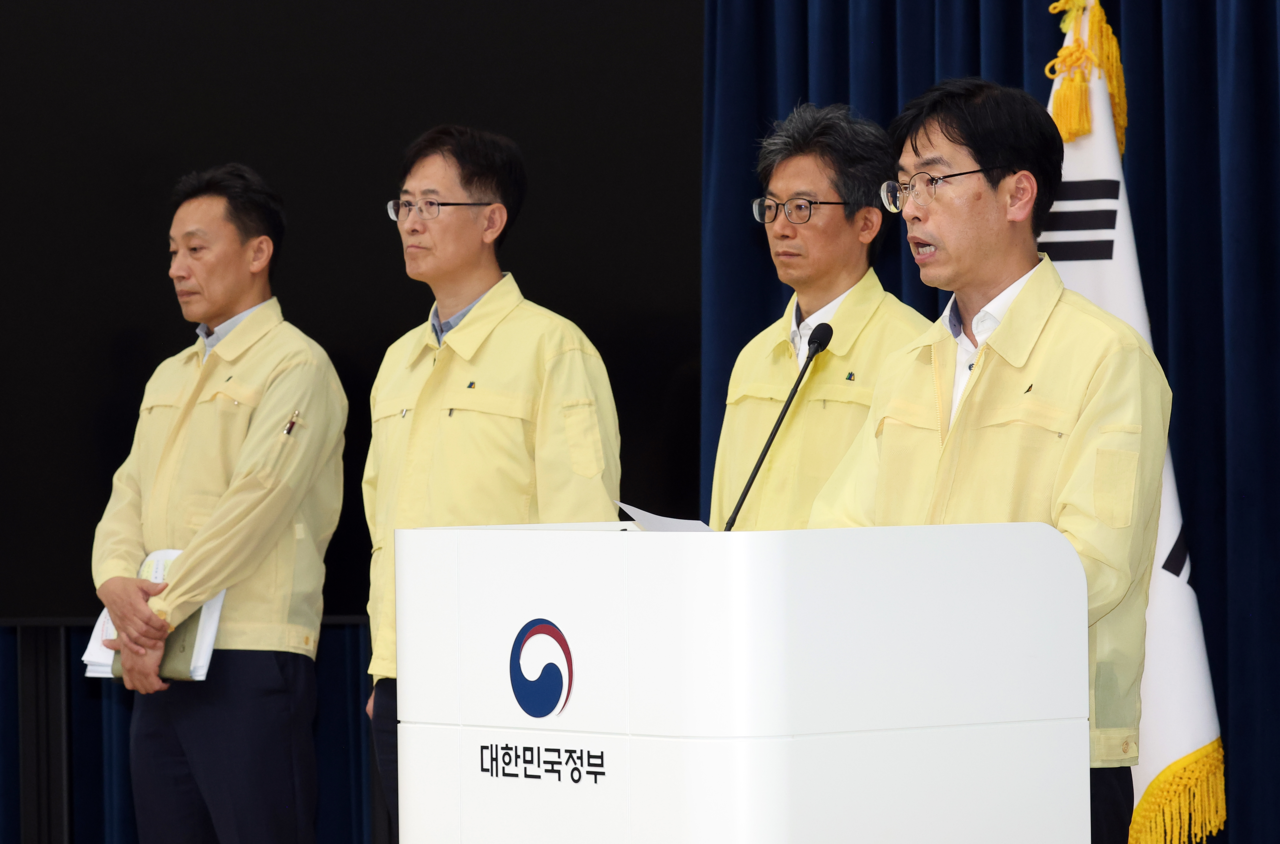
“As the system was not backed up externally, all documents stored on the repository have been lost, and there is no way to bring back the lost documents,” Director General Lim Jeong-gyu of the Public Service Bureau said at Wednesday’s press conference.
Government branches that exclusively used G Drive to store work documents are expected to experience significant disruptions to their work operations. According to the Interior Ministry, G Drive held work files for up to 30 government ministries, though the level of their reliance on the system varied.
The Ministry of Personnel Management is expected to experience significant data loss due to the fire, as it had stored most of its work on G Drive since experiencing an office break-in by a civil service exam applicant in 2016. In contrast, the Office for Government Policy Coordination is expected to experience the least impact, as it did not rely heavily on the cloud system.
“The government has managed to recover whatever we can, including files from past emails, printed copies and local PC drives created within the past month,” Lim added.
Aside from government employees’ personal work files, more sensitive official documents were mostly stored not just on G Drive but also on the Onnara System, the government’s pan-government intranet.
“All work materials of the government go through a separate reporting and approval process through the Onnara System, so official documents related to such approvals and reports are stored on both systems,” Lim explained, adding that the government expects official documents to be recovered once the Onnara System is fully restored.
When the fire broke out at the Daejeon headquarters on Friday, all 647 systems went offline simultaneously as a preemptive safety measure. The source of the fire was later identified as an uninterruptible power supply battery that was disconnected in order to be relocated to the basement.
Out of the systems that went offline, 101 were restored as of 4 p.m., Wednesday.
Of the 38 "Grade 1" services — those deemed essential based on user impact and service importance — only 21, or 55.2 percent, had been restored.
Additionally, the Daejeon Metropolitan Police Agency announced that it booked four officials in connection with the fire at NIRS headquarters, including one NIRS official and three external workers who were overseeing the battery relocation when the fire occurred. Investigators had earlier questioned 12 individuals, including the relocation project manager and other workers on site, as witnesses.
lee.jungjoo@heraldcorp.com