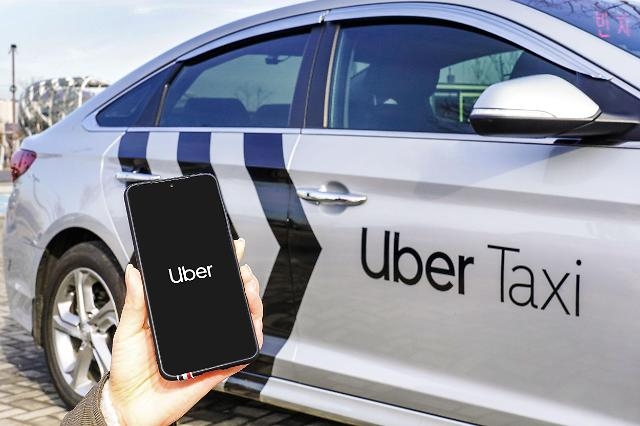
In a bold move to crack South Korea’s tightly controlled ride-hailing market, Uber Technologies is joining forces with internet behemoth Naver to take on Kakao Mobility, the operator of the country’s leading taxi-hailing service Kakao T.
Uber has launched its subscription-based loyalty program, Uber One, exclusively for Naver Plus Membership users in early October. The rollout is part of Uber’s broader strategy to expand its foothold in Korea by leveraging Naver’s vast digital ecosystem and customer base.
Priced at 4,900 won ($3.49) per month or 49,000 won annually — identical to Kakao T’s paid membership plan — Uber One offers higher rewards, with 2-7 percent more points compared to Kakao’s program. The enhanced perks aim to attract value-seeking, frequent users.
Despite its global stature, Uber has struggled to gain traction in Korea. As of August, Uber had only 850,000 monthly active users, compared to Kakao T’s commanding 9.21 million, according to data from Nielsen Koreanclick. Kakao currently holds an estimated 90 percent share of the domestic ride-hailing market.
However, industry watchers see the Naver partnership as a potential inflection point. With nearly 40 million users, Naver Plus Membership has become an increasingly sought-after platform for cross-sector expansion — spanning streaming, e-commerce and now mobility services — by significantly lowering customer acquisition costs for partner companies.
“This partnership enables Uber to tap into one of Korea’s most powerful user funnels almost overnight,” said an industry source who requested anonymity. “It blends subscription incentives with reach, creating new consumer value and energizing the competitive landscape.”
Uber has been laying the groundwork for this expansion. Ahead of Uber One’s launch, the company has increased its vehicle supply and upgraded its dispatch algorithm — addressing a key pain point among Korean users: service availability.
“Discounts and memberships don’t matter if you can’t get a ride when you need one,” an Uber Korea official said. “Before rolling out perks, we focused on solving the core issue — ensuring users can actually secure a ride.”
The company has also introduced specialized accounts such as Uber Teen and Uber Senior, targeting families and older passengers with features that emphasize safety and convenience.
Thanks to these efforts, Uber’s market share in Seoul has reportedly climbed to 7-8 percent, nearly doubling from 3-4 percent earlier this year.
“They’re offering real incentives to drivers, from better commissions to onboarding bonuses, which helps with dispatch availability,” another industry source said. “For riders, the experience is becoming nearly comparable to Kakao T.”
Uber’s timing appears calculated. The debut of Uber One closely follows Kakao Mobility’s official launch of its paid membership program, signaling an open challenge. Both services now offer similar pricing and benefits, igniting head-to-head competition for user loyalty.
While Uber entered the Korean market relatively late, its global scale and operational expertise make it a formidable contender. Sources believe this rivalry could ultimately benefit consumers through improved service standards and more choices.
“With a credible competitor now in play, Korean users may enjoy better deals, more innovation, and a higher quality of service,” the source said.
“Healthy competition between Uber and Kakao is long overdue — and it could reshape the mobility market for good.”
yeeun@heraldcorp.com