Perennial straight arrow of Korean drama trades his suit for tattoos and dance shoes in revival of a dead genre
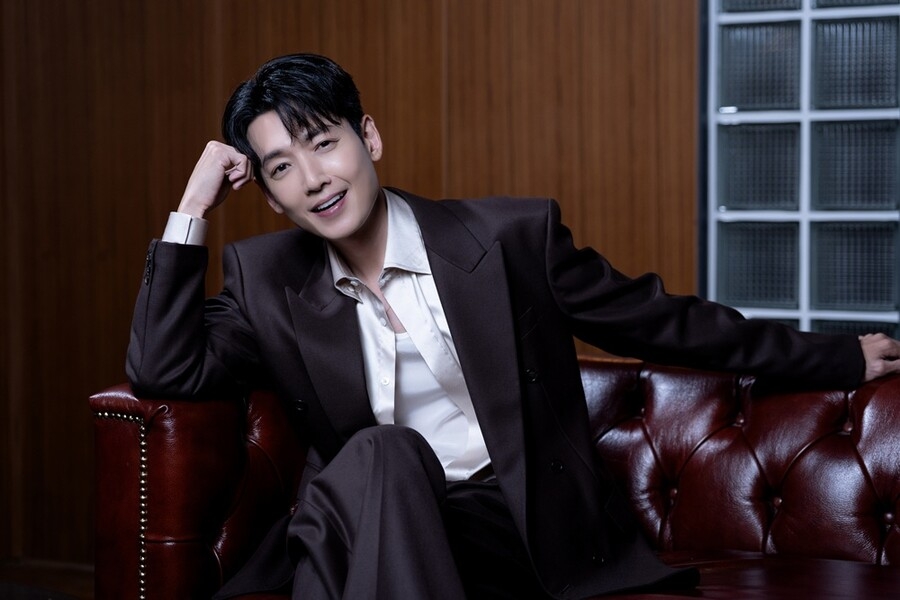
"If people walk out saying 'that guy can really dance,' I'll be thrilled," Jung Kyung-ho announces deadpan at a Samcheong-dong cafe on Monday afternoon. "Please, write that down. I did nothing but tango for months."
It may seem like an odd wish for someone with over two decades in the business who, in recent years, has played Korea's most upstanding professionals — cops, doctors, lawyers — but then, "Boss" is an odd film. Opening Friday for Chuseok, Korea's harvest holiday that stretches nearly 10 days this year, it attempts to revive the gangster comedy, a genre that thrived at the turn of the millennium before collapsing under its own weight.
Jung speaks so quietly you have to lean in. At times, he sounds less like someone promoting a major holiday release than someone trying to convince himself it was worth the effort, but apparently, the camera changes everything. "When the camera rolls, something switches on," he says. "All those people watching you, focusing on you — there's this rush that comes with it."
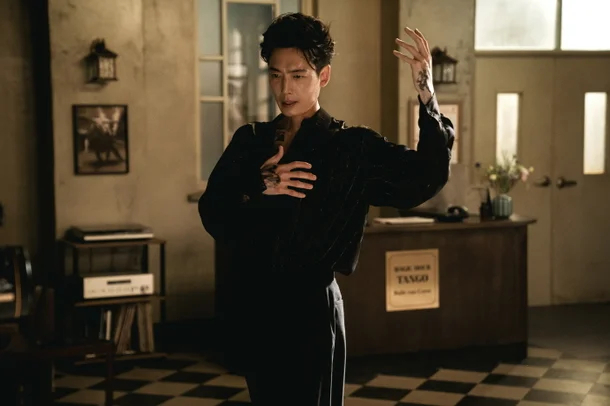
The rush might have been harder to locate with "Boss." Director Ra Hee-chan's latest follows three gangsters competing to avoid becoming the next boss while secretly pursuing their real dreams. Soon-tae (Jo Woo-jin) dreams of running a Chinese restaurant, Kang-pyo (Jung) wants to tango professionally, and Pan-ho (Park Ji-hwan) actually wants the job, but nobody thinks he's cut out for it. Throw in an undercover cop (Lee Kyu-hyung) who's been embedded for a decade, and you've got your premise.
Two decades ago, such high-concept schtick would have fit right in. The early 2000s gave us "My Wife is a Gangster," "My Boss, My Hero," "Hi Dharma," and the "Marrying the Mafia" franchise — all mining comedy gold from the gap between gangster swagger and sheer dumbness. The formula was bulletproof: tough guys doing un-tough things, embarrassing themselves at every turn. By 2010, the genre was virtually extinct, flattened by lazy sequels and audiences who'd simply moved on.
"Boss" digs up the corpse and puts it in dancing shoes — literally. Originally, Jung's character was supposed to be a frustrated pianist, but the production timeline wouldn't allow for piano lessons. The director, who happened to be taking tango classes, suggested the switch. Jung spent four months training until his toenails fell off.
"I did more dancing than script reading," he says. "Not that I had many lines anyway."
Early reviews suggest the resurrection effort's a non-starter. The film is many things — corny, forced, brazenly nostalgic — but its biggest problem seems to be that it's not particularly funny. Many have noted how the gags feel flash-frozen from circa 2001.
Oddly enough, Jung seems fine with this. "I actually liked that it wasn't too funny when I watched it," he says. "It felt more like a family drama. Soon-tae trying to protect his loved ones. That vintage feel, you know? Not huge laughs, but something families can watch together during the holidays."
At least the role marks a real departure for Jung, who played the star tutor opposite Jeon Do-yeon in "Crash Course in Romance," the cardiac surgeon in "Hospital Playlist" and back-to-back attorneys in "Oh My Ghost Clients" and "Pro Bono." After building his brand on embodying the principled elite, playing a tango-obsessed mobster feels completely out of left field.
"People tell me my strength is this good energy," he says. "Every role I play, even the difficult ones, apparently comes across as wholesome. But after 20-plus years, maybe it's time to try filling myself up differently."
"I think it's all about staying consistent, keeping your integrity. Just plugging away," he says quietly, wistfully even.
"Boss" opens in theaters Friday.
moonkihoon@heraldcorp.com