Veteran and new recruit make every move count in Seoul Metropolitan Dance Theater’s blockbuster dance repertoire

In a rehearsal studio ahead of their latest run, every detail is under scrutiny.
The dancers adjust not only the tilt of their heads but also the direction of their gaze, aligning with each other down to the millimeter. They calibrate the angle of a prop, the slope of a shoulder, the spacing of rows and columns, as if drawing invisible straight lines across the floor.
Seoul Metropolitan Dance Theater’s “One Dance” (“Ilmu” in Korean) returns this weekend to the Sejong Center for the Performing Arts.
The blockbuster production binds 49 dancers to breathe and move as if they were one. Any deviation can shatter the illusion of unity.
“’Ilmu’ is so perfectly synchronized that the dancer who makes a mistake becomes the main character,” said Oh Jeong-yun, the company’s associate principal dancer, in an interview with The Korea Herald.
“We joke among ourselves that whoever slips becomes the star of the night.”
The irony, of course, is that no one wants that starring role. Months of arduous rehearsals are devoted to becoming “one.” The title “Ilmu” literally means “to dance in unison” — a name that captures both the ambition and the burden of the work.
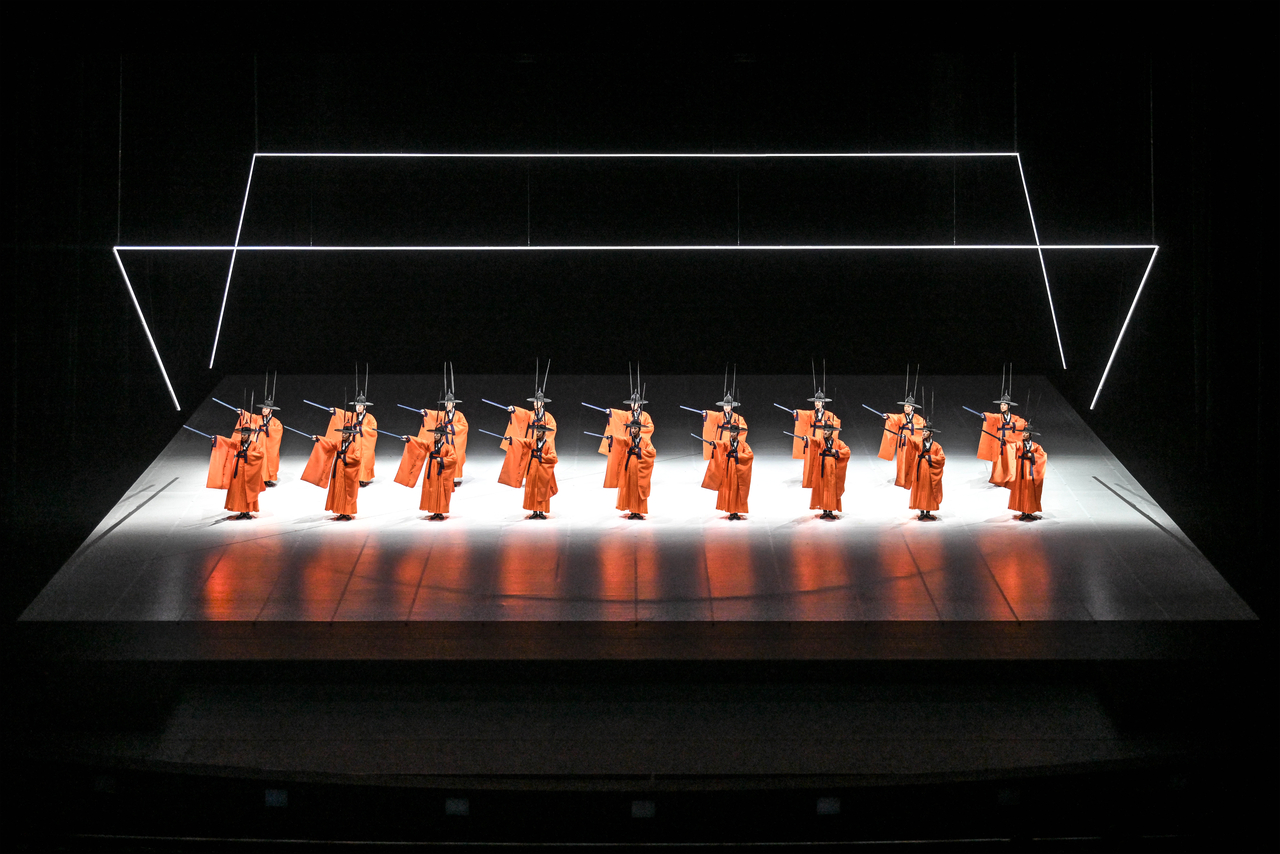
First staged in 2022, “One Dance” reinterprets the ceremonial dance from Jongmyo jeryeak, a royal performance of song, music and dance performed during ancestral rites, which is listed as a UNESCO Intangible Cultural Heritage.
For this large-scale production, leading figures from across the Korean dance scene teamed up: fashion designer-turned-creative director Jung Ku-ho, who took the helm; choreographer Jung Hye-jin, a specialist in Korean dance; contemporary choreographer Kim Sung-hoon and choreographer-composer Kim Jae-duk.
Since its premiere, the work has been performed annually, establishing itself as a signature piece for the company. In 2023, it traveled to Lincoln Center in New York, where the sold-out show drew standing ovations. This year’s Seoul run sold out weeks in advance.
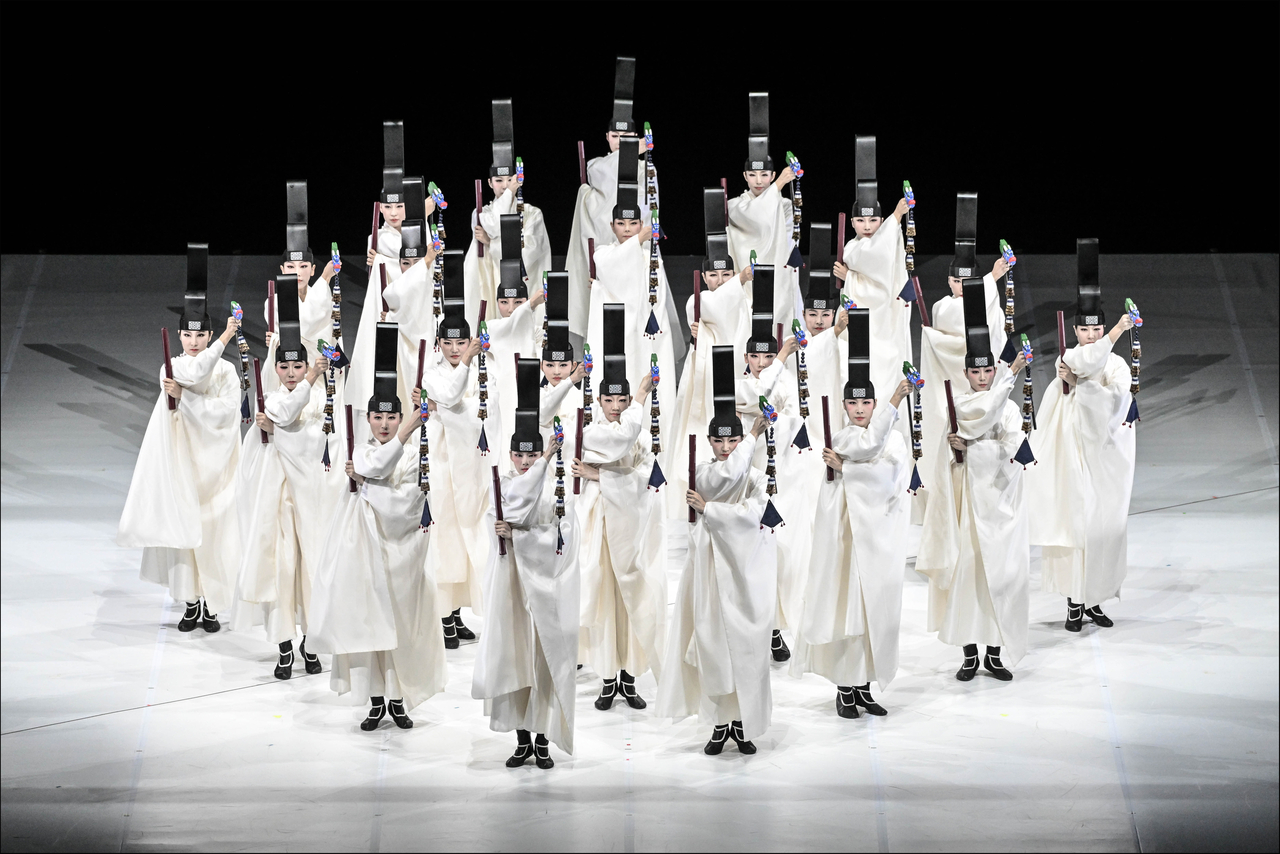
For the company’s dancers, that success is both gratifying and daunting.
“I’d say this is the most challenging work the company has performed. Even now, I sometimes find myself thinking, ‘How did we manage this?’” said Oh, who joined the company in 2015 and has danced in every run since the premiere. “The choreography itself is demanding, and because the piece is composed entirely of ensemble work, its structure adds another layer of difficulty.”
And for the newest members of the company, the challenge is all the more acute.
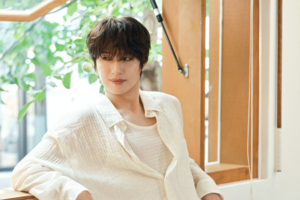
“I saw this performance twice before joining the company, and I've been dying to try it,” said Kim Gun-woo, 24, one of six new dancers admitted this year. “But I didn’t realize how exact everything had to be — the angles, the timing, even the silences.”
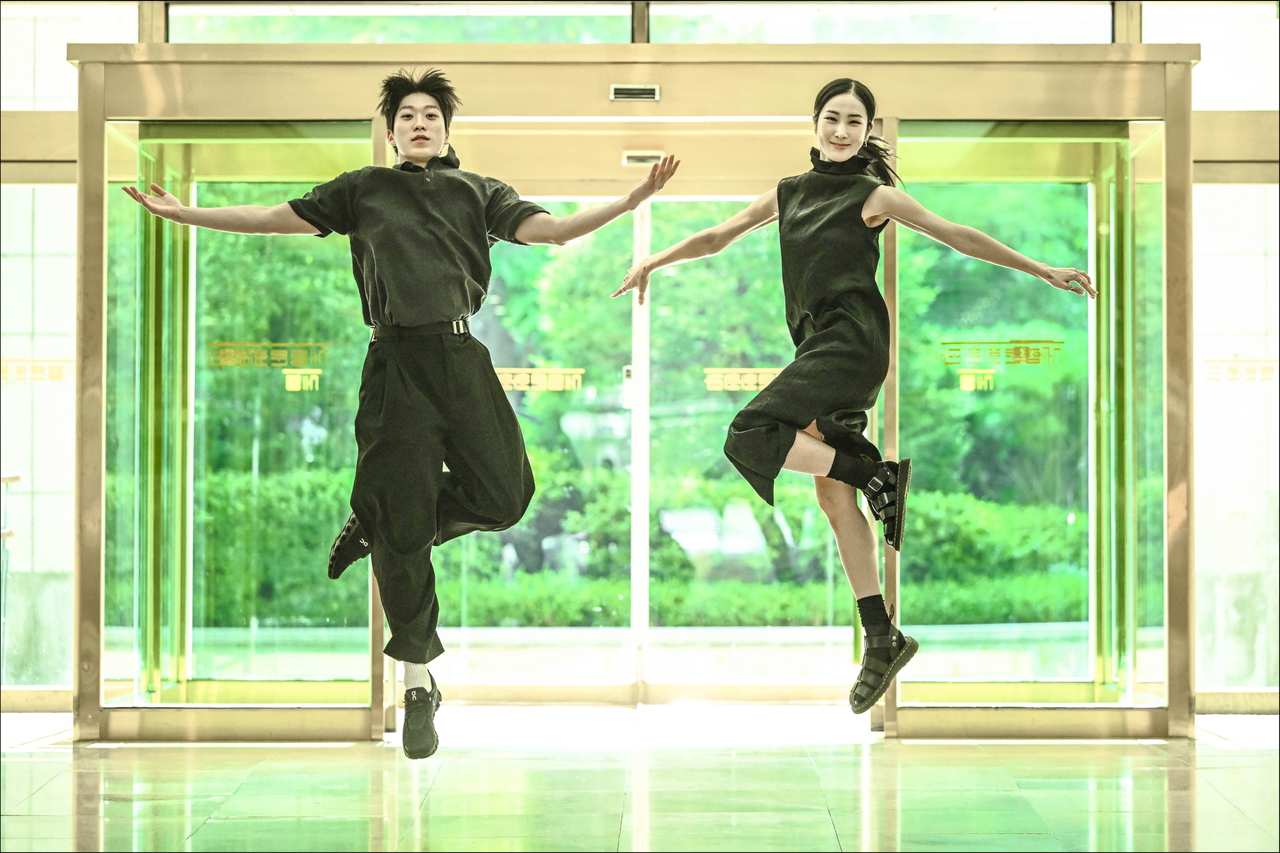
Rehearsals, both dancers agree, are grueling and relentless. Every pathway through sequence and space must be mapped precisely — not just where a dancer lands, but how and when they get there. The repetition leaves muscles in knots, and the rehearsal studio is thick with the scent of menthol patches used as relief for sore muscles.
Yet amid the fatigue, a kind of instinct takes over. The opening sequence unfolds in silence, with only a beat as a guide. “There are moments when your mind goes blank. But your body remembers, and it responds,” said Oh.
That surrender, she added, is the essence of the work. “Here, you empty yourself. It’s not about showing off your own style. It’s about pouring all your energy into something collective. So it feels like the most authentic work for a professional dance company.”
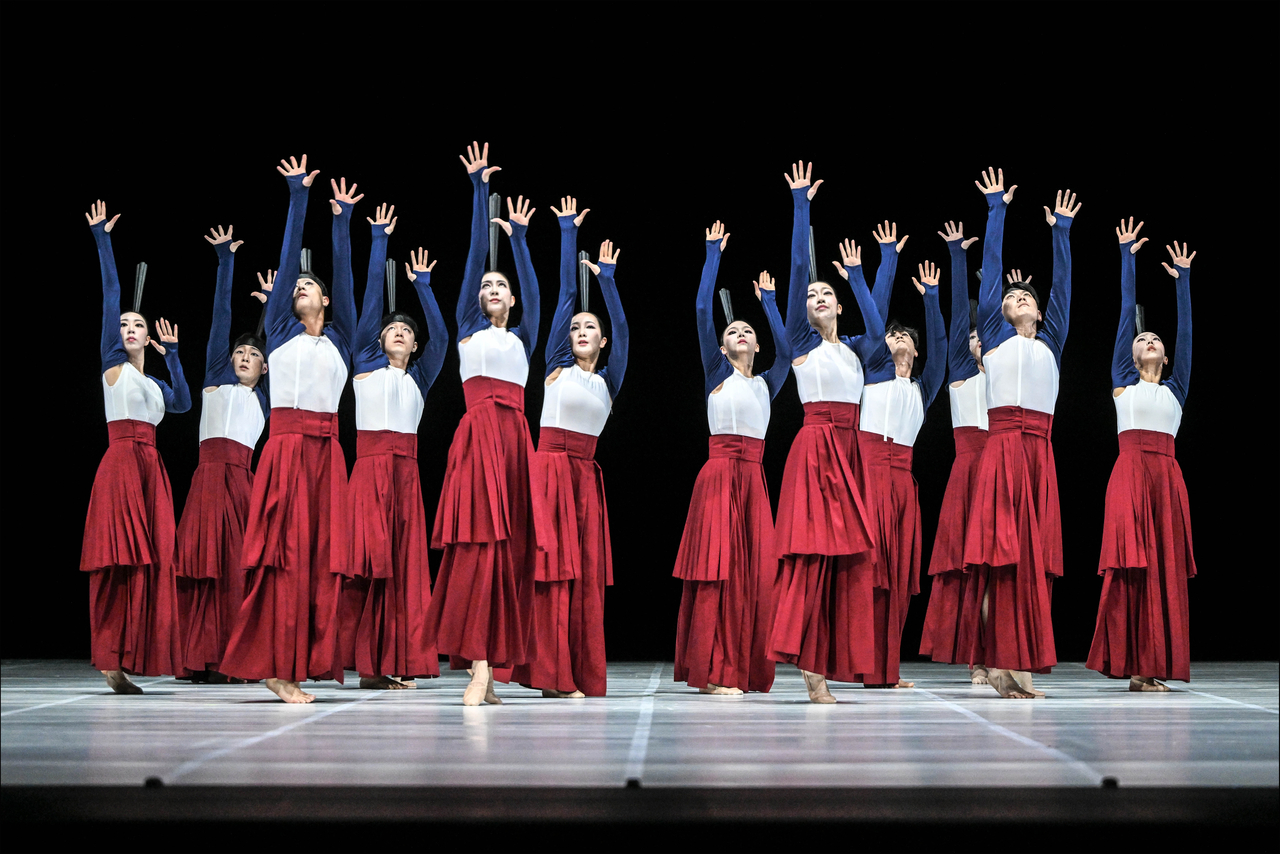
Both dancers spoke of the weight of obligation toward their company, their colleagues and the audiences they face on stage.
“I mean, we are professional dancers and members of the company. The company puts in enormous effort, and audiences are paying their time and money to see us. That means we can’t make mistakes,” said Oh.
Her most unforgettable moment came during the New York run. “The entire hall rose like a wave. It was a sight to behold. The applause felt like it was literally pouring over me, and I couldn’t stop myself from tearing up. That moment renewed my sense of purpose as a dancer.”
Kim, still at the beginning of his journey, voiced a similar commitment.
“Getting into this company was already a huge source of pride, and I feel the weight of having to give everything on stage. The house is sold out again this year, and I can’t be the one who makes a mistake and 'steals the show.’”
What he finds most compelling, he added, is the way the 75-minute work traverses tradition, gendered forms of dance and contemporary invention. “You get to experience it all in one evening,” said Kim.
“One Dance” runs Friday to Sunday in Seoul. Following the Seoul run, the production travels to Gangneung Arts Center on Aug. 29 and to Daegu Arts Center on Sept. 4-5.
hwangdh@heraldcorp.com